
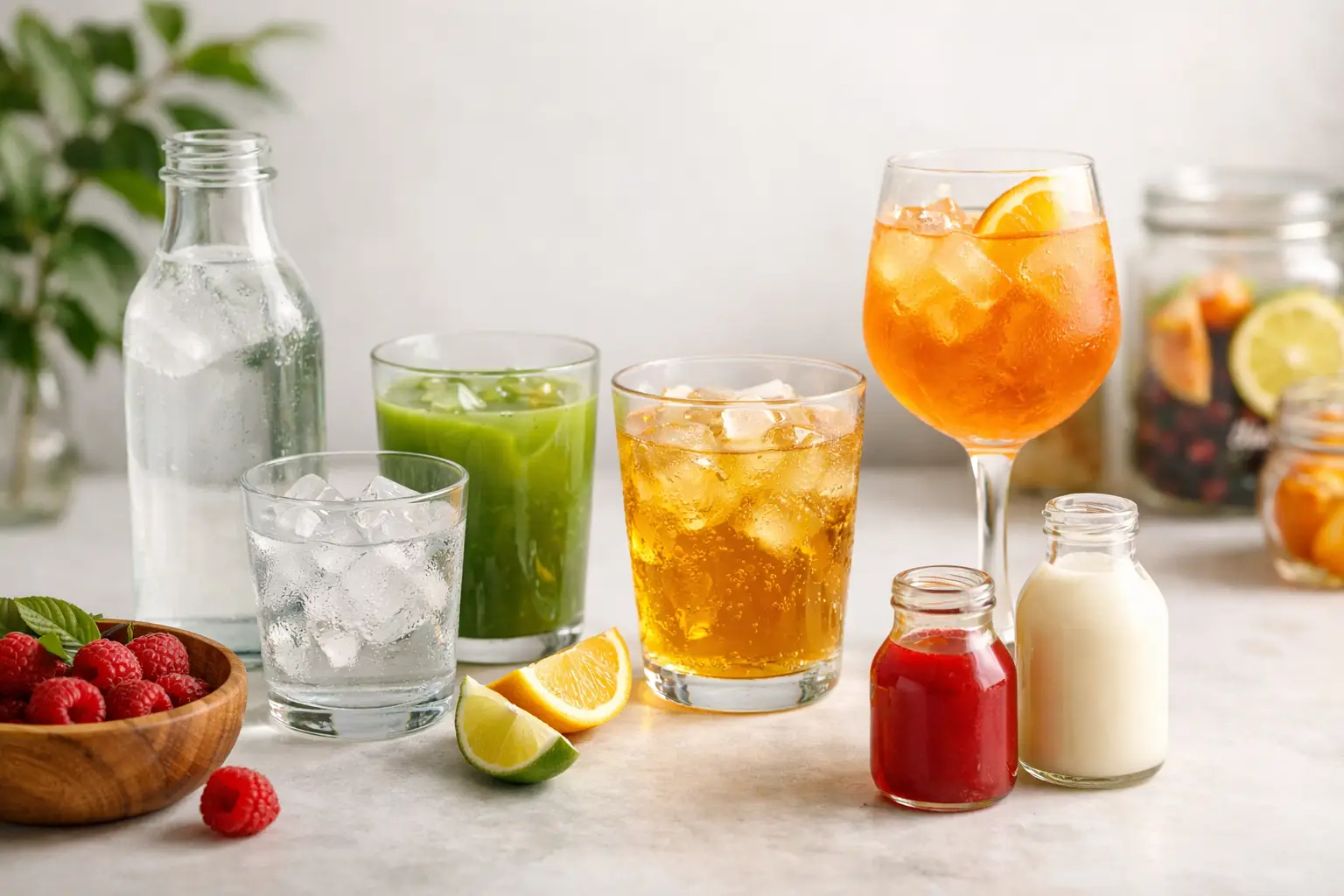
A clean-label beverage can lose its credibility in seconds if the ingredient statement tells a different story than the front label. For buyers, distributors, and beverage founders, the question of what makes drinks clean label is not answered by one claim or one design choice. It is answered by the full product: the ingredients selected, how they are processed, how the formula performs on shelf, and whether the supply chain can deliver the same standard at scale.
Clean label is a commercial advantage when it is built into formulation and manufacturing from the start. When it is added late as a marketing layer, the gaps show quickly.
What Makes Drinks Clean Label in Practice?
There is no single universal legal definition of “clean label” in the United States. That makes discipline more important, not less. A credible clean-label position generally means a beverage uses recognizable ingredients, avoids unnecessary artificial additives, communicates claims clearly, and delivers consistent quality without hiding behind vague language.
For a sports drink, that may mean fruit-derived flavors, straightforward electrolyte sources, and a sweetening system consumers can understand. For a ready-to-drink cocktail, it may mean real juice, recognizable botanical ingredients, and no artificial colors. For an energy or functional beverage, the standard may center on transparent active ingredients, clear dosage information, and a formula that does not rely on an oversized list of synthetic additives.
The exact formulation depends on the category, price point, target consumer, and intended shelf life. Clean label does not mean every beverage must contain only three ingredients. It means every ingredient should have a purpose that can be defended in product development, on the label, and in front of a retail buyer.
Recognizable ingredients are the starting point
Consumers increasingly read ingredient statements, especially in health-oriented, performance, and premium beverage categories. They want to see ingredients they recognize or can reasonably understand. Water, juice, tea, fruit extracts, electrolytes, herbs, sugar, honey, and well-defined functional ingredients are easier to explain than a long list of unfamiliar chemical names.
Recognition alone is not enough. An ingredient may sound natural while offering little nutritional or product value. Clean-label development requires a formulation rationale: what does this ingredient do, why is it included, and is there a more straightforward way to achieve the same result?
That discipline protects both the product and the brand. It also gives sales teams a clearer story for buyers who need to understand how a beverage earns its premium position.
Fewer additives, but no shortcuts
A short ingredient statement is often desirable, but it should not become an empty target. Beverages need to remain safe, stable, and consistent through production, transport, storage, and consumption. Preserving quality is not optional.
The right question is not simply, “How do we remove everything?” It is, “Which ingredients are necessary to protect safety, flavor, color, texture, and shelf life?” Depending on the beverage, clean-label solutions may involve acidity control, hot-fill processing, aseptic production, pasteurization, protective packaging, or carefully selected natural preservation systems.
These decisions create real trade-offs. Removing a conventional preservative may shorten shelf life. Using real juice can increase flavor authenticity but also introduces seasonal variation and additional supply complexity. Natural colors can be more sensitive to light, heat, and pH than artificial alternatives. A capable manufacturer addresses those realities in development rather than discovering them after a product reaches distribution.
The Ingredient Statement Must Match the Claim
Clean label is weakened when front-of-pack language overpromises. Claims such as “natural,” “no artificial flavors,” “made with real fruit,” or “no preservatives” must align with the actual formula and the applicable regulatory requirements. Precision matters because buyers and consumers are alert to claim inflation.
A beverage made with juice concentrate may appropriately communicate fruit content, but it should not imply that it contains more fresh juice than it does. A functional drink may contain a botanical extract, but the label should make clear what the ingredient is and avoid unsupported performance claims. A product using a natural sweetener should still communicate its sugar and calorie profile honestly.
For brand owners, this is where regulatory review, label development, and formulation work must operate as one process. An attractive label cannot repair a formula that conflicts with its claims. Likewise, a strong formula can be undermined by imprecise packaging language.
Clean label is not the same as organic, non-GMO, or low sugar
These terms can work together, but they are not interchangeable. Organic certification addresses how qualifying agricultural ingredients are produced and handled. Non-GMO positioning addresses a specific sourcing or production concern. Low-sugar claims focus on nutritional composition. Clean label is broader, covering ingredient simplicity, transparency, and the overall consumer perception of the product.
A beverage can be organic and still contain a complex ingredient statement. It can be low in sugar while relying on sweeteners that do not fit a particular brand’s clean-label standard. It can be all-natural in concept yet use processing aids or flavor systems that deserve closer scrutiny.
For buyers, this distinction helps compare products on substance rather than front-label shorthand. For founders, it prevents expensive repositioning later. Define the product standard before finalizing the formula, not after the packaging has been designed.
Processing Is Part of a Clean-Label Beverage
The conversation often stops at ingredients. It should not. Processing determines whether a beverage made with real ingredients can maintain quality at commercial scale.
A clean-label product needs a manufacturing process that protects flavor and function while meeting food-safety requirements. Thermal processing, aseptic filling, carbonation control, oxygen management, sanitation protocols, and packaging selection all affect the final result. The goal is not minimal intervention at any cost. The goal is the right level of intervention to produce a safe, stable beverage without compromising the intended ingredient standard.
For example, a refrigerated functional beverage may support a different formula than an ambient-stable product destined for national retail distribution. A cocktail program for hospitality may prioritize fresh sensory performance over a long warehouse life. An export-ready beverage needs to account for longer transit times and variable storage conditions.
This is why scalable clean-label beverages require more than a strong concept. They require validated production parameters, pilot runs, shelf-life testing, and quality controls that hold across batches and production regions.
Supply Chain Control Protects Product Integrity
A clean-label commitment is only as reliable as the sourcing behind it. Natural ingredients can vary by harvest, origin, crop conditions, and supplier practices. Juice concentrates may shift in acidity or color. Botanical extracts can differ in potency. Natural flavors and sweeteners require careful specification to ensure consistency.
Strong beverage programs set clear ingredient standards, qualify suppliers, verify documentation, and maintain traceability. They also build contingencies for supply disruption without allowing substitutions that change the product’s clean-label position.
This matters most when a brand moves from limited launch volumes to broad distribution. A formula that performs in a small batch must still perform in automated production, through multiple packaging runs, and across different markets. Scale should strengthen confidence, not dilute product standards.
UNC One Corp. approaches beverage development with that operational reality in mind: real ingredients, quality controls, and manufacturing capability must work together. A differentiated label claim has value only when the product behind it can be produced consistently and supplied reliably.
How Buyers Can Assess Clean-Label Credibility
Procurement teams and channel partners do not need to accept clean-label claims at face value. The most useful evaluation begins with the ingredient statement, then moves into the details that determine whether the product can perform commercially.
Ask whether the ingredients are recognizable and purposeful. Review whether natural, functional, sugar, and preservative claims are specific and supportable. Understand the product’s shelf-life target, storage requirements, and packaging format. Confirm that the supplier has established quality systems, clear specifications, and the capacity to maintain consistency as demand grows.
Also consider the category context. A zero-sugar energy beverage, a juice-based hydration drink, and a premium cocktail will not use the same formulation approach. The best clean-label product is not the one with the fewest words on the label. It is the one that delivers the right consumer proposition, with honest claims and dependable execution.
Building Clean Label Without Compromise
For beverage brands, the strongest time to establish clean-label standards is before formulation begins. Set a clear ingredient exclusion list, define what “natural” means for the brand, decide which claims are essential, and identify the intended distribution model. Those decisions guide ingredient sourcing, processing choices, packaging, cost targets, and regulatory review.
Then test the product under real commercial conditions. Flavor must hold. Functional ingredients must remain effective where applicable. The beverage must withstand its intended shelf life, and the label must remain accurate as production scales. Clean label is not achieved through a single ingredient swap. It is earned through disciplined development and manufacturing.
A drink that is simple to explain, dependable to supply, and strong enough to perform in market gives buyers a better reason to list it and gives brands a stronger foundation for growth.

No responses yet