
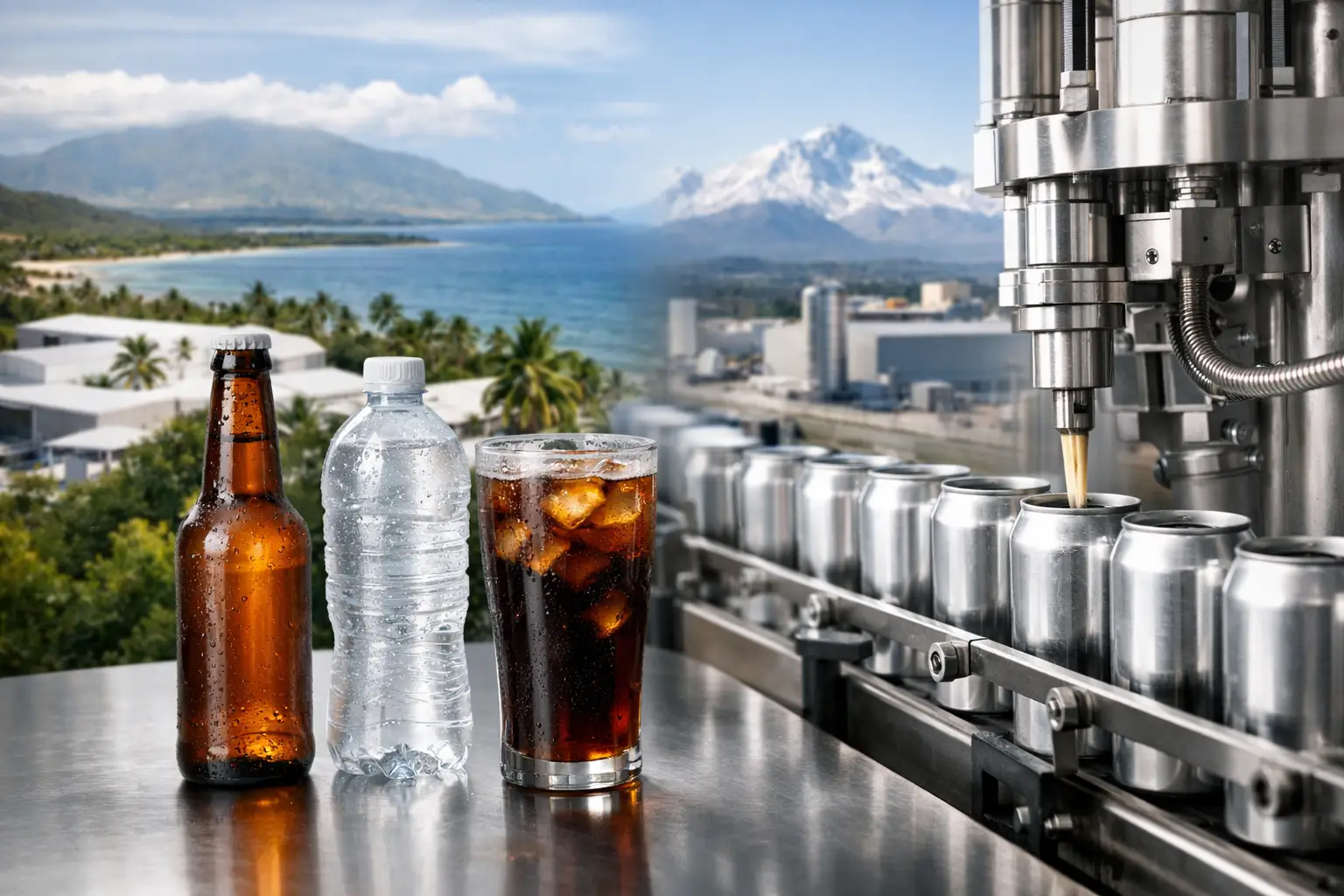
A beverage can win a buyer with one great first shipment and lose that same buyer when the second shipment tastes different, arrives late, or cannot support a regional rollout. For brands and channel partners, multi region beverage production is not simply a footprint claim. It is the operating discipline required to protect product integrity while supplying demand across markets.
For natural cocktails, sports drinks, functional energy beverages, and emerging wellness concepts, the stakes are especially high. Real ingredients require careful sourcing, controlled processing, and reliable handling. A formula that performs in one facility must deliver the same sensory profile, shelf stability, packaging quality, and compliance outcome in every market served.
Why Multi Region Beverage Production Matters
Production in more than one region gives a beverage business options when conditions change. Freight lanes tighten. Ingredient availability shifts. A retailer adds doors faster than forecast. Import rules change. A single-facility model can turn these events into missed deliveries and costly reformulation decisions.
A multi-region network creates supply flexibility closer to the point of demand. That can reduce transit exposure, improve replenishment speed, and make regional market entry more practical. It also gives procurement teams a stronger foundation for planning inventory, rather than relying on long lead times from one production source.
The value is not production redundancy for its own sake. The value is controlled capacity. Brands need the ability to allocate volume intelligently while keeping the beverage consumers expect. Distributors need confidence that a successful launch can move from trial placements to broad distribution without a breakdown in supply.
For a brand owner, regional manufacturing can also improve commercial decision-making. Smaller initial runs may support a market test, while proven SKUs can move into higher-volume automated production. This balance matters for premium beverages that need craft-level attention but must also meet the volume expectations of major retail, convenience, hospitality, and wholesale accounts.
Scale Only Works When Standards Travel
Multi region beverage production introduces a basic challenge: scale can multiply inconsistencies as easily as it multiplies output. The answer is not to treat each plant as an independent operation. It is to establish one product standard and enforce it through every stage of development, sourcing, production, and release.
A controlled product specification should define more than the ingredient list. It should address sensory targets, Brix and acidity ranges where relevant, carbonation requirements, fill levels, package tolerances, microbiological controls, shelf-life expectations, labeling requirements, and approved substitutions. The goal is to remove ambiguity before it becomes a production problem.
For clean-label and naturally positioned beverages, ingredient equivalency deserves particular attention. Fruit inputs, botanical extracts, natural flavors, sweeteners, and functional components can vary by origin and season. A supplier change that appears minor on paper can alter color, aroma, mouthfeel, or performance. Regional sourcing can be commercially valuable, but it must be evaluated against the formula rather than accepted as an automatic replacement.
Quality assurance must operate with the same discipline. Plants may have local teams and regional suppliers, yet their quality systems need shared methods for raw material approval, batch records, in-process checks, retained samples, finished-product testing, and corrective action. Consistent documentation makes it possible to trace a product issue quickly and protect the wider supply network.
This is where automated production and beverage craftsmanship must work together. Automation supports repeatability at speed. Technical beverage knowledge protects the product from becoming a generic liquid in a can or bottle. Neither is enough alone when a brand is built on real ingredients and a premium consumer experience.
Formula Transfer Is a Technical Process
Moving a beverage formula from one facility to another is not a paperwork exercise. Water chemistry, processing equipment, line speed, heat exposure, blending sequence, and packaging format can all affect the finished product. Even identical ingredient names do not guarantee identical behavior in production.
A disciplined transfer begins with a defined formula and process specification, then validates the product through pilot work and commercial-scale trials. Teams should compare the new production against the approved reference for taste, appearance, analytical values, stability, and package performance. If a correction is required, it should be documented and controlled, not improvised on the line.
The right approach depends on the beverage. A shelf-stable functional drink may require extensive validation around active ingredients and thermal processing. A carbonated cocktail may place more emphasis on flavor balance, carbonation retention, and can or bottle performance. A sports drink may require close control of electrolytes, sweetness, and drinkability. Product category changes the technical priorities, but not the requirement for consistency.
Regional Capacity Should Support Market Strategy
Manufacturing location affects more than freight cost. It shapes how quickly a business can respond to demand and how confidently it can commit to customers. A distributor evaluating a new portfolio wants differentiated products, but also needs assurance that supply will remain dependable after the initial order.
For US market growth, domestic or nearby regional capacity can improve responsiveness for off-premise accounts, foodservice operators, and hospitality groups. For international expansion, production across Europe, the United States, Latin America, and Asia can support regional access while reducing dependence on a single export route. UNC One Corp. applies this model to combine international production reach with the supply flexibility required for high-quality beverage programs.
Still, local production is not always the best choice for every SKU. A specialized ingredient may only be available from one approved source. A particular package format may be more efficient at a specific plant. In some cases, centralized production provides better cost control and stronger process consistency. The right network design considers total landed cost, lead time, duty exposure, local compliance, capacity, and the risk of disruption.
The point is to make those choices deliberately. Regional production should follow the commercial plan, not become a complexity layer that the business cannot manage.
Compliance Cannot Be Added at the End
Every market brings its own labeling, ingredient, deposit, tax, language, packaging, and food safety requirements. For beverage brands, a formula may be commercially ready but still unfit for sale in a target region because the label claim, nutrition panel, additive status, or package configuration is not compliant.
A capable manufacturing partner addresses regulatory requirements early in development. That reduces the chance of investing in packaging, production slots, or sales activity before the product is ready for its intended market. It also helps brands avoid making broad performance or wellness claims that cannot be supported under local rules.
Compliance planning should connect commercial, regulatory, quality, and operations teams. When those functions work in isolation, changes arrive late and create avoidable rework. When they work from the same launch plan, the organization can identify market-specific requirements while preserving the core brand identity.
What Buyers and Brand Owners Should Evaluate
The strongest manufacturing relationships are based on evidence, not capacity statements alone. Before selecting a multi-region production partner, buyers and brand owners should examine how the network is governed, how product specifications are transferred, and how quality decisions are made across facilities.
Ask whether the partner can demonstrate consistent production history in relevant beverage categories. Confirm the available packaging formats, minimum and maximum run sizes, quality controls, ingredient approval process, and ability to support scale after launch. Understand where the product will be manufactured, which ingredients are regionally sourced, and what contingencies exist if a site or supplier is disrupted.
Commercial transparency matters as much as technical competence. A strong partner will be clear about lead times, development stages, forecast expectations, cost drivers, and the trade-offs between localized production and centralized supply. No production network eliminates risk. The right one makes risk visible, manageable, and less likely to reach the customer.
Build for Repeat Orders, Not Just Launch Day
A successful first run proves that a beverage can be made. Repeat orders prove that the business can perform. That distinction is critical for brands moving from concept to distribution and for buyers adding products to demanding portfolios.
The most effective multi-region strategy starts with a product standard that does not move, then builds the supply options needed to serve changing markets. Real ingredients, verified processes, disciplined quality systems, and scalable capacity create the confidence to grow without compromising the beverage that earned the order in the first place.
Choose production capability that can support the next market, the next volume tier, and the next customer requirement while keeping the product exactly where it needs to be: consistent, compliant, and ready to perform.

No responses yet