
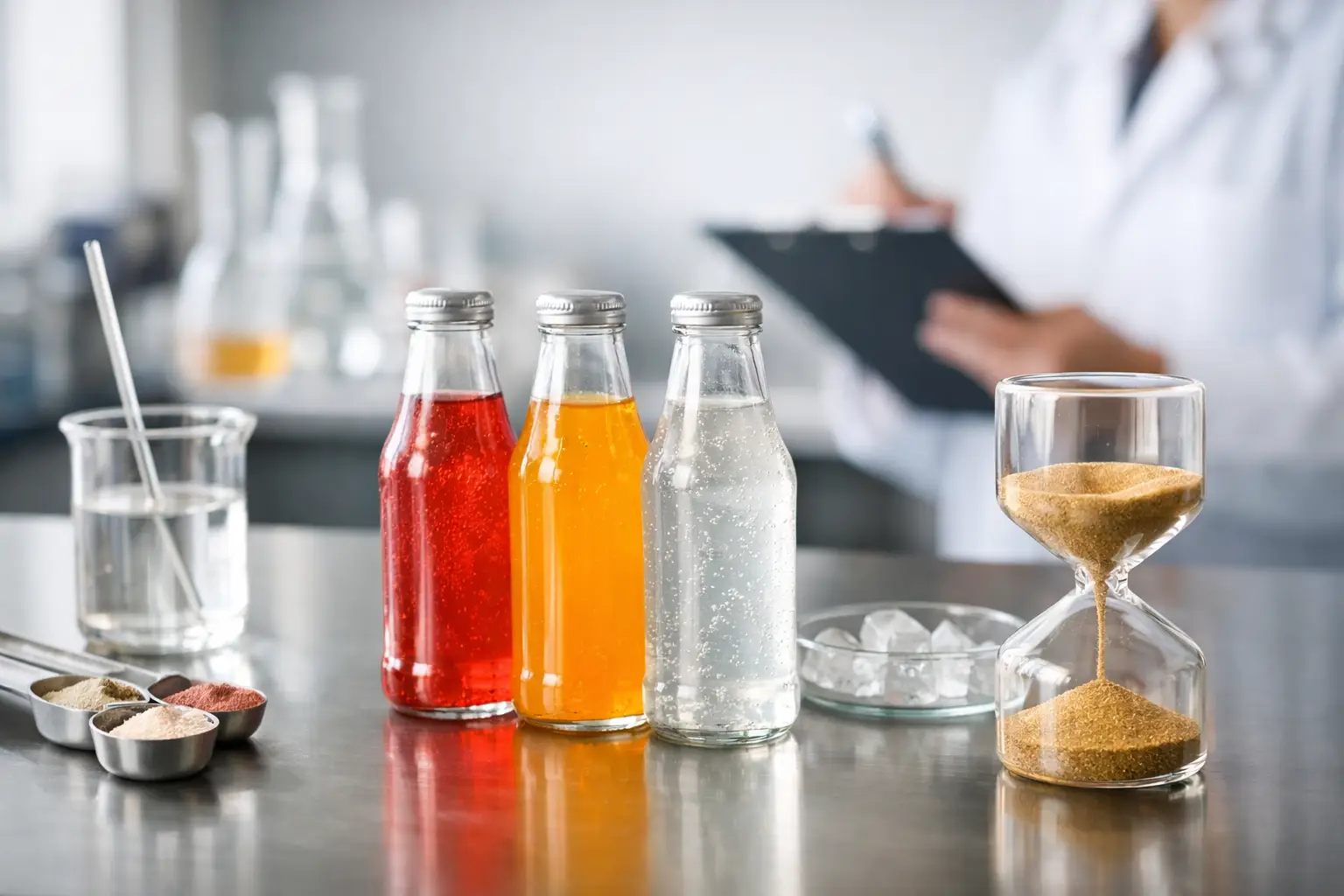
A beverage idea can begin with a single clear promise: a cleaner sports drink, a functional energy beverage with real ingredients, or a classic cocktail ready for modern retail. Turning that promise into a shelf-ready product takes disciplined development. So, how long does drink formulation take? For most commercial beverages, expect roughly 3 to 9 months. More complex products can require 12 months or longer.
The calendar is not driven by flavor alone. It is shaped by ingredient availability, regulatory requirements, shelf-life targets, packaging, manufacturing conditions, and the number of rounds needed to get the product right. A fast timeline is possible when the brief is clear and the supply chain is ready. Rushing the wrong steps, however, can create expensive delays after launch.
How Long Does Drink Formulation Take in Practice?
A straightforward flavored beverage using established ingredients and a proven production format may move from brief to first commercial production in 8 to 16 weeks. This usually assumes the formula has no unusual regulatory barriers, ingredients are available, and the brand can make decisions quickly.
A new functional drink often needs 4 to 9 months. Added vitamins, minerals, botanicals, electrolytes, protein, caffeine, adaptogens, or other active ingredients introduce more variables. The formula must taste right, remain stable over time, meet label claims, and perform consistently at production scale.
Alcoholic ready-to-drink products can also require additional time, particularly when the product uses natural juices, extracts, or ingredients that affect color and clarity. The liquid must be stable, the alcohol balance must be controlled, and the finished product must meet market-specific labeling and compliance requirements.
The most accurate answer is not a fixed number of weeks. It is a development plan built around the product’s technical risk. A simple concept with a decisive team can move quickly. A first-to-market functional formula with a complex ingredient deck deserves more time and testing.
The Stages That Set the Timeline
1. Product brief and feasibility
The first stage often takes one to three weeks, but it determines the quality of every decision that follows. The development team needs a clear brief: target consumer, flavor direction, nutrition facts, sweetener preferences, active ingredients, serving size, target retail price, package format, and intended markets.
This is where trade-offs should be addressed early. A no-sugar formula may need a longer flavor optimization process. A natural color system may behave differently under heat or light than a conventional alternative. A product intended for multiple countries may require changes to ingredients or claims. Clear priorities prevent formulation work from moving in circles.
Feasibility also includes an initial review of ingredient supply, cost, minimum order quantities, and production capability. A premium ingredient that cannot be sourced consistently is not a scalable solution, no matter how well it performs in a small sample.
2. Bench formulation and sensory development
Bench work typically takes two to six weeks for a relatively simple beverage and longer for products with challenging functional ingredients. This is the stage where the concept becomes a liquid.
Formulators build and refine prototypes, adjusting sweetness, acidity, aroma, mouthfeel, color, and finish. For functional beverages, they also manage the taste impact of active ingredients. Electrolytes can bring salinity or bitterness. Protein can affect texture. Botanical extracts can create sediment, haze, or a strong finish. The goal is not simply to mask these characteristics. It is to create a drink consumers will want to buy again.
Fast feedback matters. A brand that reviews samples promptly and makes clear decisions can save weeks. When feedback changes from one round to the next without a defined product standard, timelines expand and costs follow.
3. Ingredient qualification and compliance review
Ingredient qualification may happen alongside bench development, but it should never be treated as an afterthought. Depending on the formula and markets, this stage can take two to eight weeks.
The team verifies specifications, allergen information, certificates, country of origin, microbiological standards, and documentation needed for the finished product. Label language, nutrition panels, ingredient declarations, and permitted claims must align with the intended point of sale.
For a drink positioned around health or performance, claims require particular discipline. “Energy,” “hydration,” “natural,” and other consumer-facing statements must be supported and appropriate for the product and market. Good formulation protects the brand before the first case ships.
4. Pilot production and process validation
A formula that works in a laboratory must still work on an automated production line. Pilot production generally adds two to six weeks, depending on scheduling, packaging, and the number of adjustments required.
Commercial equipment introduces real production conditions: mixing order, shear, heat treatment, carbonation, filling speed, container headspace, and closure performance. These conditions can change flavor, texture, foam, color, or stability. Natural ingredients may be especially sensitive to processing.
Pilot runs expose whether the formula can be manufactured repeatedly at the desired volume. They also confirm practical details such as yield, production loss, filtration needs, and cleaning requirements. This is where craft credibility must meet industrial control. A product should deliver the same experience in every can or bottle, without compromise.
5. Shelf-life and stability testing
Shelf-life testing is often the longest critical path. Initial results may be available within weeks, but a full real-time shelf-life program can take as long as the intended shelf life. Accelerated stability testing can provide early direction, yet it does not replace a sound validation plan.
Testing evaluates microbial safety, pH, flavor retention, color stability, carbonation, sedimentation, separation, packaging interaction, and nutritional performance where relevant. A beverage that tastes excellent at filling but declines after several weeks is not ready for distribution.
The required duration depends on the product. A refrigerated drink, an ambient shelf-stable beverage, and a high-acid carbonated product each follow different technical paths. Packaging also matters. A formula in aluminum may behave differently than the same liquid in PET or glass.
6. Final specifications, packaging, and commercial production
Once the product and process are approved, the team finalizes production specifications, quality controls, artwork, case configuration, and purchasing plans. Allow two to six weeks for this final preparation, plus manufacturing lead time.
This phase is often delayed by packaging rather than liquid development. Printed cans, custom closures, cartons, and labels can have longer lead times than expected. Brands should begin packaging decisions early, while leaving enough flexibility to accommodate final regulatory information.
At UNC One Corp., development is approached as an execution program, not a flavor exercise. The objective is a beverage built on real ingredients, clear quality standards, and a manufacturing path that can support both premium positioning and commercial volume.
What Speeds Up Development Without Lowering Standards
The strongest way to shorten a timeline is to make the right decisions before samples are produced. A complete brief, defined target cost, confirmed market, and realistic packaging choice eliminate avoidable rework.
Using ingredients with established supply, documentation, and beverage applications also reduces risk. So does selecting a production format already proven at the intended facility. This does not mean every product should look like what is already on the shelf. It means innovation should be focused where it creates real consumer value.
A disciplined approval process is equally important. Limit the number of decision-makers, schedule sensory reviews in advance, and agree on what constitutes approval. Every sample round should answer a specific question: Is the sweetness correct? Does the active level meet the brief? Is the finish clean enough? Precision moves projects forward.
When a Longer Timeline Is the Better Business Decision
A longer formulation process is justified when the brand is building a product that must earn trust over time. New functional systems, sensitive natural ingredients, multi-market launches, and ambitious shelf-life requirements all deserve deeper validation.
The cost of extra development is usually lower than the cost of reformulation after distribution has begun. A failed stability test, inconsistent flavor profile, or unavailable ingredient can disrupt retailer relationships and put brand equity at risk. Quality is not a final check. It is built into the formulation timeline from the start.
For brands planning a launch, the practical target is to begin development at least six months before the desired production date. If the product includes novel functional ingredients, custom packaging, or international distribution, allow closer to nine to twelve months. The right partner will help define the critical path early, protect product integrity at every stage, and turn a strong concept into a beverage ready to perform in the market.

No responses yet