
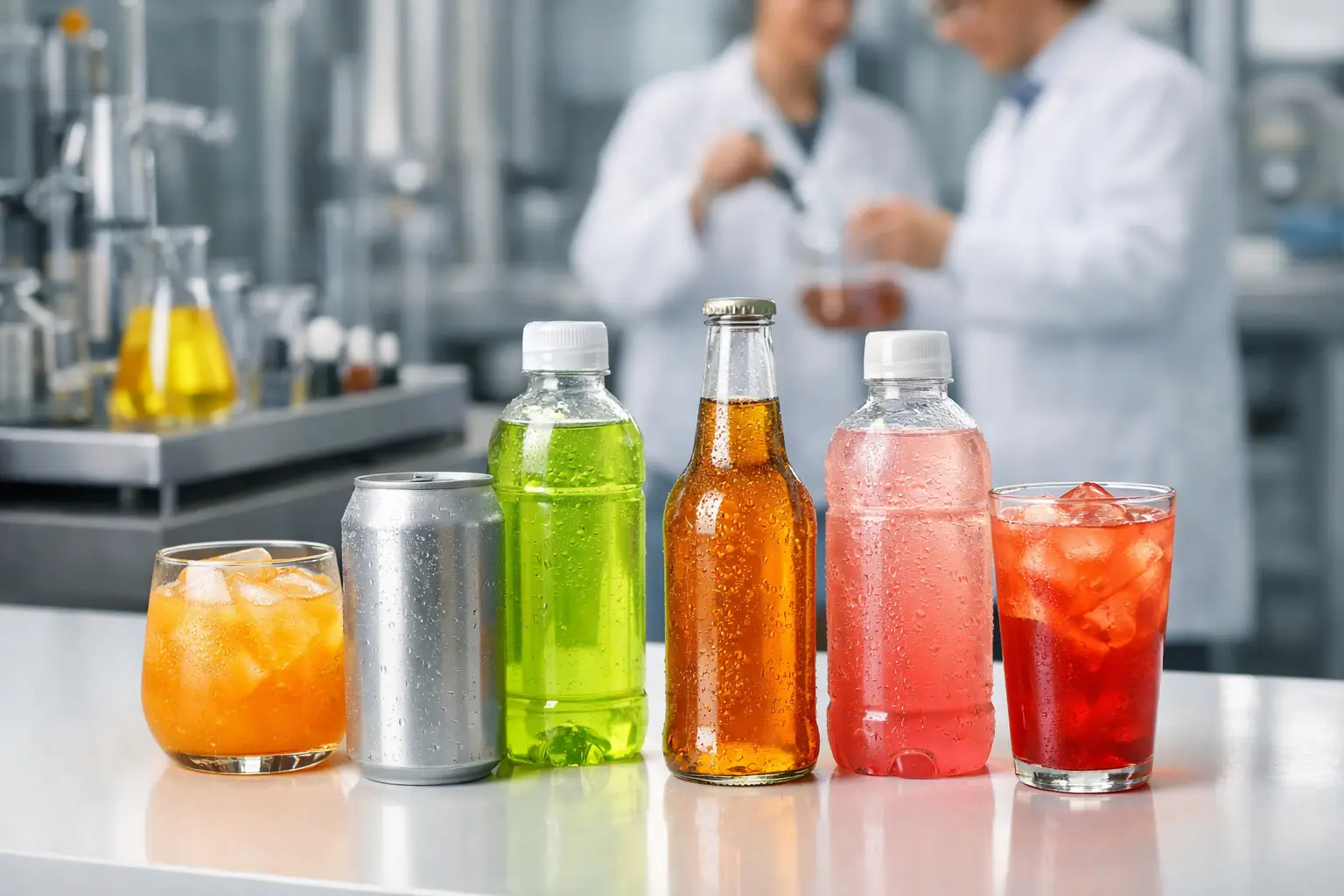
A strong beverage idea can fail for reasons that have nothing to do with taste. The formula may not hold up in production. Ingredients may not scale cleanly. Packaging may slow line speed. Compliance gaps may delay launch. That is why turnkey beverage development matters. It gives brands a structured path from concept to finished product, with quality, speed, and manufacturing discipline built in from the start.
For founders, private-label operators, and established beverage teams, the appeal is simple. You do not need to assemble a separate network for formulation, sourcing, regulatory review, production, and packaging. You work with one manufacturing partner that can carry the process end to end. That reduces friction, but more importantly, it reduces risk.
What turnkey beverage development actually includes
At a basic level, turnkey beverage development is the full-service creation and production of a beverage under one operating model. It typically begins with product strategy and formulation, then moves through ingredient sourcing, bench samples, pilot runs, regulatory review, packaging selection, production planning, and commercial manufacturing.
That sounds straightforward, but the details decide whether a product is launch-ready or stuck in revision. A drink that performs well in a small lab batch may separate, lose flavor impact, or shift color in scaled production. A formula built around clean-label goals may require trade-offs in shelf life or processing method. A packaging format that looks right for retail may create unnecessary cost in logistics or limit speed on the production line.
A capable partner addresses those issues before they become expensive. The point is not just to make a beverage. The point is to build one that can be manufactured consistently, shipped reliably, and sold with confidence.
Why brands choose turnkey beverage development
The main advantage is execution. Beverage launches involve technical and operational dependencies that are easy to underestimate. Product development is connected to sourcing. Sourcing is connected to lead times. Lead times affect production scheduling. Production constraints affect packaging choices and launch timing.
When those functions are split across multiple vendors, accountability gets diluted. If a formula fails at scale, the developer may point to the manufacturer. If packaging causes delays, the co-packer may point to procurement. Turnkey beverage development puts responsibility in one place. That improves communication, shortens decision cycles, and gives the brand a clearer line of control.
It also helps protect positioning. Many brands want natural ingredients, clean-label language, and premium taste, but they still need commercial pricing and dependable supply. Those goals can work together, but only if the development process is built around both product integrity and production reality. Real ingredients should still run efficiently. Premium quality should still be repeatable at volume. That balance is where experienced beverage manufacturing matters most.
The real work happens before the first production run
The strongest beverage programs are built upstream. Before the first commercial order, the right partner pressure-tests the concept against market fit, ingredient functionality, process requirements, and packaging compatibility.
Formulation is the obvious starting point, but formulation alone is not enough. A sports drink, cocktail, functional beverage, or energy concept needs to be evaluated for stability, sensory consistency, sweetener behavior, acidity, preservative approach, and target shelf life. If the drink includes active ingredients, botanicals, juice components, or natural colors, the margin for error gets smaller.
This is where trade-offs need to be addressed honestly. A cleaner ingredient deck may affect shelf stability. A higher juice content may improve taste and label appeal, but it may also change cost, filling conditions, and transportation sensitivity. Functional ingredients may support stronger claims, yet they can introduce bitterness, sediment, or interaction with other inputs. Good turnkey development does not hide those realities. It solves for them early.
Scale changes everything
Many beverage concepts look strong in a sample bottle. Fewer hold their quality once they move into commercial production. Scaling is not just multiplying a recipe. Mixing order, shear, temperature control, dwell time, and fill conditions can all affect the finished product.
That is why production capability should be part of development from day one. A manufacturer with automated high-speed capacity and practical knowledge of natural and functional beverages can build a formula around actual line conditions, not ideal lab assumptions. That reduces reformulation later and helps preserve product character from pilot to launch.
Scale also affects sourcing strategy. A promising ingredient may be available for test batches but not for a sustained national or multi-market rollout. A turnkey model should evaluate dual sourcing, lead-time exposure, and regional supply options before the product is locked. Otherwise, the brand may win distribution and still struggle to fulfill it.
Packaging is part of product performance
Founders often treat packaging as a branding decision. Buyers and experienced manufacturers know it is also an operational one. Can format, bottle type, closure, label application, case configuration, and pallet efficiency all affect cost and execution.
The right package depends on channel strategy. On-premise needs are not identical to retail needs. Club, convenience, grocery, and hospitality all bring different handling patterns, shelf expectations, and margin pressures. A package that supports premium shelf presence may not be the best fit for freight efficiency. A single-serve format may support trial, while a multi-pack may better serve household velocity.
Turnkey beverage development works best when packaging is chosen with manufacturing and distribution in mind. That means balancing appearance, durability, machine compatibility, and commercial practicality without compromising the brand promise.
Compliance cannot be an afterthought
For beverage brands, regulatory discipline is not optional. Labeling, ingredient statements, claims language, and market-specific requirements need to be accurate before launch, not corrected after product reaches customers.
This matters even more in functional beverages and health-oriented concepts. The stronger the positioning, the more carefully the claims framework needs to be handled. A responsible development partner helps align the formula, label, and product presentation with compliance requirements while protecting the brand from avoidable exposure.
The same principle applies to quality systems. Documentation, batch consistency, traceability, and process controls are not back-office details. They are part of what buyers and channel partners are really purchasing: confidence. If a product cannot be reproduced consistently, the brand is not scalable, no matter how good the concept looks in a pitch deck.
What to look for in a turnkey partner
Not every manufacturer offering development support is built for full commercial execution. Some are strong at pilot work but limited on throughput. Others can run volume but offer little support in formulation or regulatory preparation. The right fit depends on your product, your channel plan, and your growth horizon.
In practice, the best partner will combine formulation capability, sourcing discipline, packaging knowledge, quality control, and scalable manufacturing under one operating structure. Multi-region production can also be a major advantage, especially for brands managing international growth, supply flexibility, or regional distribution demands.
That combination matters because speed without control creates problems, and quality without capacity limits opportunity. UNC One Corp. operates in the middle of that equation, where natural product standards and high-volume production have to work together without compromise.
Turnkey beverage development is really about control
A beverage brand does not gain strength from having the most vendors involved. It gains strength from reducing uncertainty. The more aligned the development, sourcing, compliance, packaging, and manufacturing process is, the easier it becomes to protect margins, maintain quality, and grow into larger accounts.
That does not mean every project should move fast. Some should move carefully. A complex formula, a new functional position, or a premium ingredient strategy may need more testing before scale. The value of a turnkey model is not speed by itself. It is disciplined execution at the right pace.
If you are building a beverage for real distribution, not just a soft launch, the question is not whether you need manufacturing support. The question is whether your development path is strong enough to carry the product from concept to repeatable supply. The brands that win long term are usually the ones that treat product quality and production quality as the same job.

No responses yet