
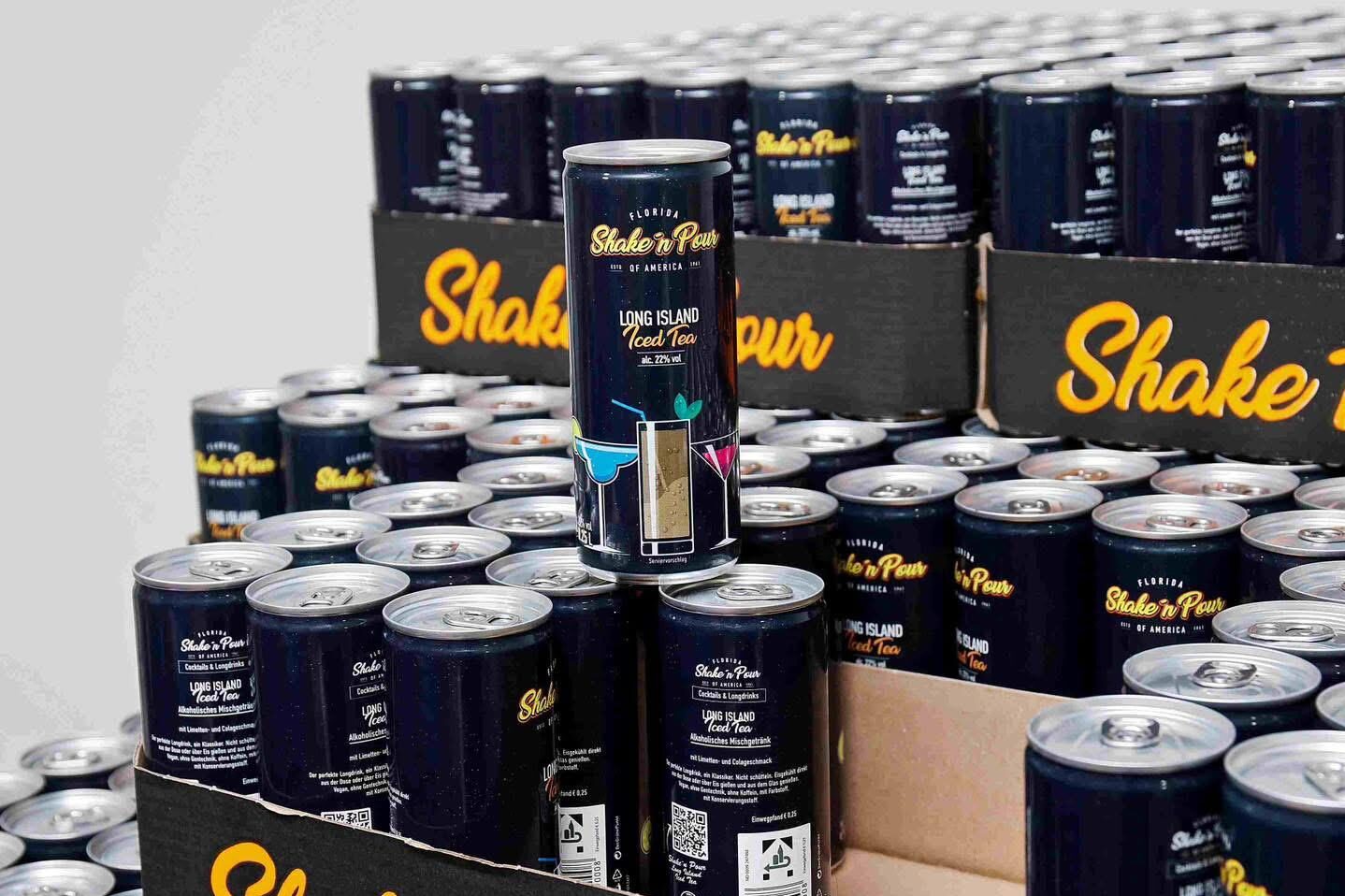
Shake’n Pour brings timeless cocktail classics to the ready-to-drink (RTD) market – without compromising on taste, quality, or ingredients. Each recipe follows the official guidelines of the International Bartenders Association (IBA), ensuring an authentic bar experience in every sleek 8.4 fl. oz. can.
The RTD alcohol category is crowded, but not every product is built to last. Buyers are under pressure to find drinks that meet clean-label expectations, deliver consistent taste, and scale across channels without quality drift. That is where shake’n pour classic natural RTD cocktails & long drinks stand apart.
For importers, distributors, retailers, and hospitality groups, the real question is not whether RTD demand exists. It does. The question is which products can hold premium positioning while moving efficiently through modern supply chains. In that environment, a natural classic cocktail line has to do more than look good on a shelf. It has to prove itself in formulation, production, compliance, and repeat purchase performance.
Target Markets
- Hospitality – Bars, restaurants, hotels, catering, event venues
- Retail – Grocery stores, liquor stores, convenience chains, club stores
- Foodservice – Distributors, stadiums, arenas, corporate cafeterias
- Specialty – Kosher retailers, vegan establishments, health-focused outlets
Why Shake’n Pour?
For Consumers:
- Authentic IBA cocktail taste – no mixology degree required
- Clean, natural ingredients – no artificial anything
- Perfectly portioned – consistent flavor every time
- Portable and convenient – grab, shake, pour, enjoy
For Retailers & Distributors:
- Science-backed formulations from a food scientist
- Clean label meets consumer demand for transparency
- Kosher, non-GMO, and vegan options available
- Diabetes-friendly (on demand) line opens additional market segments
- Produced in the USA – Fort Myers, Florida
- Generates strong returns.
- Delivers exceptional yield.
- Produces high profitability.
Shake’n Pour occupies a unique space in the rapidly growing RTD cocktail category, market-leading in Europe.
What makes Shake’n Pour Classic Natural RTD Cocktails different
Classic cocktails are familiar by design. That familiarity creates a higher standard. If a Mojito, Gin Tonic, or Rum Cola does not taste balanced, the consumer notices immediately. There is very little room to hide behind novelty.
That is why the value of shake’n pour classic natural RTD cocktails starts with product integrity. Real ingredients, recognizable flavor structure, and disciplined production matter more than trend-driven branding. Natural positioning only works when it is supported by a stable formulation and reliable sensory results at a commercial scale.
For channel partners, this has direct business value. A product that combines classic cocktail recognition with natural ingredient credibility is easier to place across multiple environments. It can work in retail coolers, convenience formats, leisure venues, on-premise menus, and travel-related channels because consumers do not need to be educated about the drink. The purchase decision is faster, and the premium is easier to justify.
The long drink segment adds another advantage. Long drinks sit in a useful space between sessionability and flavor impact. They appeal to consumers who want refreshment, lower complexity, and recognizable alcohol cues without the ritual of preparing a full cocktail. That gives buyers more flexibility in assortment planning.
Why classic natural RTD cocktails & long drinks fit current demand
Consumer expectations have shifted from novelty alone to transparency with taste. In alcoholic beverages, that means people increasingly read ingredient claims, pay attention to sweetness, and notice whether a product tastes engineered or authentic. Natural RTD cocktails benefit from this shift, but only when the product performs in the glass.
There is also a practical retail reality. Shelf competition is intense, and SKU rationalization is real. Products that survive are usually the ones that deliver three things at once: fast product recognition, consistent reorder potential, and dependable supply. A classic natural RTD line checks those boxes more effectively than highly experimental flavor concepts that may generate trial but fail on repeat.
For on-premise operators, labor pressure is another major factor. Bartender shortages, training inconsistency, and service speed all affect margins. A well-executed RTD cocktail or long drink gives operators a way to protect quality while reducing preparation variability. That only works, however, if the drink tastes premium enough to preserve menu credibility. Natural formulation and controlled production are central to that equation.
The production challenge behind natural RTD quality
Natural claims are commercially attractive, but they raise the technical bar. Real ingredients can introduce variation in flavor, color, stability, and shelf behavior. A product positioned as premium and natural cannot rely on shortcuts that undermine sensory consistency.
This is where manufacturing discipline becomes the difference between a concept and a viable brand. Ingredient sourcing has to be controlled. Flavor balance has to remain stable across batches. Alcohol integration, sweetness profile, carbonation, where applicable, and packaging compatibility all need to be validated under real production conditions.
For buyers, this matters because inconsistency creates hidden costs. Returns, customer complaints, shorter shelf confidence, and channel hesitation can damage more than one SKU. They can affect supplier trust. For brand owners, it matters because natural positioning raises expectations that the product must continue to meet at larger volumes.
A credible partner in this category needs to combine craft-level product standards with industrial repeatability. That means process control, audited quality systems, regulatory awareness, and enough manufacturing capacity to support growth without reformulating the product into something weaker or less distinctive.
shake’n pour classic natural RTD cocktails & long drinks in multi-channel distribution
Not every beverage built for retail performs in hospitality. Not every on-premise success translates to off-premise velocity. The strength of classic natural RTD cocktails and long drinks is that they can bridge both when positioned correctly.
In off-premise, the value is immediate. Consumers want convenience, but they also want a drink that feels more elevated than basic refreshment. Familiar cocktail architecture supports impulse purchase, while natural cues support premium trade-up. Packaging, flavor clarity, and ABV strategy all influence how broadly the line can expand.
In on-premise, the role is different. Here, speed and consistency often matter as much as branding. Hotels, event venues, beach clubs, casual dining locations, and entertainment spaces all benefit from drinks that can be served quickly with predictable quality. RTD formats reduce execution risk, especially in high-volume service windows.
There are trade-offs. Some venues will still prioritize made-to-order cocktails for theater and customization. Some retailers will focus harder on price than on ingredient quality. But for many operators and buyers, the strongest position sits in the middle: premium enough to stand out, efficient enough to scale.
What buyers should evaluate before listing a natural RTD line
A strong product pitch is not enough. Commercial buyers need evidence that the line can sustain placement. The core evaluation usually comes down to product quality, operational reliability, and regulatory readiness.
Taste remains first. If the classic serve does not meet expectations, repeat sales will be limited; no matter how clean the label looks, that comes down to formulation credibility. Buyers increasingly want to understand what natural means in practice, not just as a front-label claim.
Supply confidence is just as important. A promising RTD program loses value quickly if production cannot support seasonal peaks, meet export requirements, or support a wider rollout. This is especially relevant for distributors and retail groups managing multiple regions or mixed channel demand.
Then there is compliance. Alcohol products carry packaging, labeling, and market-entry requirements that vary by jurisdiction. A capable manufacturing and brand partner should be prepared for that complexity from the start, rather than treating it as a late-stage obstacle.
Why manufacturing scale matters in premium RTD alcohol
Premium does not mean small. In fact, many of the most successful beverage programs fail when they try to grow beyond limited production models. Quality may be excellent at the pilot level, but scaling introduces new pressure on ingredients, lead times, line efficiency, and quality control.
That is where experienced beverage manufacturing becomes a strategic asset rather than a back-end function. Buyers want assurance that a supplier can support both initial launch and expansion. Brand owners want to know that a winning formula will not need to be compromised to hit commercial volume.
The best operators in this space understand both sides. They know how to maintain classic cocktail integrity while managing high-speed production, packaging consistency, and international supply requirements. That balance is not easy. It requires process discipline, not marketing language.
UNC One Corp. operates in exactly that space, combining natural beverage standards with scalable production reach across multiple regions. For buyers and brand partners, that means premium positioning supported by manufacturing depth rather than limited by it.
A stronger fit for brands building in RTD
For entrepreneurs, private-label operators, and beverage companies entering the alcohol RTD space, classic natural cocktails and long drinks offer a smarter launch platform than many trend-dependent concepts. The category is familiar, commercially proven, and broad enough to support differentiated execution.
What matters is how the product is built. Real ingredients, strong sensory discipline, packaging alignment, and production planning all shape whether a line can move from idea to repeatable revenue. The right manufacturing partner helps reduce risk at each step, from formulation through commercialization.
That is also why the category remains attractive to established buyers. It answers a clear market demand without asking the consumer to learn a new drinking ritual. When the product is executed correctly, it delivers what the market wants now: convenience, quality, familiarity, and credibility without compromise.
In RTD alcohol, novelty can create attention. Consistency creates business. Classic natural cocktails and long drinks win when they do both.
The Shake’n Pour Promise
“No shortcuts. No artificial ingredients. No compromise on taste. Just classic cocktails made right – from our family of scientists to your glass.”
Call to Action
Distributors & Retailers: Contact UNC One Corp. for samples, pricing, and distribution opportunities.

No responses yet