
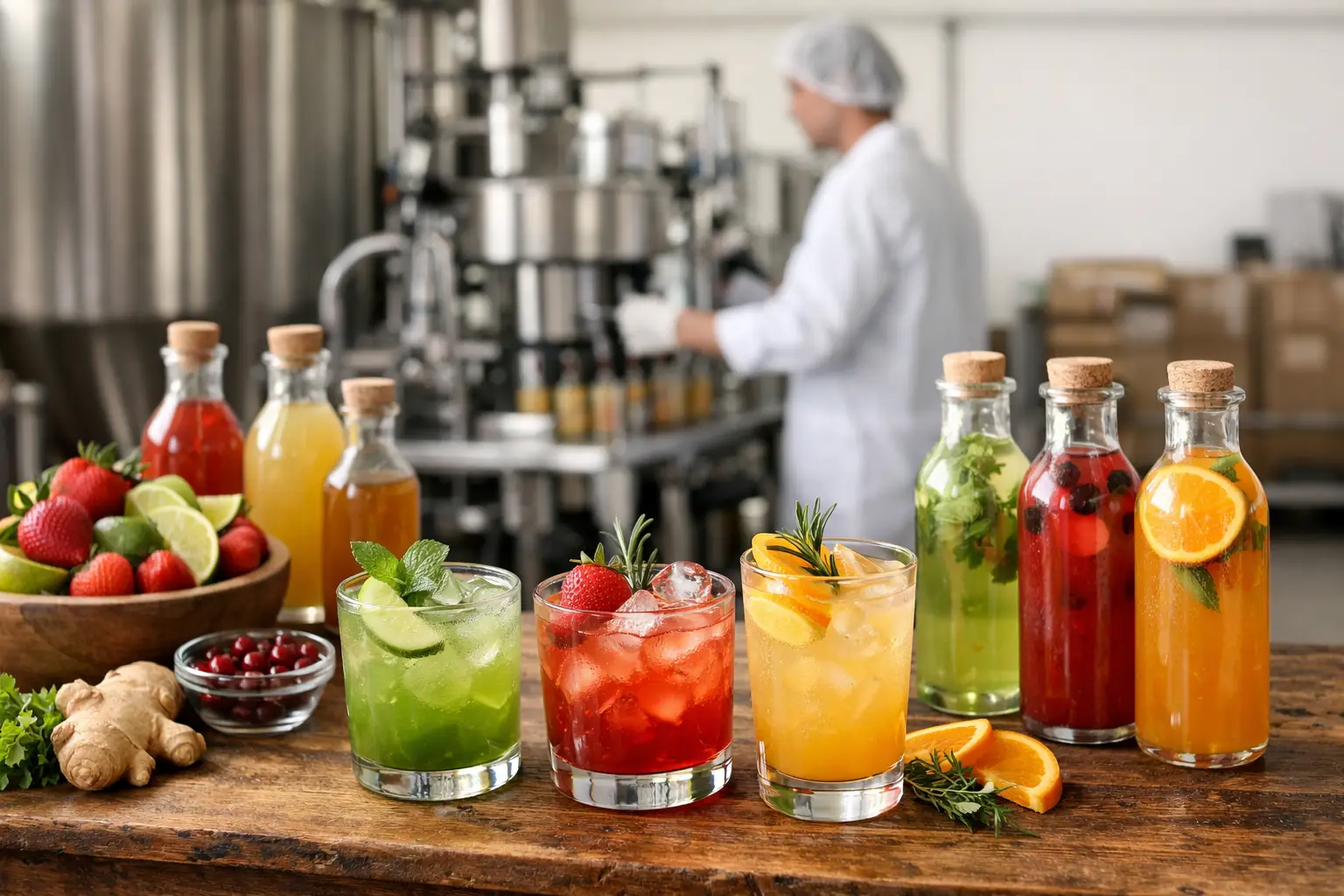
Shelf space is tighter, buyer scrutiny is sharper, and consumers read ingredient panels faster than ever. That is why choosing an all natural cocktail manufacturer is no longer a branding detail. It is a supply, quality, and growth decision that affects formulation, compliance, margin, and long-term market credibility.
For importers, distributors, hospitality groups, and emerging beverage brands, the challenge is rarely just making a drink that tastes good. The harder part is producing a clean-label cocktail at commercial scale without losing ingredient integrity, process control, or speed to market. Natural positioning creates real opportunity, but it also raises the standard across sourcing, processing, shelf stability, packaging, and documentation.
What an all natural cocktail manufacturer should deliver
An all natural cocktail manufacturer should do more than blend ingredients and fill cans or bottles. The right partner should protect the product concept from first formulation through final packaged goods. That means understanding how natural juices, extracts, sweeteners, and flavor systems behave under production conditions, and how those inputs hold up over time across different distribution environments.
This matters because natural cocktails are less forgiving than conventional alternatives built on artificial stabilizers, flavors, and colors. A recipe that performs in a benchtop sample can fail quickly in scaled production if acid balance, sweetness, particulate load, or thermal treatment are not managed correctly. What looks simple on paper often becomes complex once the product has to survive transport, storage, retail handling, and real-world consumption conditions.
A qualified manufacturer should also be able to translate brand language into technical execution. Claims such as all natural, clean label, premium, and craft-inspired need to be backed by ingredient selection, process discipline, and consistent sensory outcomes. If the manufacturer cannot protect that standard at volume, the positioning will not hold in the market.
Natural claims require discipline, not just marketing
The term natural carries commercial value, but it also invites closer review from buyers and regulators. Brands entering this category need a manufacturer that understands the difference between a marketable idea and a defensible product.
Ingredient sourcing is the first test. Real fruit components, natural flavors, botanical extracts, and sweetening systems must be selected with consistency in mind. Seasonal variation, origin differences, and supply volatility can all change color, aroma, and taste. A manufacturer with mature procurement and quality control systems can reduce those variables before they turn into finished-goods problems.
Processing is the second test. Natural cocktails often depend on a narrow balance between flavor freshness and microbiological stability. That balance may require pasteurization, filtration, hot fill, tunnel processing, or other controls depending on the formula and package format. There is no universal answer. The right method depends on alcohol level, pH, sugar content, ingredient sensitivity, and intended shelf life.
Documentation is the third test. Buyers, distributors, and retail partners increasingly expect clarity on specifications, batch consistency, compliance, and production standards. An all natural claim that cannot be supported operationally creates risk for everyone in the chain.
Where brands get stuck when scaling natural cocktails
Most brands do not struggle with vision. They struggle with translation. A founder may know the target taste profile, the audience, and the design language, yet still hit a wall when it is time to commercialize.
One common issue is ingredient behavior at scale. Fresh-tasting citrus notes may flatten in production. Botanical complexity may fade after processing. Natural sediment may appear in a way that is technically acceptable but commercially problematic. These are not minor details. They shape whether the final product feels premium or inconsistent.
Another issue is throughput. Small-batch methods can create an excellent sample, but they do not always support efficient, repeatable output. A manufacturer needs to bridge craft credibility with industrial production capability. Without that combination, a brand may face a difficult choice between quality and capacity.
Lead times and network resilience also matter. A single-site production strategy can work for a limited launch, but larger regional or international distribution often requires more flexibility. Multi-region manufacturing can reduce freight complexity, improve service levels, and create a buffer against disruptions. For brands planning real distribution growth, that flexibility becomes a strategic advantage rather than a convenience.
How to evaluate an all natural cocktail manufacturer
The most reliable evaluation starts with three questions. Can the manufacturer produce a clean, stable product with real ingredients? Can it do so consistently at the required volume? Can it support the commercial realities of your channel strategy?
Formulation capability is critical. Some manufacturers are strong operators but weak development partners. Others can develop a promising concept but struggle with process repeatability. Ideally, you want both. The best partner can refine flavor, sweetness, mouthfeel, and functional performance while keeping the formula practical for production and compliant for the intended market.
Packaging capability is equally important. Cans, glass bottles, and other formats each create different technical and commercial conditions. The package affects oxygen exposure, light protection, line efficiency, freight economics, and channel fit. A manufacturer should not treat packaging as an afterthought. It should be part of the product strategy from the beginning.
Quality systems deserve direct scrutiny. Ask how ingredients are qualified, how batches are controlled, how deviations are handled, and how records are maintained. Serious manufacturing partners do not speak in generalities here. They operate with specifications, tolerances, validation processes, and traceability.
Capacity planning should also be discussed early. Some brands wait too long to ask about production windows, minimum runs, scaling thresholds, and contingency planning. That usually leads to avoidable pressure when demand starts to move. A manufacturer that can support both launch volumes and expansion phases gives the brand a cleaner path forward.
Why scale matters in natural beverage production
Scale is often misunderstood in premium beverage categories. Some buyers assume scale weakens authenticity. In reality, scale only becomes a problem when process control is poor. A disciplined manufacturer can preserve premium standards while delivering the volume modern distribution requires.
That is especially true in ready-to-drink cocktails, where retail and on-premise channels expect consistency every time. If one batch leans sweeter, darker, or flatter than the previous one, the market notices. Consistency is not the enemy of craftsmanship. It is proof that the production system is working.
This is where manufacturing infrastructure matters. Automated high-speed production, when paired with strict quality oversight, allows brands to maintain product integrity without sacrificing operational efficiency. For channel partners, that means fewer supply disruptions and more confidence in repeat orders. For brand owners, it means growth without reengineering the business every time demand increases.
A company like UNC One Corp. operates in this space with a clear advantage: heritage in beverage production, natural product focus, and international manufacturing reach. That combination matters when buyers want premium positioning supported by real execution, not just a concept deck.
The trade-offs buyers and brand owners should consider
Not every natural cocktail program should be built the same way. A highly differentiated formula with sensitive ingredients may require a slower, more controlled production model. A broader commercial line intended for large retail distribution may benefit from standardized inputs and more efficient processing. Neither approach is inherently better. The right choice depends on the brand promise, channel mix, and margin structure.
There is also a practical balance between ingredient purity and shelf-life expectations. The cleanest possible formulation may not always deliver the distribution durability a buyer needs. On the other hand, overengineering for stability can strip away the sensory quality that made the product compelling in the first place. A good manufacturer helps navigate that balance instead of forcing a one-size-fits-all answer.
Cost is another reality. Natural ingredients, quality controls, and premium packaging can raise unit economics. That does not mean the model fails. It means the product has to be built with clear channel logic and pricing discipline. Strong manufacturing support helps brands avoid hidden inefficiencies that erode margin long before the product reaches scale.
What the right manufacturing partner changes
The right all natural cocktail manufacturer reduces friction across the entire commercialization process. Product development becomes faster because technical limitations are identified early. Quality becomes more predictable because systems are built to manage variation. Expansion becomes more realistic because capacity, compliance, and supply planning are already part of the operating model.
For distributors and buyers, that translates into confidence. The product tastes right, looks right, ships reliably, and supports premium positioning. For brand owners, it creates room to focus on market building instead of constantly fixing production issues.
Natural cocktails are not a passing premium cue. They reflect a broader demand for beverages made with real ingredients and clear standards. The brands that win in this category will not be the ones with the loudest claims. They will be the ones backed by manufacturing discipline, product consistency, and the ability to scale without compromise.
If you are evaluating your next launch or supply partner, start with the product and follow the process all the way to the shelf. That is usually where the right decision becomes obvious.

No responses yet