
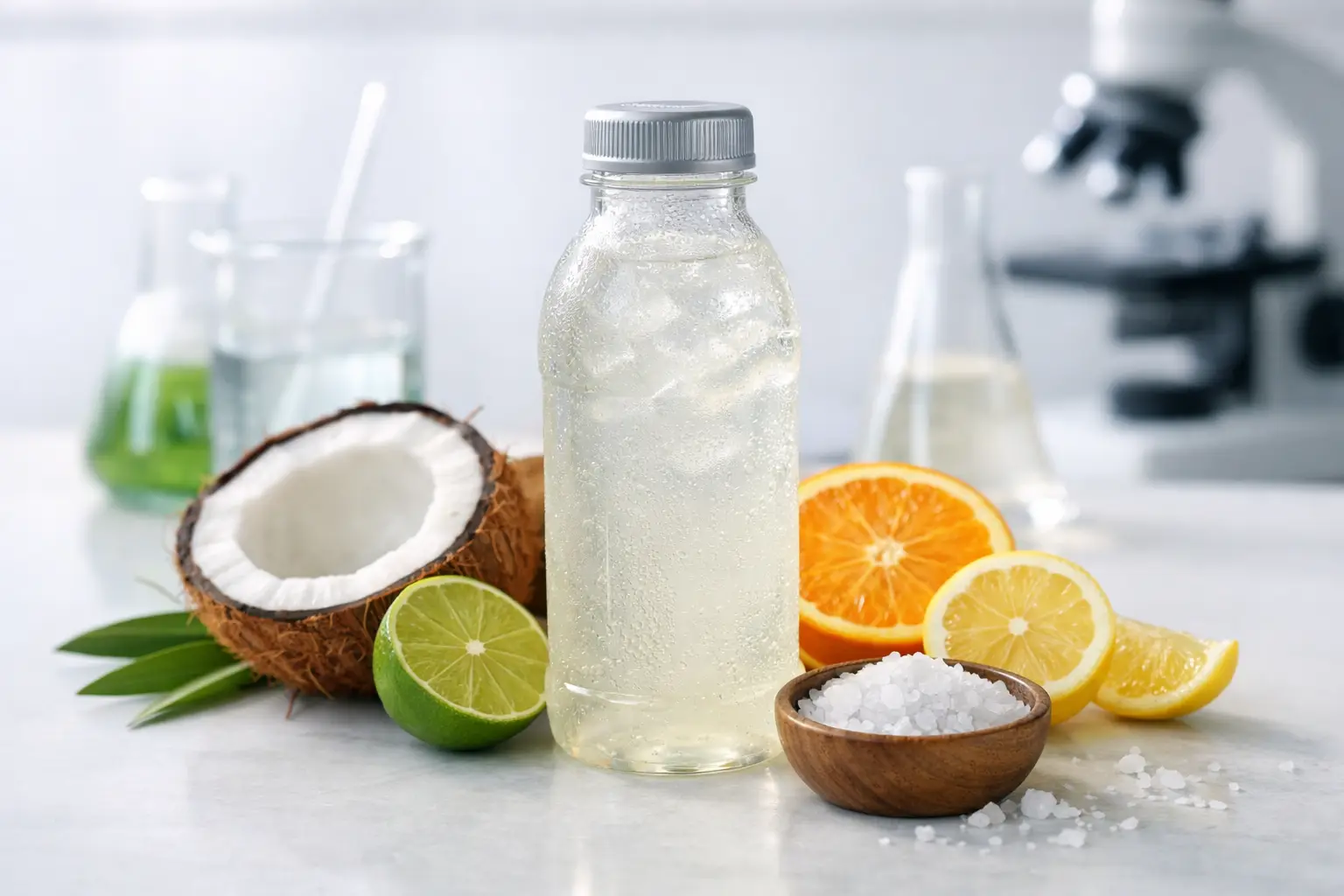
A natural electrolyte drink can win a buyer on the first read of the label and lose them on the first sip. That is why natural electrolyte drink development has to balance three pressures at once – clean-label expectations, functional performance, and production reality. If any one of those fails, the product does not hold up in market.
For beverage brands, distributors, and procurement teams, this category looks simple from a distance. Consumers want hydration, recognizable ingredients, and less artificial positioning. But once development begins, the real work starts. Electrolyte source, sugar level, flavor masking, shelf stability, regulatory review, and line efficiency all shape whether a concept becomes a repeat-purchase product or stalls at pilot stage.
What natural electrolyte drink development really requires
The strongest products in this segment are built backward from use case, not trend language. A beverage designed for active hydration after exercise needs a different mineral profile, sweetness level, and package strategy than a daily wellness drink sold in retail coolers or a better-for-you option placed in hospitality channels.
That distinction matters because electrolytes are not just a marketing claim. Sodium, potassium, magnesium, and calcium each influence performance, taste, and formulation behavior differently. Sodium supports hydration effectiveness, but it can quickly push flavor in a salty direction. Potassium helps round out the functional profile, yet certain sources bring bitterness. Magnesium can strengthen the product story, though it often creates sensory and stability challenges at meaningful inclusion rates.
Natural positioning adds another layer. Consumers increasingly expect ingredient statements built around fruit bases, coconut water, sea salt, mineral-rich concentrates, and natural flavors instead of synthetic systems. That creates opportunity, but it also narrows formulation flexibility. Natural ingredients can vary by crop, region, and season. A formula that performs well in the lab must still perform consistently at production scale.
Choosing ingredients that support both label and function
Ingredient selection is where many concepts either gain credibility or create avoidable weakness. A clean label only works if the drink still hydrates well, tastes finished, and survives distribution.
Coconut water is a common starting point because it carries natural potassium and immediate consumer recognition. It also contributes flavor and color, which can support some profiles and conflict with others. In a tropical blend, that can be an advantage. In a crisp citrus profile aimed at a broader mainstream audience, it may require heavier flavor adjustment.
Sea salt is another frequent choice, especially for sodium delivery and natural positioning. It helps support the hydration story, but dosage needs discipline. Too little and the functional claim feels thin. Too much and the product tastes medicinal or briny. The same is true for magnesium and calcium sources. Natural origin is valuable, but not if the finished beverage becomes chalky, cloudy, or difficult to drink repeatedly.
Sweetening strategy is just as important. Many brands want reduced sugar, but electrolyte drinks sit in a category where taste and absorption expectations still matter. A very low-sugar formula can work, yet only if body and flavor are carefully rebuilt. Juice, fruit concentrates, cane sugar, and natural non-nutritive sweeteners all come with trade-offs in taste, cost, calorie load, and process behavior. There is no universal best option. The right choice depends on target consumer, channel, price point, and nutrition goals.
Taste is not secondary in natural electrolyte drink development
Hydration products are often purchased for function and repurchased for taste. That makes sensory performance a commercial issue, not just a formulation detail.
Natural minerals can create bitterness, salinity, metallic notes, and dry finish. Natural flavors can soften those edges, but they need to be selected with the base system in mind. Citrus, berry, and tropical profiles often work well because they tolerate some mineral presence. More delicate flavor directions can be harder to execute cleanly.
Acid balance also carries more weight than many early-stage brands expect. Acids shape brightness, perceived sweetness, and flavor lift, but they also interact with mineral systems. Push acidity too high and the drink can feel sharp or thin. Pull it back too far and the profile may taste flat, especially in reduced-sugar applications. The goal is not just a good bench sample. The goal is a product that drinks cleanly from first sip to full bottle.
This is where disciplined iteration matters. One pilot that tastes acceptable is not enough. A serious development process tests flavor under realistic fill conditions, holds samples over time, and checks whether the product remains attractive after transport and storage.
Formulation decisions have manufacturing consequences
A formula that works on paper may still be inefficient, unstable, or expensive to run. In natural electrolyte drink development, scale has to be part of the conversation early.
Mineral systems can affect solubility and tank behavior. Fruit components can introduce sedimentation or variation. Natural colors may shift over shelf life. Certain ingredients may require tighter sourcing controls or longer procurement lead times. None of that means the formula is wrong, but it does mean the product needs to be engineered for production, not just concept approval.
This is especially important for brands planning multi-market growth. If a beverage needs to run in different regions, ingredient availability and regulatory acceptance must be considered up front. A formula that depends on one narrow ingredient source can create supply risk. A product with highly sensitive processing conditions can create avoidable downtime and inconsistent fill quality.
That is why experienced manufacturers look at beverage development through both technical and operational lenses. The product has to be clean-label and effective, but it also has to run efficiently on automated lines, maintain batch consistency, and hold quality across volume.
Claims, compliance, and label discipline
Natural hydration products operate in a claim-sensitive space. Buyers want a clear product story, but they also expect that story to stand up to review.
Words like natural, functional, hydration, energy-supporting, or recovery-oriented cannot be handled casually. Ingredient choice, nutrition panel design, and claim language need to align. If the formula includes juice, sweeteners, botanical components, or functional additives, those inputs affect how the product is labeled and marketed.
This is where disciplined development protects brand value. A product with strong shelf appeal but weak substantiation creates risk for retailers, distributors, and brand owners. Clear documentation, quality specifications, and regulatory review should be built into development from the start, not added at the end as a cleanup step.
For commercial buyers, this matters because reliability is part of the product. A drink that can be approved, ordered, and replenished without label disputes or reformulation surprises is far more valuable than a concept that only looks good in a pitch deck.
Packaging and channel fit shape the final product
Electrolyte drinks do not succeed in isolation from packaging and channel strategy. The same liquid can perform very differently depending on whether it is sold in single-serve PET, cans, multipacks, foodservice formats, or specialty retail placements.
Cold-chain assumptions, shelf-life targets, freight economics, and merchandising conditions all affect development choices. A premium natural product for fitness retail may justify a different ingredient cost than a high-volume item built for mass distribution. An on-premise format may prioritize taste and presentation differently than a club-store pack built around value and throughput.
Channel fit should guide decisions on sweetness, pack size, carbonation status, and even flavor range. Not every electrolyte drink needs to be broad-market. But every product should be precise about who it is for and where it is meant to win.
Why the right development partner changes the outcome
For many brands, the challenge is not identifying the trend. It is converting a good concept into a repeatable, compliant, and scalable product. That requires formulation expertise, ingredient discipline, pilot validation, sourcing strength, and manufacturing capacity in the same process.
A capable partner does more than blend ingredients. They pressure-test the formula against taste, cost, shelf life, line efficiency, and future expansion. They know when a premium ingredient is worth the investment and when it creates complexity without enough consumer value. They also know that speed only matters if quality holds.
This is where a manufacturing-forward approach creates real advantage. Companies such as UNC One Corp. operate at the point where beverage innovation meets industrial execution. That matters in a category where natural claims, functional expectations, and supply-chain performance all have to work together without compromise.
Natural electrolyte drink development is not about making the label look cleaner than the competition. It is about building a beverage that tastes right, performs as promised, and scales with confidence. The brands that get this right do not chase the category. They define their place in it, one disciplined formulation decision at a time.
The best next step is usually the simplest one: start with the product standard you refuse to compromise, then build the formula and supply chain around that standard.

No responses yet