
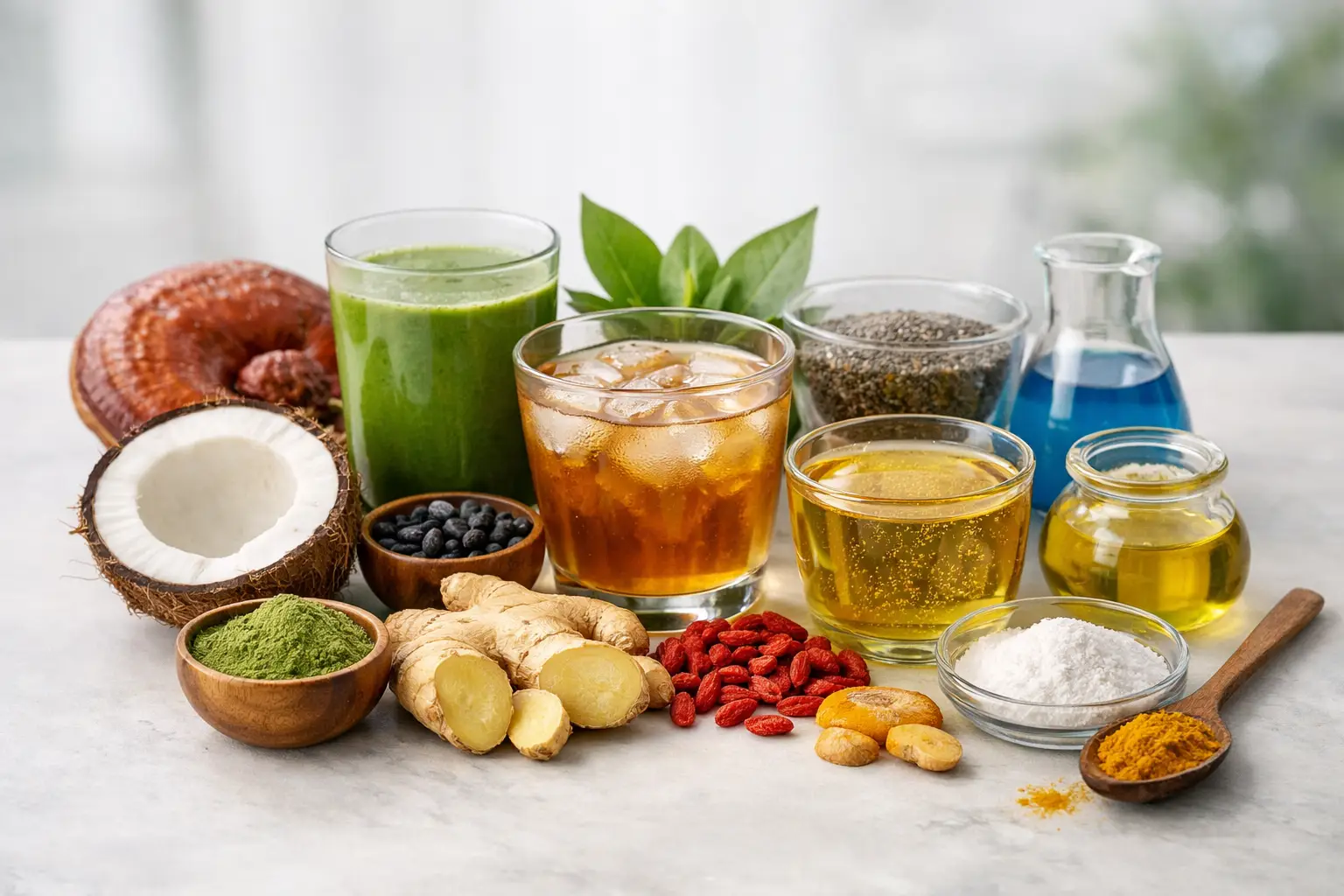
Performance claims are easy to print on a label. Building a drink around the best functional beverage ingredients is harder. For buyers, brand owners, and formulation teams, the real question is not which ingredients sound impressive. It is which ones deliver a clear consumer benefit, survive production, fit a clean-label strategy, and scale without compromising taste or margin.
That is where many functional beverage concepts succeed or fail. An ingredient may trend well in wellness retail and still create problems in flavor, sedimentation, supply continuity, or regulatory positioning. The strongest formulas are built on ingredients that can do more than market well. They need to work in the tank, in the package, and on the shelf.
What makes the best functional beverage ingredients worth using
The best ingredients earn their place by meeting four standards at once. First, they need a clear and recognizable benefit, whether that is hydration, energy, focus, recovery, digestion, or immunity support. Second, they must fit the intended sensory profile. A drink that promises performance but tastes medicinal will not repeat.
Third, they need process compatibility. Heat treatment, pH, oxygen exposure, sweetener systems, and package type all affect ingredient stability. Finally, they need supply reliability and regulatory discipline. A strong concept on paper means little if sourcing is inconsistent or claims cannot be supported across markets.
For commercial beverage programs, these factors matter as much as ingredient novelty. Real ingredients, real results, and no shortcuts is still the better strategy.
10 best functional beverage ingredients for commercial use
1. Electrolytes
Electrolytes remain one of the most dependable functional systems in beverage. Sodium, potassium, magnesium, and calcium support hydration and muscle function, and consumers already understand the benefit. That familiarity gives sports drinks, recovery beverages, and everyday hydration products a clear advantage at shelf.
The trade-off is balance. Too much sodium can push taste in the wrong direction, while magnesium and potassium can introduce bitterness or metallic notes. The best electrolyte formulas are built with flavor masking and use-case discipline, not just high mineral numbers on pack.
2. Caffeine from natural sources
Natural caffeine from green coffee or tea is still one of the most commercially effective ingredients for energy beverages. It offers an immediate, recognizable benefit and works across still drinks, sparkling formats, and hybrid wellness concepts.
What matters is dose control and positioning. High-caffeine formulas can attract attention, but they also narrow the audience and increase formulation pressure around bitterness. Moderate caffeine systems paired with a clean taste profile often perform better over time, especially when the goal is broad retail acceptance rather than a niche performance claim.
3. L-theanine
L-theanine is widely used to soften the sharper edge of caffeine. In practical terms, it helps energy and focus drinks feel more controlled and less jittery. That matters for modern consumers who want productivity support without the crash associated with older energy products.
This is a good example of an ingredient that works best in combination. On its own, it is not usually the headline. Paired with caffeine, it can create a more disciplined functional profile that supports premium positioning.
4. B vitamins
B vitamins remain common for energy and metabolic support because they are familiar, affordable, and easy to communicate. They also fit a wide range of beverage categories, from energy to enhanced waters and wellness shots.
Still, familiarity can be a weakness if the formula depends on B vitamins alone to justify a functional claim. Consumers have seen that approach for years. B vitamins work best as supporting ingredients inside a broader system, not as the entire reason a product exists.
5. Adaptogens
Adaptogens such as ashwagandha, ginseng, and rhodiola have moved from niche wellness to mainstream beverage innovation. They are especially relevant in drinks positioned around stress support, mood balance, and sustained energy.
The opportunity is real, but so are the challenges. Adaptogens vary widely in taste, extract quality, and consumer understanding. Some bring earthy or bitter notes that are hard to hide in lighter flavor systems. Others require careful sourcing and standardization to maintain consistency. For that reason, adaptogens can be among the best functional beverage ingredients when the formula is built with discipline, but they are not plug-and-play.
6. Botanicals with recognized function
Ginger, turmeric, hibiscus, elderberry, and similar botanicals continue to perform because they bridge function and flavor. A consumer can understand the ingredient, connect it to a traditional wellness benefit, and enjoy a taste profile that feels natural rather than synthetic.
That combination is valuable. It supports clean-label positioning and creates room for product differentiation without relying on obscure compounds. The trade-off is that botanicals can vary by harvest, origin, and extraction method, which makes quality control essential.
7. Protein
Protein is a strong choice for satiety, recovery, and meal-adjacent beverage concepts. It has clear consumer relevance and can support premium pricing when the format and texture are right. Ready-to-drink shakes, recovery beverages, and hybrid coffee or smoothie concepts all benefit from the right protein system.
The challenge is technical. Protein affects viscosity, mouthfeel, flavor release, and heat stability. Some proteins work well in dairy systems but struggle in clear or acidified beverages. Others create chalkiness or sediment. Protein can be highly effective, but it demands formulation expertise and a clear channel strategy.
8. Fiber and prebiotics
Digestive wellness continues to support strong consumer demand, and fiber ingredients such as inulin or other prebiotic systems give brands a credible way to enter that space. They can add a gut-health story while also contributing texture and body, depending on the application.
But digestive function is not just a marketing category. Dose matters. Too much fiber can affect tolerance, taste, and drinkability. The right use level depends on serving size, target audience, and whether the beverage is intended for daily use or occasional support.
9. Collagen
Collagen has strong appeal in beauty-from-within, active lifestyle, and premium wellness beverages. It is especially useful when a brand wants to connect function with visible lifestyle benefits rather than pure sports performance.
From a commercial standpoint, collagen offers brand value, but it must be handled carefully. Source transparency, solubility, flavor interaction, and claim discipline all matter. It is not right for every beverage line, but in the right concept it can support strong differentiation.
10. Nootropic support ingredients
Nootropic-adjacent ingredients such as citicoline or other focus-support compounds are becoming more common in beverages designed for work, gaming, or sustained mental performance. They reflect a market shift from simple stimulation to more targeted cognitive positioning.
This category has upside, but it also requires precision. Consumer education is lower than it is for caffeine or electrolytes, and regulatory language needs to be handled with care. These ingredients are best used when the brand has a clear point of view and the formulation supports a premium, modern energy profile.
How to evaluate the best functional beverage ingredients for your product
Ingredient selection should start with the product brief, not the trend cycle. If the target is hydration for mass retail, electrolytes and light botanical support may outperform a more complex ingredient stack. If the goal is premium convenience retail energy, a balanced caffeine system with L-theanine and select nootropic support may be stronger.
Taste should be tested early. Many functional concepts fail because benefit claims are prioritized before sensory reality. The strongest products make function feel easy to consume. That means the ingredient system has to support the flavor, not fight it.
Manufacturing conditions also need to be considered from the start. Acid levels, carbonation, filling method, thermal process, and packaging all affect what will remain stable over shelf life. An ingredient that performs well in a bench sample may degrade, separate, or discolor in full production.
Then there is sourcing. Reliable commercial programs need ingredient suppliers that can support documentation, traceability, and continuity. This is especially important for natural extracts, botanicals, and specialty actives, where batch variation can affect both product quality and compliance.
Why formulation discipline matters more than ingredient quantity
More ingredients do not automatically create a better beverage. In many cases, they create a noisier label, more flavor conflict, and greater processing risk. A focused formula built on two or three well-chosen actives often delivers a cleaner consumer message and a better finished product.
That is particularly true for brands trying to scale. Each additional ingredient can affect cost, lead time, validation, and shelf stability. The best commercial formulations are intentional. They are built to survive real production, real distribution, and real purchasing decisions.
For companies developing functional drinks at scale, that discipline matters as much as innovation. Businesses such as UNC One Corp. operate in a market where product quality, manufacturing control, and supply flexibility have to work together. Ingredient choices should support all three.
The market is rewarding clarity
Consumers still want performance, but they are becoming more selective about how that performance is delivered. They want recognizable ingredients, cleaner labels, and benefits that feel credible. Buyers want products that can hold their position in market without quality issues or supply disruption. Brand owners want formulas that are distinctive but practical to produce.
That is why the best functional beverage ingredients are not simply the newest or most expensive ones. They are the ingredients that align benefit, taste, stability, and scale without compromise.
If you are building the next functional beverage, start with what the product must do, then choose ingredients that can prove their value from formulation through final shipment. That is how strong concepts become repeat business.

No responses yet