
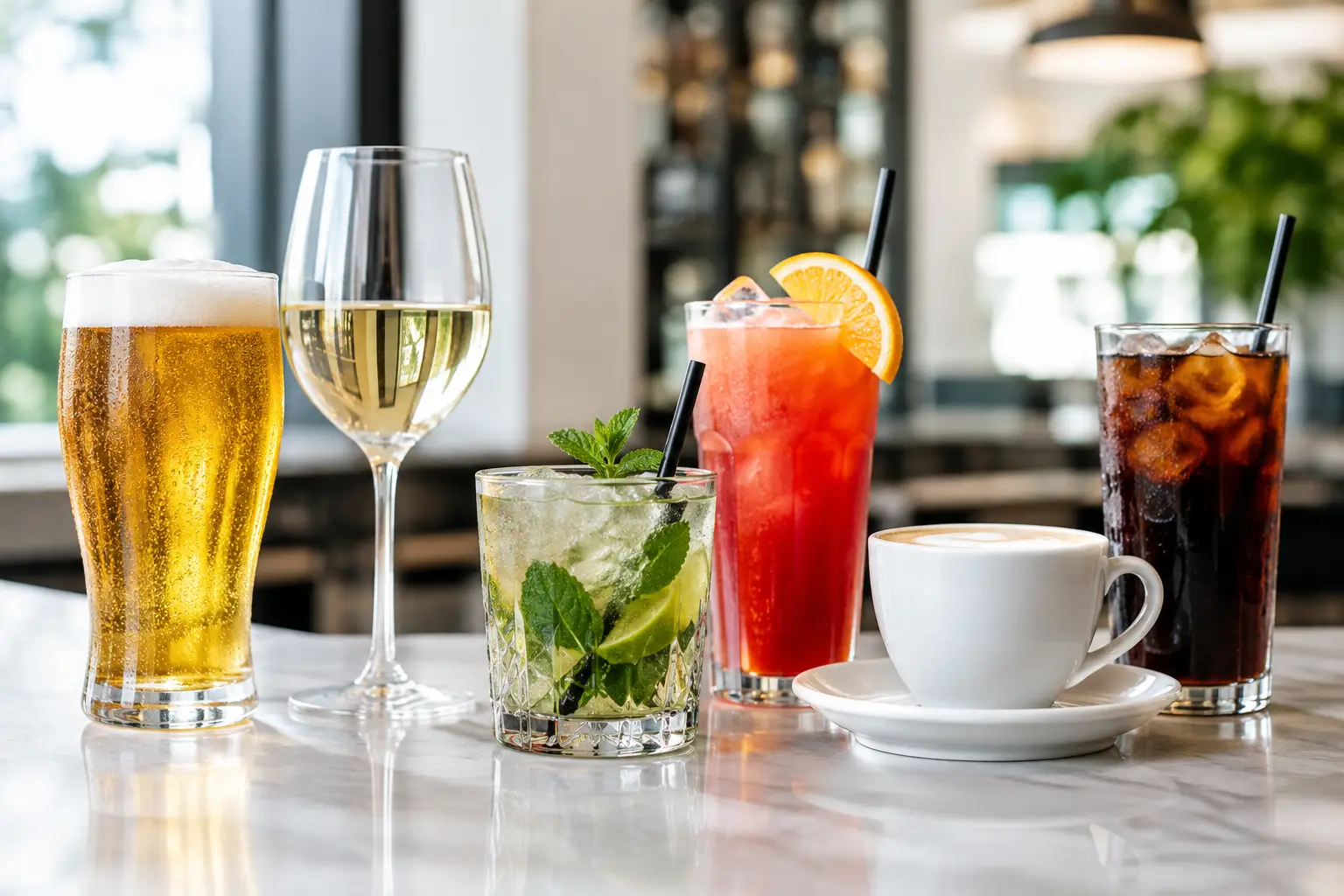
A full bar can support a memorable guest experience, but it can also create the slowest point of service, the most variable pour cost, and the greatest training burden. The best beverage formats for hospitality are the ones that fit the venue’s operating model as closely as they fit its menu. A premium hotel lounge, high-volume music venue, boutique restaurant, and poolside resort may all serve cocktails, but they do not need the same format to serve them well.
For hospitality buyers, format is not simply a packaging decision. It determines labor requirements, storage needs, consistency, speed of execution, waste exposure, and the ability to protect a premium guest experience during peak demand. The right choice balances product quality with the realities of service.
What Defines the Best Beverage Formats for Hospitality
The strongest format is the one that performs under pressure without compromising the product. It should be easy for staff to handle, reliable across shifts and locations, appropriate for the venue’s price point, and available in a supply model that can support seasonal peaks and sustained growth.
Natural ingredients and clear product positioning matter more than ever, particularly for guests looking for recognizable flavors, lower-sugar options, functional benefits, or credible alternatives to conventional alcoholic and nonalcoholic drinks. Yet a clean label alone does not solve a hospitality buyer’s problem. The product also needs to pour cleanly, chill quickly, hold quality through service, and arrive in packaging suited to back-of-house conditions.
The practical question is not whether one format is universally superior. It is whether the format removes friction from a specific service environment.
Ready-to-Drink Cans: Speed, Portion Control, and Mobility
Ready-to-drink beverages in cans are one of the most efficient options for high-throughput hospitality. They offer controlled portions, fast service, straightforward inventory counts, and limited product handling. For outdoor events, rooftop bars, resorts, stadiums, pools, and venues with restricted glass service, cans are often the most operationally sensible choice.
A well-developed canned cocktail can also protect consistency. The guest receives the same flavor profile and serving strength every time, regardless of who is working the bar. That control is valuable where temporary staff, large guest counts, or multiple service points make traditional cocktail preparation difficult to standardize.
Cans do have trade-offs. They can feel less premium when presented without the right glassware, garnish, or menu language. They also require a strong approach to chilling and storage, especially when a venue carries multiple flavors or rotates seasonal offerings. Premium positioning comes from the complete serve, not the container alone. A natural cocktail with real ingredients, served cold and finished thoughtfully, can command a strong check average while moving faster than a made-to-order equivalent.
For buyers, the key is to assess whether the product has enough flavor integrity to justify repeat orders. Convenience is not a substitute for quality. The best canned formats deliver both.
Bottled Formats: Table Service and Elevated Presentation
Glass bottles remain highly effective in restaurants, hotels, lounges, and premium dining environments where visual presentation carries weight. A bottle communicates deliberateness. It supports table service, allows staff to describe the product, and can reinforce an upscale brand position for cocktails, mixers, functional drinks, sparkling refreshment, or premium hydration.
Bottled formats are especially useful when a venue wants to create a composed nonalcoholic program. A carefully designed functional energy beverage or sports drink can be positioned as a considered choice for wellness-minded guests, travelers, daytime diners, and event attendees. In these settings, the bottle becomes part of the perceived value.
The operational cost is greater than with cans. Glass is heavier, breakage must be managed, and storage can be less forgiving. Venues must also consider local rules around pools, patios, beaches, and event spaces. Still, where the service ritual matters, bottles can earn their place. The format works best when the product, label, and serving strategy all support a clear premium proposition.
Keg and Draft Formats: Margin at Volume
Draft formats can create a compelling model for high-volume beverage programs, particularly for cocktails, low- and no-alcohol drinks, cold brew-style refreshment, and select functional offerings. When a menu item has proven demand, keg service can improve speed, reduce packaging waste, and support strong margins per serving.
The advantage is not automatic. Draft requires disciplined execution. Lines must be cleaned, refrigeration must be dependable, carbonation or dispensing settings must be correct, and staff need clear protocols for serving and quality checks. A poorly maintained draft program damages product quality quickly, even when the liquid itself is excellent.
Draft also favors a focused menu. It is rarely the right answer for a long list of uncertain flavors. It is more effective for a few high-confidence beverages that deserve dedicated taps and can move consistently. A resort bar may use draft for a signature cocktail during its busiest season, while a restaurant may reserve it for a high-margin nonalcoholic spritz that complements lunch and dinner service.
For operators with the right infrastructure, draft can be an efficient long-term play. For those without it, the equipment, maintenance, and staff training may outweigh the projected benefit.
Bag-in-Box and Batch Formats: Built for Back-of-House Control
Bag-in-box and bulk batch formats are often underappreciated because they are not guest-facing. Their value sits behind the bar: fast replenishment, efficient storage, lower handling time, and better control over high-volume recipes.
These formats work particularly well for banquet operations, all-inclusive hospitality, large catering programs, cruise environments, and venues that repeatedly serve the same cocktails or mixers. If a beverage is being built hundreds of times per shift, a professionally formulated batch can reduce variability and free staff to focus on presentation and guest interaction.
The quality standard must remain high. Batch formats should not become an excuse for generic flavor or excessive sweetness. The formulation needs to account for dilution, ice, garnish, temperature, and the final serving vessel. A drink that tastes balanced straight from a production sample may not perform the same way after a fast bar pour over ice.
For brand owners, this is where manufacturing expertise matters. Formula development, ingredient stability, shelf-life validation, food safety controls, and filling precision determine whether a bulk format performs consistently from the first case to the final pour.
Functional and Nonalcoholic Formats Need Their Own Strategy
Hospitality programs are no longer built around alcohol alone. Guests expect credible choices that support energy, hydration, recovery, moderation, and everyday wellness. Sports drinks, natural energy beverages, botanical refreshers, and zero-proof cocktails can expand occasions without forcing the operator to redesign the entire beverage menu.
The format should match the occasion. A slim can may be ideal for a fitness club, airport lounge, or hotel mini bar. A premium glass bottle may better suit a spa, restaurant, or meeting space. A ready-to-pour zero-proof cocktail can help bars offer a sophisticated alcohol-free serve during busy periods without adding complex preparation steps.
Avoid treating functional beverages as an afterthought. Their value depends on clear, compliant communication and ingredients that support the stated benefit. Hospitality teams should be able to explain what the product is, who it is for, and why it belongs on the menu. Vague claims create confusion. Real ingredients and real results create confidence.
How Buyers Should Evaluate a Beverage Format
Start with service volume and service style. A beverage that works in a 40-seat restaurant may fail at a 2,000-person event. Then consider the physical environment: available refrigeration, back-bar space, glass restrictions, loading access, and waste handling all affect the right decision.
Next, test the economics beyond the unit price. Include labor, pour consistency, spoilage, breakage, menu price, required equipment, and training time. A higher-cost ready-to-drink product may deliver a better return than a lower-cost format that requires extensive staff preparation and generates inconsistent serves.
Finally, evaluate supply reliability. Hospitality buyers need partners that can maintain quality at scale, respond to demand changes, and manage production across markets without cutting corners. UNC One Corp. approaches this requirement through natural product standards, controlled manufacturing, and production capacity across key international regions. That combination supports buyers who need differentiated beverages without compromising operational confidence.
The right beverage format should make service easier, not merely add another SKU. Choose formats that protect flavor, support the guest occasion, and give your team the control to perform at its best when the room is full.

No responses yet