
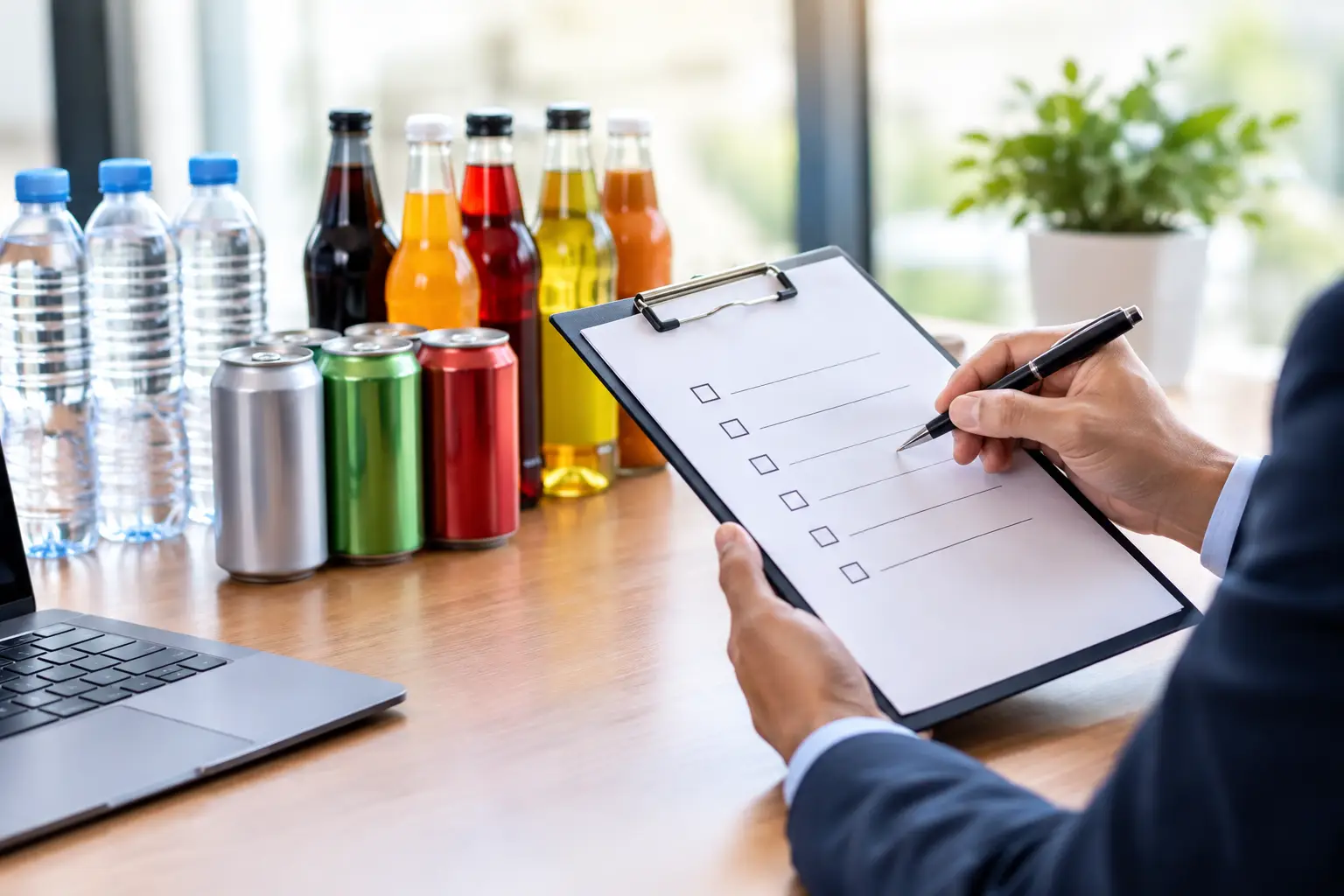
A beverage line can look right on a sell sheet and still fail at the point of execution. The beverage buyer procurement checklist below is built for the decisions that determine whether a product can earn shelf space, perform in the channel, and stay in stock after the first order. It applies to retailers, distributors, importers, hospitality groups, and operators evaluating natural cocktails, sports drinks, functional energy beverages, and emerging wellness concepts.
The objective is not simply to find the lowest unit cost. It is to select products and partners that protect quality, margin, compliance, and continuity of supply – without compromise.
Start With the Commercial Fit
Procurement begins with the role the beverage will play in your portfolio. A differentiated product may justify a premium price, but only if its benefits are clear enough for the customer, sales team, and account manager to explain in seconds. Define the channel, occasion, consumer, price tier, and expected velocity before comparing suppliers.
For an on-premise buyer, format and service speed may carry more weight than case configuration. A retailer may prioritize shelf efficiency, category incrementality, and a clear clean-label message. A distributor needs a product that can be sold repeatedly across accounts, with dependable replenishment and enough margin to support the route-to-market model.
Ask whether the line fills a real gap. Natural ingredients, lower sugar, functional benefits, and premium cocktail credentials can be strong points of difference. But a claim alone does not create demand. The product must fit the category strategy and have a practical reason to win against established brands.
Confirm the Price Architecture
Review suggested retail pricing, distributor pricing, promotional allowances, and gross-margin expectations as one system. A beverage can have a healthy headline margin while becoming unworkable once freight, slotting, commissions, displays, or promotional support are factored in.
Request a clear price ladder by package, flavor, and order quantity. Then test the numbers against the realities of your channel. A single-serve functional drink may support a higher retail price than a multipack. A premium cocktail may need a distinct on-premise pour cost. The right answer depends on the format and customer, not on a generic category target.
Beverage Buyer Procurement Checklist: Product Standards
The product must stand up to scrutiny before it reaches a purchase order. Begin with the formula and ingredient statement. Buyers focused on natural beverages should verify what “natural” means in practice: real juice, recognizable ingredients, sweetener choices, preservatives, flavor systems, and functional components should all be documented.
Taste remains non-negotiable. Request current production samples rather than relying only on early development batches. Evaluate flavor consistency, carbonation or texture where relevant, aroma, finish, color stability, and performance at the temperature the consumer will actually experience. A sports drink, energy beverage, or ready-to-drink cocktail can taste materially different after time in distribution.
Use the following checks when reviewing the product file:
- Complete ingredient and nutrition information, including allergens and claim substantiation.
- Product specifications for fill volume, Brix, pH, carbonation, alcohol content where applicable, and sensory targets.
- Packaging specifications, including can or bottle format, closure, tray, case pack, pallet configuration, and barcode readiness.
- Shelf-life data, storage requirements, and remaining-life standards at delivery.
- Batch traceability and a documented process for quality holds, complaints, and recalls.
A strong supplier can provide this information quickly and consistently. Delays or conflicting documentation are not administrative inconveniences. They are procurement risk.
Review Packaging for the Real Channel
Packaging should be evaluated as a commercial and operational asset. Does the format fit the shelf, cooler, back bar, vending set, or warehouse slot? Is the case pack practical for account-level ordering? Can the product withstand long-distance freight, humidity, temperature changes, and normal handling without label damage or package failure?
Consider how the product will be merchandised. A visually premium can may command attention in a chilled set, while a bottle may better support certain hospitality occasions. Neither is inherently better. The right package balances brand presentation, logistics, consumer use, and total delivered cost.
Validate Compliance Before the Commitment
Regulatory readiness should be reviewed before a buyer presents the item to key accounts. For U.S. distribution, labeling, nutrition facts, ingredient declarations, allergen statements, claims, net contents, and facility-related requirements must be handled with precision. Products containing alcohol, supplements, or certain functional ingredients may require additional review.
Do not accept broad assurances that a product is compliant. Request the current label artwork, relevant certificates, test results where needed, and the supplier’s approval process for market-specific packaging. If the beverage will cross borders, verify country-of-origin documentation, import requirements, tariff exposure, and language or label adaptations early.
Claims deserve special attention. “Clean,” “natural,” “energy,” “hydration,” and “performance” can carry commercial value, but they must be supported and presented appropriately. Buyers should also confirm whether the manufacturer has a process for reviewing claims as formulas, regulations, and markets change.
Test Supply Capacity and Execution
A successful launch creates a different set of problems than a slow one. The supplier must be able to support forecasted volume and respond when demand exceeds plan. Ask where the product is made, what production capacity is available, how capacity is allocated, and what contingency options exist if one facility is disrupted.
Multi-region manufacturing can reduce lead times and create flexibility, but it only adds value when specifications remain consistent across sites. Confirm whether the same formula, ingredients, package components, and quality standards can be maintained across production locations. Ask about minimum order quantities, standard lead times, production scheduling windows, and inventory policies for high-turning SKUs.
UNC One Corp.’s model reflects the value of this balance: craft-oriented beverage standards paired with automated, high-speed production across multiple regions. For buyers, the principle is straightforward. Premium positioning is only useful when the producer can supply it at commercial scale.
Measure Reliability Beyond the First Shipment
Request performance data where available. Fill rate, on-time-in-full delivery, quality claims, lead-time stability, and response times during disruption are more meaningful than a generic promise of service. A supplier that communicates early about a raw-material constraint is usually more valuable than one that offers certainty until the order is late.
Freight should be reviewed separately from product cost. Confirm Incoterms or delivery responsibilities, freight assumptions, warehouse receiving requirements, pallet exchange rules, temperature sensitivity, and insurance obligations. These details can materially change landed cost and should be clear before a launch calendar is built.
Assess the Partnership Model
The best beverage partners do more than manufacture or sell a product. They make it easier to execute in the market. Evaluate the quality of their commercial materials, training support, samples, launch planning, and responsiveness to buyer feedback. This is particularly relevant for functional categories, where account teams may need concise education on ingredients and benefits.
For private-label and brand-development buyers, assess the full development path: formulation, sourcing, pilot runs, packaging support, regulatory review, scale-up, and ongoing quality control. A lower initial quote can become expensive if the supplier cannot manage these stages with discipline.
Put the service expectations in writing. Define who owns forecasts, purchase-order changes, artwork approvals, inventory aging, discontinued packaging, quality claims, and replenishment communication. Procurement works best when accountability is visible on both sides.
Build a Decision Scorecard
Not every criterion should carry equal weight. A high-volume convenience program may prioritize price, service level, and supply continuity. A premium natural retailer may put greater emphasis on ingredient integrity, packaging, and brand fit. Assign weighted scores to commercial fit, product quality, compliance, supply, total landed cost, and service capability.
Use the scorecard to compare suppliers on evidence, not presentation quality. Require documentation for each critical point, then identify the gaps that must be resolved before approval. A product that scores well overall but has an unverified shelf-life claim or unclear capacity plan is not ready for a full commitment.
A disciplined procurement process protects more than the next purchase order. It protects the consumer experience, the account relationship, and the reputation attached to every case you put into the market. Choose partners that can prove their standards, meet their commitments, and scale when the opportunity arrives.

No responses yet