
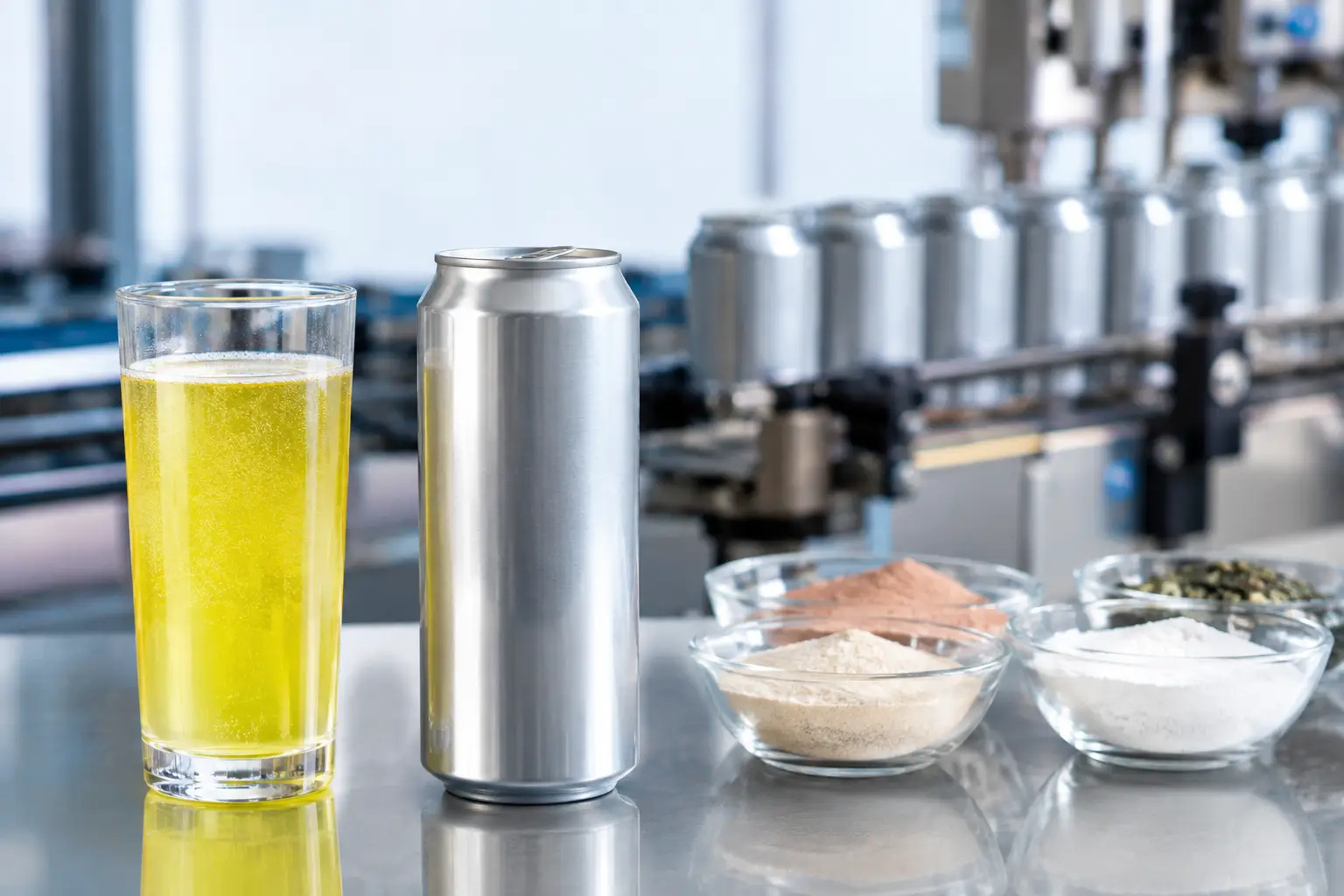
A serious energy drink reformulation example starts with a commercial reality: removing an ingredient is easy on paper. Replacing its function without losing taste, stability, margin, shelf life, or consumer trust is the real work. For brands competing in a crowded performance beverage category, reformulation must protect what made the product successful while giving buyers a clearer reason to list it.
The strongest projects do not begin with a trend-led ingredient list. They begin with a defined product brief, measurable targets, and a manufacturing plan that can perform at commercial volume. Clean-label positioning matters, but it must be supported by a formula that delivers real ingredients, real results, and consistent execution in every market.
Why Energy Drink Reformulation Is a Business Decision
Energy drink reformulation is often triggered by a clear market pressure. A retailer may request lower sugar. Consumers may expect recognizable ingredients. A founder may need to replace artificial colors, revise caffeine positioning, reduce costs, or meet requirements in a new export market. Each reason is valid, but each creates a different technical path.
Changing one part of the formula affects the entire system. Reducing sugar can thin the body and expose bitterness. Replacing synthetic flavors can change aroma intensity and heat stability. Moving from an artificial color to a natural color may alter light resistance, pH tolerance, and the final appearance on shelf. Reducing caffeine requires an equally deliberate decision about how the product will still communicate and deliver a credible energy benefit.
For channel partners, the goal is straightforward: a beverage that earns its shelf space and arrives reliably. For brand owners, the goal is broader. The new product needs to preserve brand recognition, meet label expectations, pass quality testing, and remain viable at the production volumes required for growth.
An Energy Drink Reformulation Example in Practice
Consider a 16-ounce carbonated energy drink with high sugar, artificial color, synthetic fruit flavor, and a single-source caffeine system. It has a loyal customer base, but its buyer feedback is consistent: the product needs a more natural profile, lower sugar, and a label that fits wellness-oriented retail without losing its familiar flavor impact.
A disciplined reformulation brief could set these objectives: reduce sugar by at least 40%, remove artificial colors, retain a fruit-forward taste, maintain a meaningful caffeine level per serving, and achieve a stable twelve-month shelf life. The product must also run efficiently on existing filling equipment and remain within a defined cost range. These targets turn a broad idea into an executable development program.
The first formula revision may replace part of the sugar with a blend of sweeteners and soluble fiber or another body-building component. This can lower calories and sugar, but sweetener selection cannot be made on label appeal alone. Some sweeteners linger. Others can amplify bitterness from caffeine, botanical extracts, vitamins, or acids. A formula that tastes clean from a bench sample may taste very different once it is carbonated, packaged, and stored for several months.
Next, the development team can replace an artificial color with a naturally derived alternative appropriate for the beverage’s target shade and pH. Here, the trade-off is often visual consistency. Natural colors may be more sensitive to oxygen, light, or heat. Packaging selection, headspace control, process conditions, and storage expectations become part of the color decision rather than separate afterthoughts.
The caffeine system also deserves more than a simple substitution. Natural-source caffeine may support the intended positioning, but it still needs to provide a consistent dose, clean sensory performance, and appropriate documentation. If the formula includes complementary ingredients such as B vitamins, electrolytes, amino acids, or botanical extracts, the team must verify compatibility and avoid turning the label into a crowded collection of claims with no clear product story.
The result may be a lower-sugar, naturally colored energy drink with a clearer ingredient deck and a balanced flavor profile. It is not automatically better because it uses more natural inputs. It is better only if the product performs: it tastes good, remains stable, complies with the relevant regulations, and can be produced repeatedly without compromise.
The Formula Is More Than the Ingredient Statement
A reformulated product needs a sensory standard. This includes target sweetness, acid balance, aroma, body, carbonation level, finish, and acceptable variation between production lots. Without this standard, suppliers and production teams are left to interpret subjective language such as “natural tasting” or “less sweet.” Those phrases are not quality specifications.
Sensory work should compare the revised formula against the original product, leading category competitors, and the stated consumer promise. In many cases, the right decision is not to make the new formula identical to the old one. A cleaner profile may call for a different flavor architecture. The key is to make the change intentional and commercially defensible.
Scale Changes the Reformulation Equation
A pilot run proves possibility. It does not prove production readiness. At scale, ingredients behave differently, process tolerances tighten, and small variations in mixing order, temperature, carbonation, or fill conditions can become meaningful quality issues.
For example, a natural flavor may require a revised blending sequence to maintain uniformity. An extract can create haze or sediment after time in storage. A sweetener system that works in small batches may foam differently during high-speed filling. These are not failures of innovation. They are the technical realities that separate a concept sample from a finished beverage program.
A capable manufacturing partner evaluates the full production system early. That means reviewing ingredient availability, supplier specifications, minimum order quantities, lead times, packaging compatibility, process parameters, finished-product testing, and forecasted annual demand. Multi-region manufacturing can also provide supply flexibility, but formulas may still need market-specific review because ingredient rules and labeling requirements differ by destination.
At UNC One Corp., beverage development is approached with the same standard required for commercial production: ingredient integrity, repeatable quality, and the capacity to support growth. A premium formula should not depend on a fragile supply chain or a process that only works under ideal conditions.
Validate Before the Full Launch
Before approving the reformulated product, brands should complete structured validation rather than relying on a favorable first tasting. This includes stability testing, microbial testing where applicable, package compatibility review, nutritional and label verification, and production trials that represent actual line conditions.
Claims need equally careful treatment. “Natural,” “clean,” “zero sugar,” and performance-oriented language can carry different expectations depending on the formula and market. A claim should be supported by the finished product and its documentation, not by the marketing direction alone. Regulatory review is particularly important when caffeine, botanicals, functional ingredients, or multiple markets are involved.
Cost modeling belongs in this phase as well. A formula may meet every sensory target but become impractical when a botanical extract has volatile pricing or a specialized ingredient has long lead times. Sometimes the correct answer is a premium position with a higher price point. In other cases, the better decision is a more resilient formula that preserves the core consumer benefit while protecting gross margin and continuity of supply.
What Buyers and Brand Owners Should Ask
The quality of the reformulation process is visible in the questions asked before production begins. Can every critical ingredient be sourced consistently? Does the formula maintain its intended color and flavor through the stated shelf life? Is the caffeine content controlled and clearly declared? Can the packaging protect the product from the conditions it will encounter in distribution? Can the formula run at the required speed without excessive waste or downtime?
These questions matter because energy beverages are judged quickly and repeatedly. A buyer sees the label and commercial proposition. A consumer experiences the flavor and effect. A distributor needs confidence in supply. A manufacturer needs a formula that can be made to specification every time. The reformulation succeeds when all four standards align.
The best next step is not to chase the longest ingredient list or the most aggressive claim. Build a beverage with a clear performance role, a formula designed for real-world production, and quality standards strong enough to hold as distribution expands.

No responses yet