
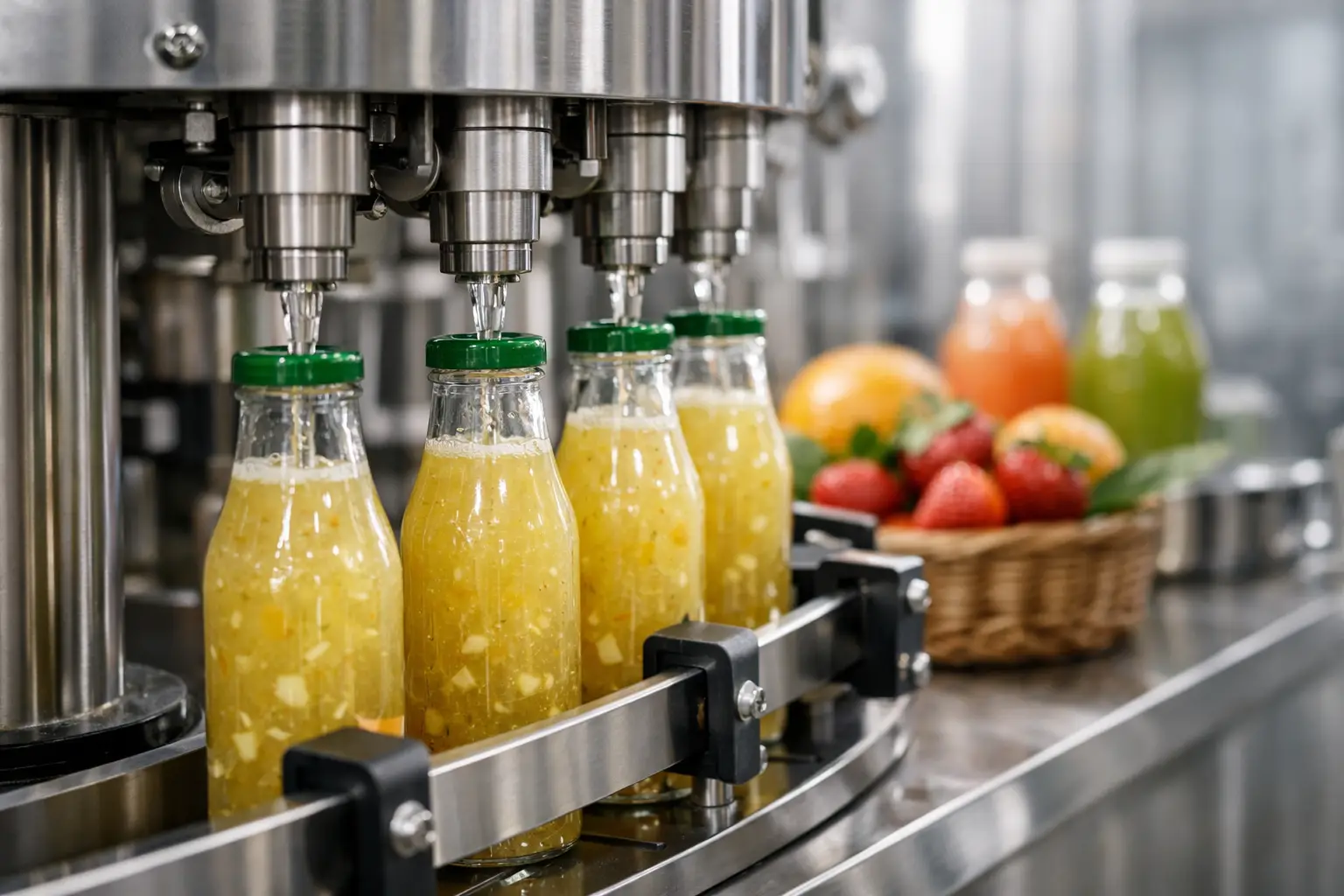
A natural beverage can begin with excellent ingredients and still fail at the filling line. Fresh juice concentrates, botanical extracts, dairy alternatives, electrolytes, and functional ingredients create real differentiation, but they also introduce process sensitivity. Sanitary filling for natural drinks is where formulation, food safety, shelf-life targets, and commercial scale must perform together – without compromise.
For beverage brands, distributors, and procurement teams, filling quality is not a back-of-house detail. It determines whether a product reaches the market with the intended flavor, appearance, carbonation, stability, and label claim intact. For founders choosing a contract manufacturing partner, it is also one of the clearest indicators of whether a facility can protect a premium concept as volume grows.
Why Natural Drinks Require More From the Filling Line
Natural positioning often means fewer preservatives, recognizable ingredients, and formulations that are less forgiving than conventional soft drinks. Fruit bases can carry microbial load. Plant extracts can contribute sediment. Proteins and fibers can affect viscosity and settling. Acid level, sugar content, dissolved oxygen, and package format all influence the process window.
The central requirement is simple: control contamination while protecting the product. That requires more than a clean facility. It requires a filling process selected for the beverage’s actual formulation, target shelf life, distribution conditions, and packaging format.
A low-pH sparkling drink may be well suited to a hot-fill or tunnel-pasteurized process, depending on its ingredients and package. A sensitive functional beverage with vitamins, probiotics, or delicate botanical notes may require aseptic filling to achieve commercial shelf life without excessive heat exposure. Refrigerated products can preserve certain sensory characteristics, but they add cold-chain dependence and limit distribution flexibility.
There is no universal best method. The right choice depends on the product and the route to market.
The Core Controls Behind Sanitary Filling for Natural Drinks
Sanitary filling is a system, not a single machine. Product safety and consistency depend on controls that begin before liquid reaches the filler and continue until finished cases are released for shipment.
Hygienic equipment design
A production line must be engineered to prevent product buildup, standing water, and inaccessible surfaces where microorganisms can persist. Food-contact components should be compatible with the beverage’s acidity, viscosity, carbonation level, and ingredients. Valves, pipes, tanks, gaskets, and filling heads need designs that can be effectively cleaned and inspected.
For natural beverages, this matters especially when formulas include pulp, fibers, spices, extracts, or proteins. These ingredients can create residue that demands a more disciplined cleaning approach than a filtered, conventional beverage. Equipment capability must match the formula rather than forcing the formula to fit a limited process.
Validated cleaning and sanitation
Cleaning-in-place procedures remove product residue from enclosed processing equipment. Sanitizing reduces microorganisms to controlled levels before production begins. Both must be validated, documented, and repeated consistently.
A strong sanitation program defines the chemistry, temperature, concentration, flow rate, and contact time required for each product family and line configuration. It also accounts for changeovers. Producing a clear electrolyte drink after a turmeric or protein-based beverage, for example, requires more than a quick rinse. The process must prevent flavor carryover, allergen risk where applicable, and visual defects.
Verification matters as much as the written procedure. Facilities should use defined checks for cleaning performance, pre-operational conditions, and microbiological control. Records create accountability and make it possible to investigate issues quickly if a deviation occurs.
Controlled product treatment
The product treatment step is selected to control pathogens and spoilage organisms while preserving intended quality. Depending on the beverage, this may include hot fill, pasteurization, aseptic processing, or refrigerated filling under tightly managed conditions.
Heat is effective, but it has trade-offs. Excessive heat can flatten fresh flavor, darken color, reduce certain nutrients, or change the behavior of botanical ingredients. Aseptic systems can preserve more sensitive profiles, yet they require advanced process control, sterile packaging conditions, and disciplined validation. Refrigerated distribution may support a premium fresh profile but increases logistical complexity and exposure if temperature control breaks down.
The strongest production decision is not the most advanced process on paper. It is the process that meets safety, sensory, shelf-life, and cost requirements for the intended market.
Packaging sanitation and closure integrity
A safe beverage can be compromised by an unsanitary container or an unreliable seal. Cans, bottles, caps, and closures must be managed as part of the same food-safety system. Container rinsing or treatment, controlled handling, closure application, and seal inspection all influence finished-product protection.
Closure integrity deserves special attention in carbonated drinks and products intended for long ambient shelf life. A minor sealing defect can lead to leakage, oxygen pickup, loss of carbonation, or microbial exposure. These failures affect more than a single unit. They create chargebacks, returns, and damage to brand confidence in the channel.
Protecting Flavor, Function, and Label Claims
Sanitary filling is often discussed in terms of safety. It also protects what consumers paid for. Natural brands compete on flavor authenticity, ingredient credibility, and functional benefits. A filling process that introduces excess oxygen, inconsistent heat exposure, or poor mixing can weaken each of those advantages.
Dissolved oxygen control is one example. Oxygen can accelerate flavor changes, color degradation, and oxidation in sensitive ingredients. For products containing juices, natural colors, omega oils, or botanical extracts, managing oxygen exposure through deaeration, controlled transfers, inert gas where appropriate, and dependable closures can materially improve product stability.
Homogeneity is another operational requirement. A beverage with electrolytes, minerals, protein, fiber, or suspended botanicals must be mixed and filled consistently. If solids settle during a production run, the first and last cases may not deliver the same product. The result can be inconsistent nutrition, variable taste, and consumer complaints even when the formula itself is sound.
This is why development cannot be separated from manufacturing. A formula should be tested under real production conditions, including heating, holding, pumping, mixing, filling, and storage. Bench-top success is useful, but it does not prove commercial readiness.
What Brands Should Ask a Manufacturing Partner
A capable manufacturer should be able to explain how its sanitation program and filling technology apply to a specific beverage, not simply describe general plant capabilities. The conversation should cover product acidity, particulate level, allergens, thermal sensitivity, desired shelf life, package size, carbonation, and intended distribution conditions.
Brands should also ask how the partner manages quality holds, finished-product testing, lot traceability, and deviation response. Speed is valuable, but fast production without disciplined release controls creates downstream risk. Reliable supply comes from repeatable standards, documented processes, and the capacity to maintain them at volume.
For companies moving from pilot production into retail, the transition is often where gaps appear. A process that works for a regional run may need different equipment, treatment, or packaging controls to support national distribution. Planning for that shift early avoids expensive reformulation, packaging changes, or shelf-life failures later.
UNC One Corp. approaches beverage production with this discipline: real ingredients, controlled processes, and scalable execution across markets. The objective is not merely to fill units. It is to protect the product specification that buyers, distributors, and consumers expect in every case.
Scale Should Not Reduce Standards
High-speed automation can improve consistency when it is supported by proper controls. Automated rinsing, filling, capping, coding, inspection, and case packing reduce avoidable handling variation. However, automation does not replace sanitation discipline. A fast line multiplies performance in both directions: it can produce a high volume of consistent product, or spread a poorly controlled issue quickly.
The operational standard must remain the same at every production volume. That means trained personnel, preventive maintenance, calibrated instruments, controlled changeovers, environmental monitoring where required, and clear quality ownership. It also means building enough production flexibility to manage different product formats without weakening cleaning and release requirements.
For natural beverage brands, sanitary filling is a commercial foundation. It supports shelf confidence, protects premium ingredients, and gives channel partners a product they can place with confidence. Choose a process built for the beverage you are selling today and the distribution reach you plan to earn next.

No responses yet