
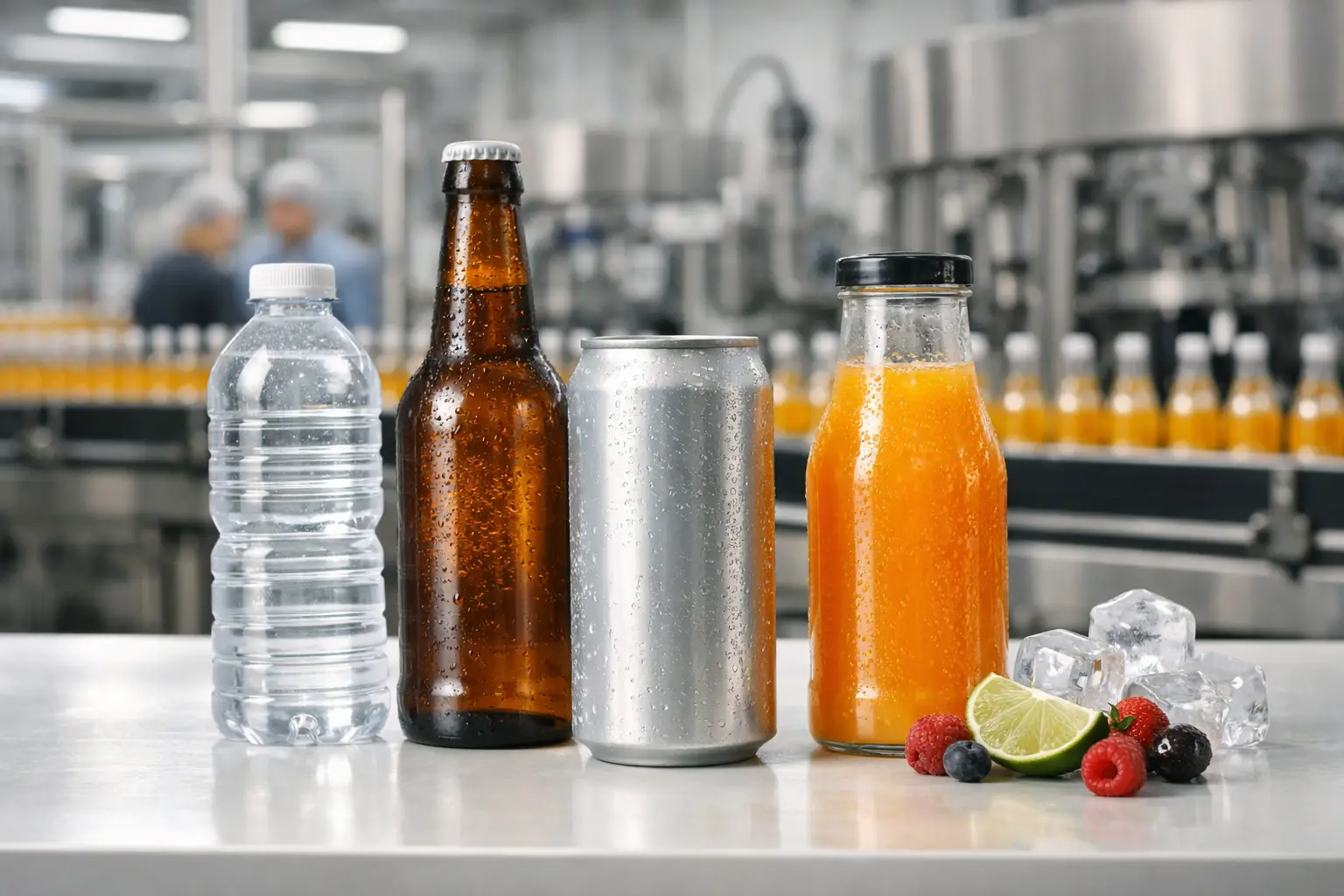
A drink can look ready for market long before it is ready for production. That gap is where most mistakes happen. If you want to understand how to create private label drinks that hold up under real commercial pressure, you need more than a flavor idea and a label. You need a product built for shelf life, compliance, repeatability, and scale.
Private label beverage development is not only about speed to market. It is about building a drink that can survive buyer review, production scheduling, ingredient sourcing, transit, and consumer expectations without compromise. The strongest launches start by getting the fundamentals right.
How to create private label drinks with a clear market position
Before formulation starts, define what the product needs to be in the market. That sounds obvious, but many private label concepts begin too broadly. “A healthy energy drink” or “a natural cocktail line” is not specific enough to guide production decisions.
A better starting point is a commercial brief with real boundaries. What channel are you targeting: retail, convenience, club, hospitality, or e-commerce? What price point needs to work after freight, margin, and promotional spend? Is the buyer looking for clean-label ingredients, low sugar, functional benefits, premium flavor cues, or all of the above?
This stage determines whether the product belongs in glass, can, PET, or another format. It also shapes serving size, formula cost, and ingredient selection. A natural sports drink for mass retail will be developed differently than a premium botanical mixer for on-premise accounts. Both can be strong products, but they require different technical and commercial decisions.
The biggest early risk is trying to satisfy every trend at once. Real ingredients, low calories, functional claims, and aggressive price targets do not always coexist easily. Discipline here saves time later.
Build the formula around production reality
A concept becomes a product when the formula can be produced consistently. This is where many brands learn that a bench sample and a manufacturable beverage are not the same thing.
Flavor is only one part of the formula. Acidity, sweetener system, mouthfeel, color stability, active ingredients, preservative strategy, carbonation, and processing method all affect the final result. If the drink is positioned as natural or functional, those choices become even more important because ingredient interactions can change taste and shelf stability quickly.
A clean-label drink may require tighter control over raw material quality and processing conditions. A functional beverage with vitamins, botanicals, or performance ingredients may need careful review of solubility, sedimentation, and flavor masking. A cocktail-inspired RTD may need precision around alcohol integration, sweetness balance, and packaging compatibility.
This is also where cost pressure shows up. Premium ingredients support premium positioning, but they can narrow your margin if the formula is not engineered carefully. The right manufacturing partner helps balance product integrity with cost discipline instead of forcing a choice between the two.
Shelf life is part of the product
If a beverage tastes excellent on day one but drifts after a few weeks, it is not ready. Shelf life testing should evaluate flavor stability, color retention, carbonation performance where relevant, microbiological integrity, and packaging interaction.
This matters even more for drinks built on real ingredients. Juice components, natural extracts, and functional actives can perform differently over time. A commercial product needs to stay within specification from filling line to final sale, not just in the sample room.
Packaging decisions affect margin, logistics, and brand perception
Packaging is often treated as a branding exercise first. In reality, it is also a production and distribution decision. The container, closure, decoration method, and case configuration all influence line efficiency, freight cost, storage performance, and channel fit.
Slim cans may support a modern functional positioning. Glass can reinforce premium cues in cocktail or mixer categories. PET can improve portability and freight economics for sports and hydration products. None of these choices are universally better. It depends on the product, the target channel, and the production setup.
Label claims and artwork also need discipline. What looks clean on a design proof still has to accommodate mandatory information, ingredient statements, allergen considerations where applicable, nutrition facts, lot coding, and regulatory language. If export is part of the plan, market-specific labeling requirements need to be addressed early.
Good packaging aligns brand presentation with operational reality. That is what keeps premium positioning credible at volume.
Compliance is not a final checkpoint
Founders and buyers sometimes treat regulatory review as something to handle after the formula and design are complete. That approach creates delays, redesign costs, and in some cases a product that needs to be reformulated.
Compliance should be built into development from the start. That includes ingredient review, claims substantiation, nutrition panel accuracy, formula documentation, and packaging language. If the drink includes functional positioning, the wording around performance benefits must be especially disciplined.
The exact requirements depend on category and market. A non-alcoholic functional drink, an energy beverage, and an alcoholic RTD all carry different compliance considerations. The more ambitious the claims, the more careful the documentation must be.
For private label operators planning multi-market distribution, this becomes even more important. A formula that works in one market may require adjustments in another based on ingredient acceptance, claim restrictions, or labeling rules. That does not mean international expansion is difficult by default. It means the product should be developed with those variables in view.
Choose a manufacturing model that fits your growth stage
One of the most practical decisions in how to create private label drinks is choosing the right production partner and scale model. Not every manufacturer is built for the same kind of business.
Some are optimized for short specialty runs. Others are built for speed and volume. Some offer formulation support but limited packaging flexibility. Others provide a full path from concept development through sourcing, filling, compliance, and finished product execution.
The right fit depends on your goals. If you are testing a niche concept in a limited geography, smaller initial runs and a narrower SKU strategy may make sense. If you are preparing for retail authorization or broad distribution, you need manufacturing that can support repeatability, lead-time discipline, and scalable supply.
This is where production footprint matters. Multi-region manufacturing can reduce freight complexity, improve responsiveness, and protect supply continuity when one market faces disruption. For brands and channel partners that need both premium quality and serious capacity, that flexibility is not a bonus. It is part of risk management.
A capable partner should be able to speak clearly about minimums, sourcing strategy, quality controls, production scheduling, and contingency planning. If those answers are vague, the risk is already visible.
What strong manufacturing support looks like
A serious beverage partner does more than fill cans or bottles. The value is in execution across the entire chain: formulation review, ingredient sourcing, pilot validation, quality assurance, regulatory alignment, packaging coordination, and production consistency.
That matters because beverage launches rarely fail for one dramatic reason. More often, they fail through accumulated friction – unstable ingredients, shifting costs, delayed components, inconsistent fill quality, unclear documentation, or unrealistic forecasting. Strong process control prevents those problems from multiplying.
Companies such as UNC One Corp. operate in that space where craft-level product standards meet industrial-scale production. For private label buyers and brand owners, that combination is what turns a concept into a reliable commercial program.
Plan the launch around replenishment, not just debut
A first production run is not the finish line. The real test starts when the product needs to be reordered, expanded, or adjusted under market pressure.
That is why forecasting, inventory strategy, and raw material planning should be part of development discussions. If your formula relies on specialized natural ingredients with long lead times, your purchasing model needs to reflect that. If your packaging uses custom components, those timelines also need to be built into launch planning.
The smartest private label programs are designed for repeat execution. They have documented specifications, realistic production calendars, and enough supply chain visibility to support growth without creating service failures.
There is also a strategic question around SKU count. Too many flavors too early can strain working capital and complicate operations. In many cases, a disciplined launch with one to three high-conviction SKUs performs better than a broad line that spreads demand too thin.
Quality is what makes the brand believable
Private label no longer means generic. Buyers and consumers expect differentiated drinks with clear positioning, clean presentation, and dependable quality. That raises the standard for everyone involved.
The brands that win are not simply fast. They are precise. They know what the product is, who it is for, and how it will be made at commercial scale without losing integrity. That is the real answer to how to create private label drinks – start with a focused market brief, build the formula for production, treat compliance and packaging as strategic decisions, and choose a manufacturing model that can support the next stage of growth.
If the product is built with that level of discipline, launch becomes more than an announcement. It becomes the start of a business with room to move.

No responses yet