
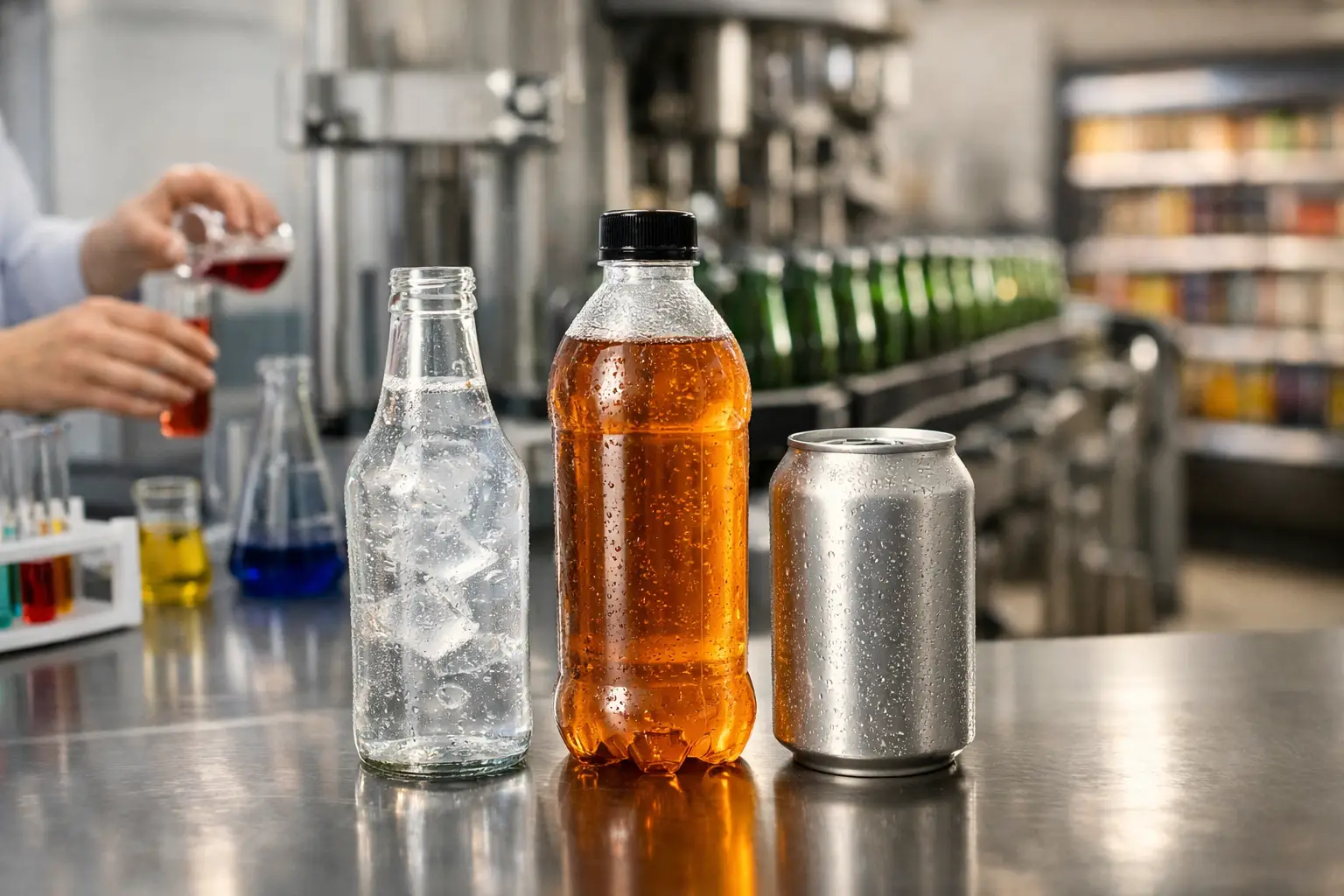
A beverage idea is not commercial because it tastes good in a sample bottle. It becomes commercial when the formula can be produced consistently, meets regulatory requirements, survives its intended shelf life, reaches the right channel at the right cost, and gives buyers a reason to stock it. That is the practical answer to the question, “what is beverage commercialization process?”
For founders, brand owners, and procurement teams, commercialization is the disciplined work of turning a concept into a repeatable business asset. It connects product development with manufacturing, packaging, quality control, supply planning, and market execution. Each decision affects the next one. A flavor adjustment can change ingredient costs. A package choice can change line speed. A retailer’s margin requirement can change the entire financial model.
What Is the Beverage Commercialization Process?
The beverage commercialization process is the structured path from concept to market-ready product. It verifies that a drink can deliver the intended taste, function, quality, safety, and margin at commercial volume.
The process is especially demanding for natural and functional beverages. Real juices, botanical extracts, proteins, electrolytes, and other active ingredients can create challenges around stability, sedimentation, color variation, flavor drift, and shelf life. Clean-label positioning may reduce formulation options. Those are not reasons to avoid innovation. They are reasons to validate the product before production commitments and channel promises are made.
A commercialization plan should answer a clear set of business questions: Who is the drink for? What makes it different? What does it need to cost? Where will it be sold? How will it be made at scale? What proof supports its label and claims? If those answers do not align, a launch can look strong on paper while becoming expensive and difficult to supply.
Start With a Commercial Product Brief
Before formulation begins, define the product as a business proposition, not just a flavor concept. The product brief should establish the target consumer, occasion, channel, format, price position, desired ingredient standards, functional benefits, and expected production volume.
A cocktail intended for hospitality has different priorities from a functional energy beverage built for convenience retail. On-premise buyers may value speed of service, premium presentation, and a dependable flavor profile. Off-premise buyers may focus more closely on shelf impact, retail margin, pack configuration, and velocity. A strong brief recognizes these differences early.
This is also the point to define non-negotiables. They may include no artificial colors, a specific calorie range, a recognizable active ingredient, alcohol content, vegan status, or a particular can size. Every non-negotiable has a cost and technical consequence. The goal is not to make every claim possible. It is to build a product with a clear reason to exist and a specification that can be executed without compromise.
Develop the Formula for Scale, Not Just Sampling
Bench formulation is where the product’s sensory profile and performance begin to take shape. Developers balance sweetness, acidity, aroma, mouthfeel, color, carbonation, and functional ingredients against the intended positioning. For a health-oriented drink, this may also include managing sugar levels, electrolyte delivery, caffeine content, or botanical flavor masking.
The first successful sample is only a starting point. A formula that works in a small development batch may behave differently in commercial equipment. Heat treatment, mixing order, dissolved oxygen, carbonation, filling conditions, and ingredient variability can all alter the finished drink.
Pilot runs close that gap. They test whether the formula remains stable and consistent under realistic production conditions. They also expose practical issues such as foaming, poor ingredient dispersion, excessive viscosity, or ingredients that are difficult to source at volume. Reformulation at this stage is normal. Reformulation after a national rollout is expensive.
Validate Safety, Stability, and Label Compliance
Commercialization requires evidence, not assumptions. Product testing confirms that the beverage is safe, stable, and aligned with its declared specifications over its expected shelf life. Depending on the product, this can involve microbiological testing, pH verification, Brix measurement, carbonation checks, sensory evaluations, package integrity testing, and shelf-life studies.
Shelf life is more than a date printed on a can or bottle. It measures whether the drink continues to meet expectations through production, shipping, warehousing, and retail storage. A beverage may remain safe while losing its brightness, carbonation, functional performance, or visual appeal. For premium products, that still represents a quality failure.
Label review is equally critical. Ingredients must be declared correctly, allergens managed, nutrition information supported, and claims reviewed for the markets where the product will be sold. Terms such as “natural,” “energy,” “hydration,” or “supports performance” require careful consideration. Functional positioning should be specific, credible, and supported by the product itself.
Regulatory requirements vary by market. Brands planning to sell across the United States, Latin America, Europe, or Asia should account for those differences during development rather than treating export as an afterthought. One formula and label may not fit every destination.
Choose Packaging That Supports the Product and Channel
Packaging is a commercial decision as much as a design decision. The selected format affects shelf life, freight efficiency, line compatibility, consumer perception, and unit economics. Cans can offer light protection, strong recyclability credentials, and efficient transport. Glass can reinforce premium presentation but adds weight and breakage risk. PET may suit specific occasions and price points but must align with the brand’s quality and sustainability expectations.
The closure, label, secondary packaging, and case configuration also matter. A format that performs well in a direct-to-consumer shipment may not work for a high-volume distributor. A sleek can may stand out in a cooler but require different packing arrangements than a standard format.
Design should communicate the product’s benefit quickly without creating compliance issues. Buyers and consumers should understand what the drink is, who it is for, and why it earns a place in the set. Clear packaging earns attention. Consistent product quality earns repeat purchase.
Build the Manufacturing and Supply Plan
At this point, the product must move from technical feasibility to dependable execution. Manufacturing planning sets production specifications, ingredient approvals, quality controls, batch records, line requirements, and forecast assumptions. It also confirms minimum order quantities, lead times, storage conditions, and contingency options for key materials.
Supply flexibility is often underestimated. A brand can have a strong formula and compelling package yet lose momentum because a specialized flavor, printed can, or active ingredient cannot be replenished on time. Qualified alternatives and multi-region production capability can reduce exposure, but substitutions must be tested and approved before they are needed.
The right manufacturing partner contributes more than filling capacity. It should bring process discipline, quality systems, packaging expertise, and the ability to translate a product vision into repeatable specifications. UNC One Corp. applies that approach across natural cocktails, sports drinks, functional energy beverages, and partner-owned concepts, combining premium product standards with scalable production reach.
Confirm the Economics Before the Launch
A beverage can be technically excellent and commercially unworkable. The financial model must account for ingredients, packaging, freight, warehousing, co-packing, sales allowances, distributor margins, retailer margins, promotional spending, and expected returns or breakage.
Price architecture needs to fit the intended channel. A premium functional beverage may command a higher shelf price, but only if the product benefit, package, and brand presentation justify it. A lower price can broaden trial, but it may leave too little room to support quality ingredients and channel margins. The answer depends on the category, competitive set, and route to market.
Forecasting should be realistic. Early launches rarely follow a straight line. Demand may spike around a placement, event, or social campaign, then settle. A measured first production run can protect cash flow, provided it still meets manufacturing minimums and gives the channel sufficient inventory confidence.
Execute a Controlled Market Launch
Commercialization does not end when the first cases leave the facility. The initial launch is a live test of product-market fit, operational readiness, and channel response. Monitor sell-through, reorders, consumer feedback, damage rates, delivery performance, and quality observations from the field.
Start with the channels where the product has a credible advantage. A clean-label cocktail may gain traction through hospitality accounts and specialty retail before broader distribution. A performance drink may need gyms, convenience outlets, and active lifestyle events to establish its use case. Broad distribution before the brand has a clear channel strategy can create costly inventory pressure.
The best teams treat early market data as a decision tool. If velocity is strong but fulfillment is weak, improve supply planning. If trial is high but repeat is low, investigate taste, price, or benefit communication. If buyers respond but consumers do not understand the proposition, refine the package and sales story. Commercial discipline protects the brand while it grows.
A beverage earns its place in the market through consistent execution: real ingredients, verified quality, reliable supply, and a product proposition that holds up after the first purchase. Build those standards into the process from the beginning, and growth has a stronger foundation.

No responses yet