
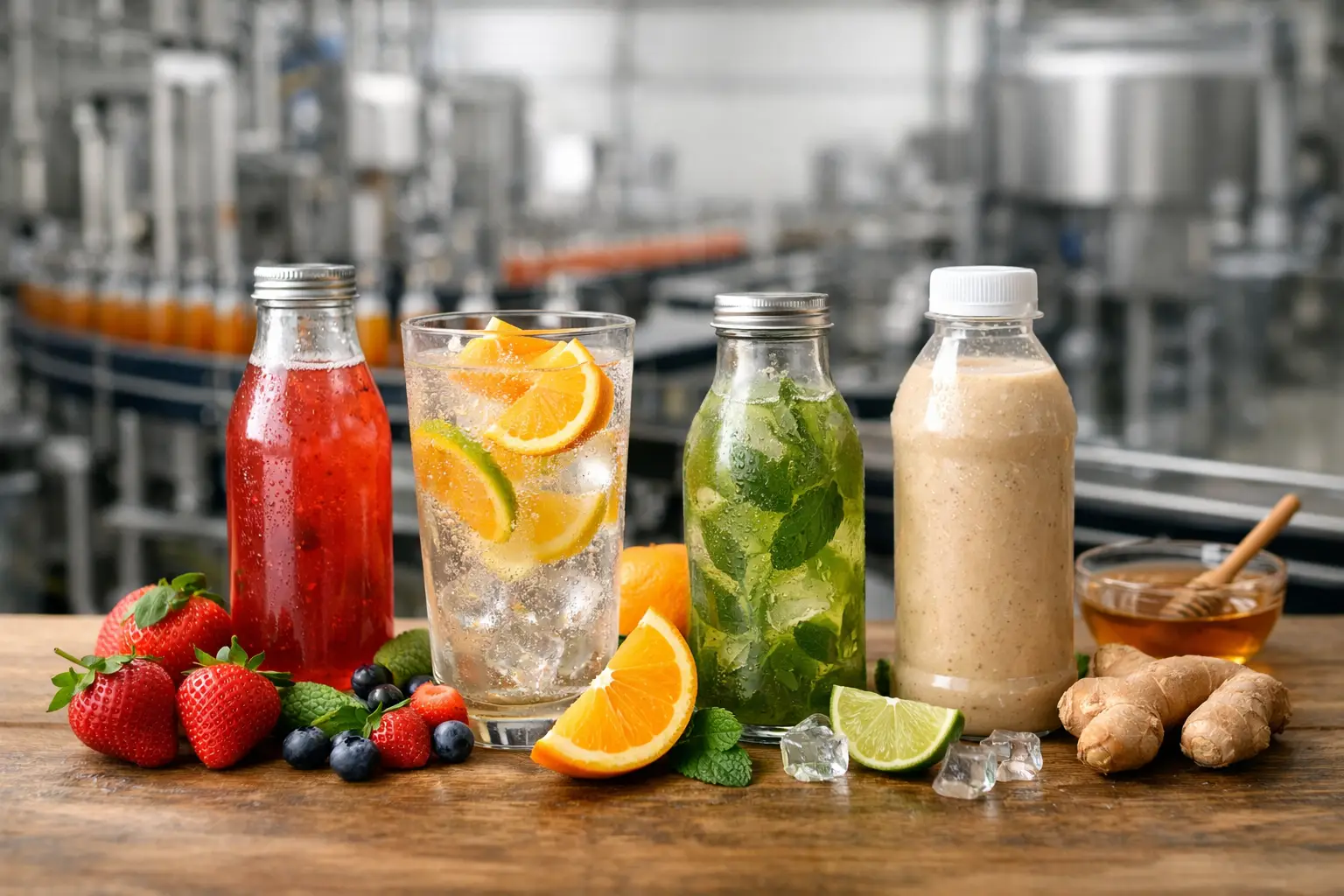
A beverage can earn attention with a clean label. It earns repeat purchase when the ingredient story is supported by taste, stability, compliance, and dependable availability. Real ingredient beverage innovation is the work of making those requirements perform together, from the first bench sample to a full production run.
For buyers, distributors, and beverage founders, that distinction matters. A product that tastes excellent in a small test batch but separates on shelf, varies by production site, or cannot secure its core inputs is not ready for a serious market. Real ingredients, real results, means building for the conditions a commercial beverage will actually face.
Why Real Ingredient Beverage Innovation Is Harder Than It Looks
Consumers increasingly recognize ingredient panels and expect products to match the claims on the package. They look for recognizable fruit, botanicals, electrolytes, teas, juices, and functional components rather than artificial flavor systems designed to imitate them. That preference creates opportunity, but it also introduces formulation variables that cannot be managed with marketing language alone.
Natural inputs vary. A citrus ingredient may shift in acidity and aroma across harvests. A botanical extract can bring color, bitterness, or sediment that changes under heat treatment. Fruit components affect sweetness, viscosity, and microbial risk. Functional ingredients may interact with minerals, proteins, or acids in ways that influence flavor and appearance over time.
The right response is not to avoid real ingredients. It is to formulate with their behavior in mind. That means setting specifications before procurement, qualifying suppliers, testing ingredient compatibility, and designing a process that protects the product through its intended shelf life. The goal is a beverage that delivers the same experience in a retail cooler, a hospitality venue, or a distributor warehouse.
Start With a Product Standard, Not a Trend
A strong concept begins by defining what cannot be compromised. Is the product a classic cocktail built on natural flavor and premium presentation? Is it a sports drink where hydration performance and refreshing taste must work together? Is it an energy beverage that needs a clear functional role without an artificial profile? Each category has different technical demands, but the operating principle is the same: establish a product standard before selecting ingredients.
That standard should cover sensory targets, nutritional parameters, ingredient restrictions, packaging format, expected shelf life, target market requirements, and production volume. It should also identify which claim or benefit is central to the product. A beverage cannot credibly be everything at once. Clear priorities make formulation faster and prevent late-stage compromises that dilute the brand.
For example, a juice-forward functional drink may prioritize authentic flavor and a short, recognizable ingredient statement. A high-volume sports beverage may place greater weight on electrolyte delivery, clarity, and heat stability. Neither approach is inherently better. The correct decision depends on the consumer, the channel, the price point, and the distribution model.
Taste Still Decides the Second Purchase
Functional benefits can prompt a trial, but taste and drinkability usually determine whether a consumer returns. This is where many products lose discipline. A formulation may contain a compelling ingredient, yet fail because its bitterness is unbalanced, its sweetness is heavy, or its flavor changes after several weeks in package.
Sensory development should test more than the first sip. Teams should evaluate aroma, initial flavor, finish, mouthfeel, and residual notes at different temperatures and at multiple points in shelf-life testing. A beverage sold cold may still experience warm transit and storage. Designing only for the ideal serving condition leaves too much to chance.
Formulation Must Be Built for Production
A pilot sample and a commercial beverage are related, but they are not the same product until the formula has been validated at scale. Processing conditions, mixing order, equipment shear, fill temperature, carbonation, and package selection can all change the final result.
This is especially relevant when working with natural juices, extracts, and functional systems. An ingredient that disperses easily in a small batch may require different handling at volume. A flavor balance that works before pasteurization may shift after thermal processing. Cloudy beverages and products containing real fruit components may need a deliberate approach to suspension, homogenization, or the acceptable presence of natural sediment.
The answer is disciplined scale-up. Move from concept through bench work, pilot validation, and production trials with measurable controls at each stage. Confirm pH, Brix, carbonation where applicable, fill levels, sensory profile, and microbiological performance. Document the process so that a successful run can be repeated, whether production is scheduled next month or next year.
This is where manufacturing competence protects brand value. High-speed automated production is not a substitute for craft credibility. When the process is well designed, it is how craft-level standards are delivered consistently at commercial volume.
Sourcing Is Part of the Formula
A real-ingredient beverage is only as reliable as its supply chain. Procurement cannot be treated as a final step after product development. If a beverage depends on a particular juice, botanical, sweetener, or functional ingredient, the availability, quality range, documentation, and lead times of that input should influence the formula from the start.
Single-source ingredients may offer a distinctive story, but they can also create exposure to crop variation, regional disruption, and fluctuating costs. Multi-source strategies can improve continuity, provided every approved source meets the same sensory and technical specifications. The trade-off should be evaluated honestly. Exclusivity may be worth the risk for a limited premium release; a national retail program generally needs greater supply resilience.
Quality documentation matters as much as volume. Ingredient specifications, certificates of analysis, allergen controls, traceability records, and applicable regulatory documentation create the foundation for confident purchasing and market access. For brand owners, this reduces avoidable delays. For distributors and buyers, it supports trust in the product behind the label.
Packaging and Shelf Life Are Product Decisions
Packaging is not just a graphic canvas. It affects oxygen exposure, light protection, carbonation retention, shipping weight, line compatibility, and consumer perception. A formulation should be assessed in its actual package, not only in a laboratory container.
A beverage with natural color or delicate botanical notes may need stronger protection from light. A carbonated cocktail requires package and closure performance that preserve its intended experience. A functional drink may need packaging selected around its distribution environment and shelf-life target. The best format depends on the product and channel, not on a universal rule.
Shelf-life testing should reflect the way the beverage will move through the market. Consider ambient storage, refrigerated placement, warehouse dwell time, and the possibility of temperature excursions during transportation. The objective is not merely to achieve a date code. It is to ensure that the beverage still looks, tastes, and performs as intended when a customer opens it.
Real Ingredient Beverage Innovation Needs Commercial Discipline
Great products fail when commercial planning arrives too late. Before launch, brands need a clear understanding of minimum order quantities, manufacturing lead times, packaging procurement, regulatory review, freight realities, and channel margins. These factors influence more than financial forecasts. They can determine which formula, package, and launch sequence are practical.
A capable development and manufacturing partner helps connect those decisions early. At UNC One Corp., the focus is on pairing natural beverage concepts with the quality systems and production capacity needed for international distribution. That includes the practical work of moving from formulation to finished packaged product without losing sight of taste, purity, or volume requirements.
For emerging brands, a phased launch can be the right path: validate the product in a focused channel, collect market feedback, then expand production against real demand. For established operators, a larger initial program may be justified when distribution commitments and supply planning are in place. In both cases, scale should be earned through preparation, not assumed through ambition.
What Buyers and Brand Owners Should Ask Before Committing
The most useful questions are direct. Can the product maintain its sensory profile across the intended shelf life? Are its real ingredients specified tightly enough to manage natural variation? Has the formula been tested under commercial processing conditions? Can the manufacturer support the required volume, package format, compliance needs, and delivery schedule?
Answers should be supported by process, documentation, and production experience. A clean label has greater commercial value when the operation behind it is equally disciplined.
The strongest beverage programs treat authenticity and execution as one standard. Choose ingredients with purpose, test them under real conditions, and build a supply and production plan that gives every customer the same reason to buy again.

No responses yet