
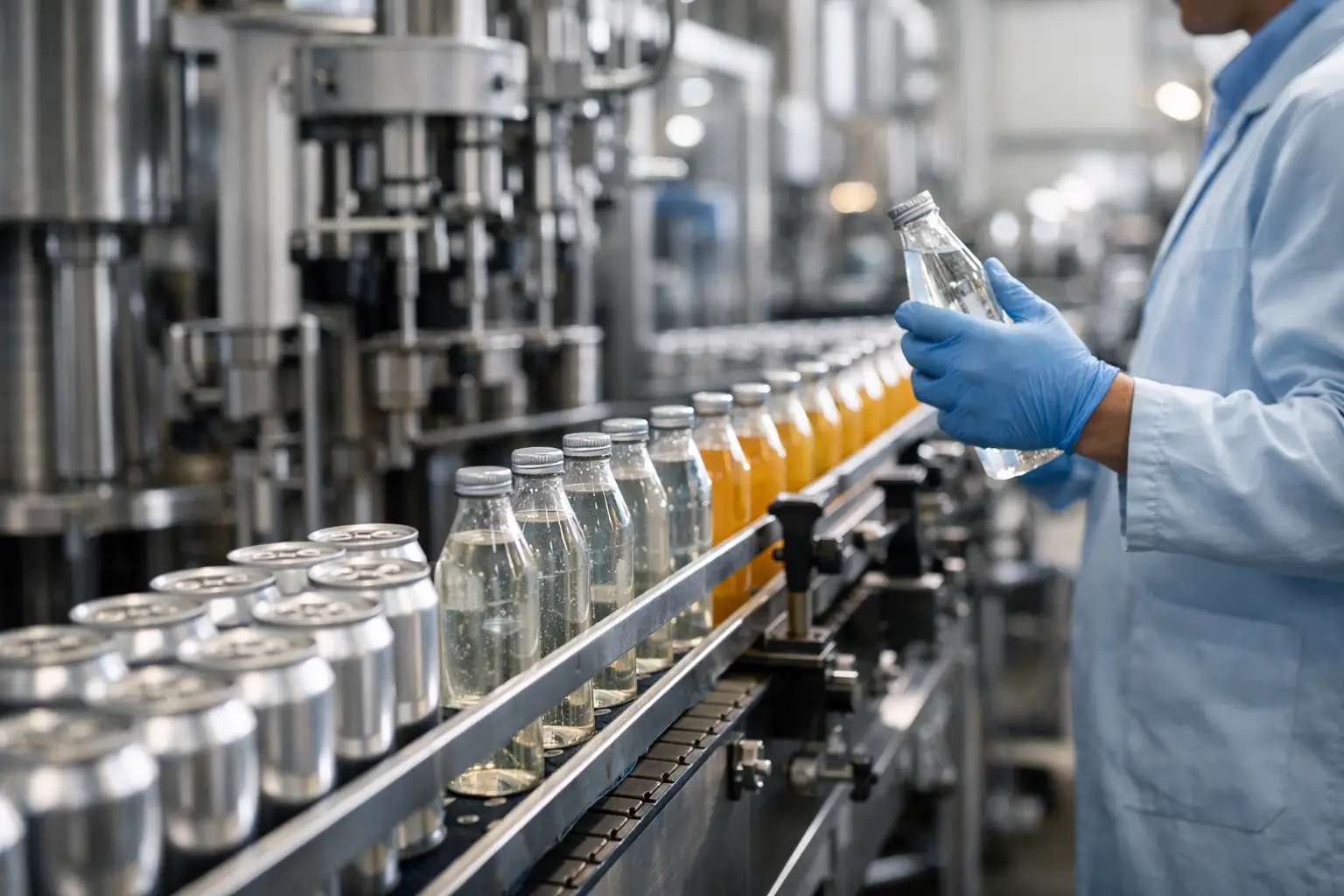
A strong beverage idea can fail for a simple reason: the product is ready, but the production system is not. That is usually where the question comes up – what is beverage co manufacturing, and is it the right model for building a brand without losing control of quality?
Beverage co manufacturing means partnering with a third-party manufacturer to produce your drink. Instead of building and operating your own plant, you work with a specialized production partner that has the equipment, technical staff, quality systems, and capacity to manufacture at commercial scale. Depending on the agreement, that partner may handle only production or support a much broader scope that includes formulation, sourcing, compliance, packaging, and logistics.
For founders, private-label operators, and established brands expanding into new channels, this model can shorten the path to market. It also changes the operating challenge. Rather than asking how to run a factory, the better question becomes how to choose the right manufacturing partner and build a supply chain that protects the brand.
What is beverage co manufacturing in practical terms?
In practical terms, beverage co manufacturing is outsourced production with defined technical and commercial standards. A brand owner brings a concept, formula, or finished product specification to a co-manufacturer. The co-manufacturer then produces that beverage according to agreed requirements for taste, ingredients, packaging format, regulatory compliance, and output volume.
That sounds straightforward, but the scope can vary widely. Some co-manufacturers simply blend, fill, and pack a finished formula that the brand has already developed. Others offer a more complete service model that starts with bench formulation and extends through ingredient sourcing, pilot runs, stability testing, label review, finished goods production, and shipment planning.
This distinction matters. A brand that already has a validated formula and established suppliers may only need a production partner with reliable throughput. A new brand entering the market with a concept and no operating infrastructure usually needs more than line time. It needs technical guidance, packaging decisions, quality documentation, and realistic production planning.
How beverage co manufacturing works
The process usually starts with product definition. That includes beverage type, ingredient deck, target flavor profile, nutritional targets, sweetener system, shelf-life expectations, and packaging format. If the product is still in development, the manufacturer may help refine the formula so it performs well at scale and remains stable through processing and distribution.
Once the product is technically viable, attention shifts to production requirements. That means confirming whether the drink will be hot-filled, aseptically processed, cold-filled, carbonated, pasteurized, or handled through another method. The right production method depends on the product itself. Natural ingredients, functional actives, acidity, preservatives, packaging material, and intended shelf life all affect the manufacturing path.
After that comes sourcing and scheduling. Ingredients, cans, bottles, closures, labels, trays, and cartons need to be specified and ordered in time for the production window. The co-manufacturer may source some or all of these components, or the brand may nominate approved suppliers. Then the product moves into pilot validation or first production, followed by quality checks, packaging inspection, lot coding, palletization, and shipment.
The strongest co-manufacturing relationships are disciplined at every step. Specifications are documented. Change control is clear. Quality standards are measurable. Lead times are realistic. That structure is what keeps a product consistent from one production run to the next.
What services are typically included?
Beverage co manufacturing often covers more than filling liquid into a container. In many cases, the real value is in the systems behind production.
A qualified partner may support formulation, ingredient sourcing, regulatory documentation, packaging procurement, scale-up trials, commercial production, and quality assurance. Some also provide warehouse coordination and freight planning. For a brand trying to launch quickly, this integrated model reduces the number of vendors involved and lowers the risk of misalignment across the process.
Still, not every brand needs every service. If you already have a mature formula, approved graphics, and a packaging supply base, a leaner production arrangement may be more efficient. If you are entering retail for the first time, broader support can save time and prevent expensive corrections later.
Why brands use beverage co manufacturing
The most obvious reason is capital efficiency. Building a beverage plant is expensive, and the cost goes far beyond tanks and filling lines. A company also needs quality systems, trained labor, maintenance programs, certifications, utilities, procurement depth, and production planning discipline. For most emerging brands, that is not the best place to invest early capital.
The second reason is speed. Beverage markets move quickly. Trends in functional ingredients, better-for-you positioning, and channel demand do not wait for a new facility buildout. Co-manufacturing gives brands access to existing infrastructure so they can focus on product, sales, and distribution.
The third reason is technical capability. Many beverages that look simple on the shelf are not simple to produce consistently. Natural flavors, juice bases, botanical extracts, vitamins, minerals, and performance ingredients can create formulation and stability challenges. A capable manufacturing partner understands how processing conditions, ingredient interactions, and packaging choices affect the finished product.
There is also a scale advantage. A manufacturer serving multiple brands often has stronger purchasing power, more scheduling flexibility, and better operational redundancy than a startup could build on its own. For companies selling into both on-premise and off-premise channels, that matters.
The trade-offs brands should understand
Co-manufacturing is not a shortcut around operational discipline. It is a different operating model, and it comes with trade-offs.
The biggest one is control. When production happens in a third-party facility, the brand is not managing every shift, every operator, or every raw material receipt directly. That makes partner selection critical. A weak manufacturing partner can damage product quality, delay shipments, and create compliance issues that are difficult to fix once the product is already in market.
Minimum order quantities are another factor. Co-manufacturers need efficient production runs, which means small brands may face larger batch requirements than they expected. That affects cash flow, inventory risk, and warehouse planning.
Flexibility can also be limited. Packaging changes, formula updates, and promotional timing all need to fit production schedules and procurement lead times. Brands that succeed with co-manufacturing usually accept that planning discipline is part of the cost of scaling without compromise.
What to look for in a beverage co-manufacturer
A credible partner should be able to do more than say yes. It should be able to explain how your beverage will be made, what risks exist in the formula, what certifications or controls apply, and how the product can scale across channels and markets.
Start with process fit. The manufacturer should have direct experience with your beverage category and packaging format. A partner built for one type of product may not be the right fit for another, especially when natural ingredients or functional additives are involved.
Then evaluate quality systems. Ask how specifications are managed, how incoming materials are verified, how batch records are maintained, and how deviations are handled. Quality is not a claim. It is a documented operating system.
Capacity matters too, but capacity without consistency is not enough. The right partner can support current demand and future growth while maintaining product integrity. For many brands, multi-region manufacturing capability is also a major advantage because it supports supply flexibility, freight efficiency, and market expansion.
Communication is another filter that is often underestimated. Problems happen in manufacturing. What matters is whether the partner flags issues early, works from data, and offers practical solutions instead of excuses.
Is beverage co manufacturing right for every brand?
Not always. If a company has very large volume, highly proprietary processing, and the capital to support full vertical integration, owning production may make sense over time. That model can offer tighter control and stronger long-term margin in certain cases.
But for many beverage brands, co-manufacturing is the smarter commercial decision. It allows the business to stay focused on brand building, channel growth, and customer relationships while relying on experienced production infrastructure. That is especially true when the goal is to launch with real ingredients, maintain premium quality, and scale into broader distribution without losing consistency.
At its best, beverage co manufacturing is not just outsourced production. It is an execution partnership. The right manufacturer helps turn a beverage concept into a repeatable, compliant, market-ready product that can perform under real commercial pressure.
If you are evaluating the model, start with a hard question: not who can make the drink, but who can make it right at scale, run after run, without compromise. That is usually where the right decision becomes clear.

No responses yet