
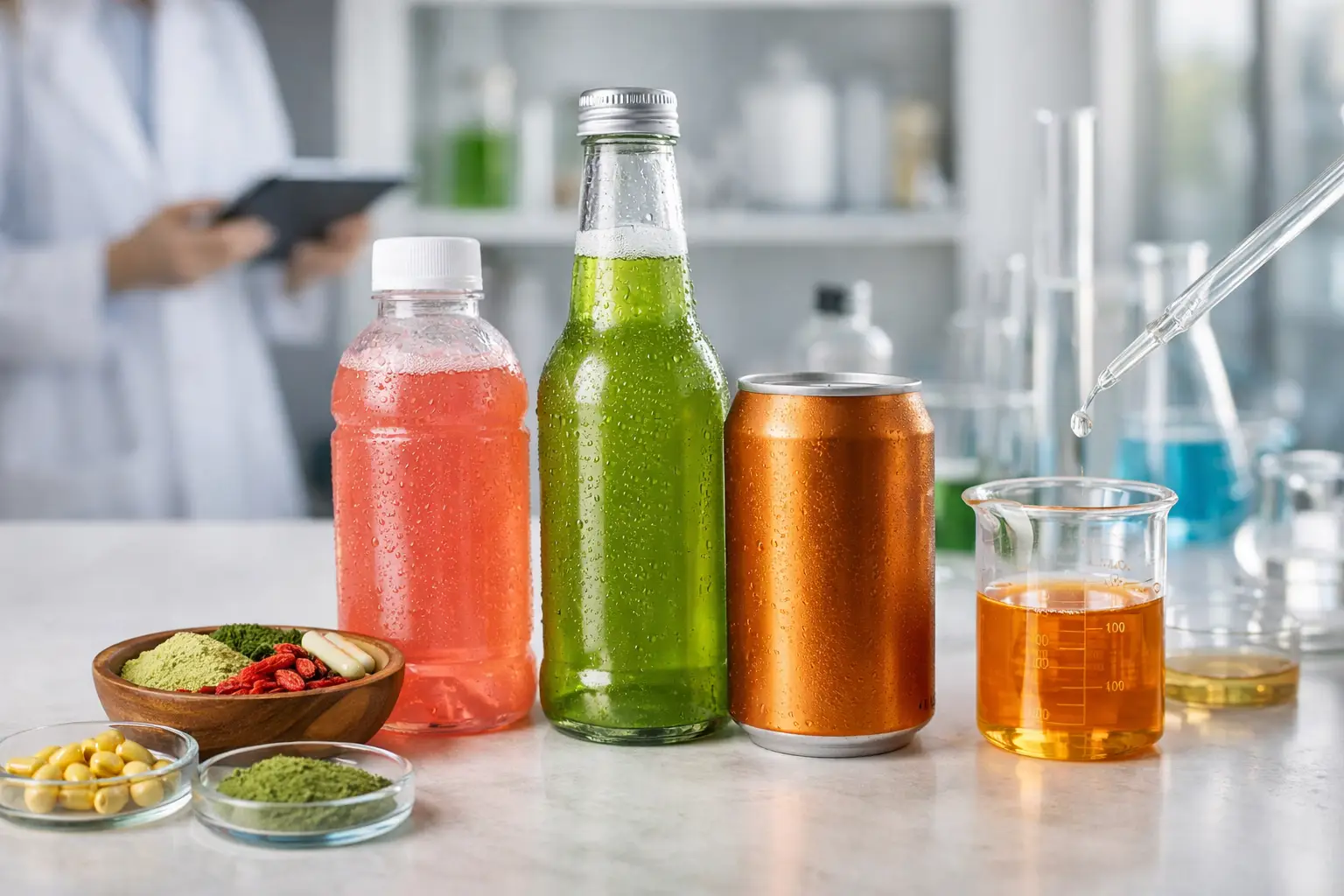
A functional drink can look great on paper and still fail the moment it hits production. The usual reasons are predictable – unstable actives, weak flavor masking, claims that do not hold up, or a cost structure that collapses at scale. If you want to understand how to develop functional drinks that can win in market, the work starts long before packaging and launch.
The category is crowded, but the opportunity is real. Buyers want differentiation they can explain quickly. Brand owners want clean labels, credible benefits, and manufacturing that does not force compromises later. That means product development has to balance efficacy, taste, compliance, shelf stability, and supply chain reality from day one.
How to develop functional drinks with a commercial lens
The fastest way to waste time is to start with an ingredient trend instead of a product job. A better process begins with a clear use case. Is the drink meant to support hydration, energy, focus, recovery, gut health, relaxation, or daily wellness? Each direction changes the formula architecture, flavor system, dosage limits, regulatory pathway, and ideal package format.
A hydration drink, for example, can tolerate a very different taste profile than a nootropic sparkling beverage. A sports drink may need higher consumption frequency and stronger cost discipline. A wellness shot can carry more intensity in flavor and function because the serving size is smaller. These are not minor decisions. They shape everything that follows.
Strong development teams define the target consumer, usage occasion, channel, and price position early. A functional product for specialty retail may support a more premium ingredient deck. A product built for convenience or broad grocery distribution needs a sharper view of margin, fill format, and throughput. Commercial fit is part of formulation, not something added later.
Start with the benefit, then prove the formula
Consumers buy outcomes, not ingredient lists. The formula still matters, but the product concept needs a benefit structure that is easy to communicate and realistic to deliver. That means choosing one primary promise and treating any secondary benefits carefully.
Trying to build one drink for energy, immunity, beauty, focus, hydration, and stress support usually creates a weak proposition and a messy label. A more disciplined approach is to decide what the product must do first, then select ingredients that work together within taste, dosage, and cost constraints.
This is where trade-offs begin. Some highly effective ingredients bring bitterness, sedimentation, color instability, or heat sensitivity. Others sound attractive in marketing but do very little at practical beverage dosages. A functional drink has to work inside a liquid system, survive processing, and remain acceptable over shelf life. Real ingredients and real results only matter when both survive production.
Choosing actives that fit the format
Not every functional ingredient belongs in every beverage. Carbonated products, still beverages, shots, and sports drinks each create different technical demands. Caffeine may be simple to work with, while botanical extracts can vary by source and standardization. Vitamins may degrade over time. Proteins can affect mouthfeel and stability. Electrolytes can introduce saltiness or mineral harshness.
The right ingredient selection depends on the serving size, pH target, sweetness system, and processing conditions. It also depends on regional compliance and ingredient availability. A formula that works in a pilot run is not enough if key raw materials cannot be sourced consistently across markets or at commercial volume.
Claims must match evidence and regulation
Functional beverages sit close to regulatory boundaries, especially when founders want aggressive claims. That is where discipline matters. Structure-function language, ingredient substantiation, label compliance, and market-specific restrictions all need review before the product is finalized.
A claim should be defensible, understandable, and aligned with the actual formula. Overreaching here creates risk for both the brand and the retail partner. It is better to make a clear, supportable claim than to promise more than the product and documentation can carry.
Taste is not secondary
Many functional drinks fail because the team treats flavor as a finishing step. In reality, taste is one of the core development pillars. Consumers may buy the product once for the function, but repeat purchase depends heavily on flavor, mouthfeel, and aftertaste.
Bitterness masking, sweetness balance, acid profile, and aroma selection all matter more when active ingredients are involved. A formula with botanicals, amino acids, minerals, or adaptogens can develop a lingering finish that weakens the drinking experience. Sometimes a bold flavor system solves that. Sometimes a lighter profile makes the flaws more obvious.
This is where practical experience matters. A clean label target may eliminate some masking tools. Sugar reduction may expose the rough edges of the active blend. Natural flavors can support authenticity, but they still need to perform under the product’s pH and shelf conditions. There is no universal solution. The best route depends on what the formula is trying to deliver and how the product will be consumed.
Stability decides whether the concept is real
A functional drink is not developed when the benchtop sample tastes good. It is developed when the formula remains stable through processing, filling, shipping, storage, and shelf life. This is where promising concepts often break down.
Actives can fall out of solution. Colors can fade. Vitamins can degrade. Botanicals can create haze or sediment. Emulsions can separate. Preservative systems may behave differently depending on pH, package type, and thermal process. If the drink is positioned as natural and clean label, the margin for technical error can be even smaller.
Process and package change the formula
Hot fill, tunnel pasteurization, aseptic filling, and other manufacturing routes place different stress on a beverage. The package does the same. Aluminum cans, PET bottles, and glass each influence oxygen exposure, light protection, distribution practicality, and perceived product position.
This is why process selection should happen alongside formulation, not after it. If the formula depends on ingredients that are highly heat sensitive, the production strategy has to reflect that. If the product needs a long shelf life across multiple export markets, that requirement should be built into the development plan from the beginning.
Costing for scale without weakening the product
A formula that only works at small pilot volumes is not a finished business case. Anyone learning how to develop functional drinks for retail or distribution needs to cost the product honestly. Ingredient dosage, sweetener system, flavor load, packaging choice, freight profile, and production efficiency all affect whether the product can compete.
Premium is not the same as expensive. A product can command a premium when the benefit is clear, the ingredient story is credible, and the sensory experience supports repeat purchase. But even a strong concept can get squeezed if the bill of materials leaves no room for distributor margin, promotions, or channel-specific pricing.
This is where manufacturing experience has real value. Formula choices that look small on paper can create major cost differences at commercial volume. A slight change in ingredient form, process yield, or package format may improve scalability without changing the consumer experience. The point is not to cheapen the drink. The point is to build it for real-world execution.
Pilot runs should answer hard questions
Pilot production is not just a box to check before launch. It is where the team tests whether the product behaves like a business, not just a concept. The right pilot run should confirm fill performance, ingredient handling, sensory consistency, stability direction, and packaging integrity.
It should also expose problems early. Does the active blend disperse consistently? Does carbonation hold as expected? Does the flavor stay clean after thermal treatment? Is there visible settling after transport simulation? Does the label claim still make sense after final formula adjustments?
A disciplined partner will use this stage to reduce surprises, not hide them. That matters because late-stage changes are usually more expensive than early corrections.
Launch planning starts in development
Functional drinks do not succeed on formulation alone. The product needs a channel strategy that matches the concept. A recovery drink for gyms, a natural energy beverage for convenience, and a health-forward sparkling functional drink for grocery all require different packaging, pricing, and messaging decisions.
The strongest products are developed with the end market in mind. That includes case configuration, pallet efficiency, lead times, export requirements, and production capacity. It also includes whether the product will launch as a brand-owned line, private label, or co-manufactured concept.
For companies that want speed without sacrificing standards, an experienced development and manufacturing partner can shorten the path from idea to shelf. UNC One Corp. approaches this work with the same standard it applies to its own beverage portfolio – real ingredients, disciplined formulation, and scalable production without compromise.
The best functional drinks are not built around hype. They are built around a formula that can be trusted, a flavor people will come back to, and a production plan that holds up when demand arrives. If the product cannot survive that test, it is not ready yet. If it can, you are no longer chasing a trend. You are building a beverage with staying power.

No responses yet