
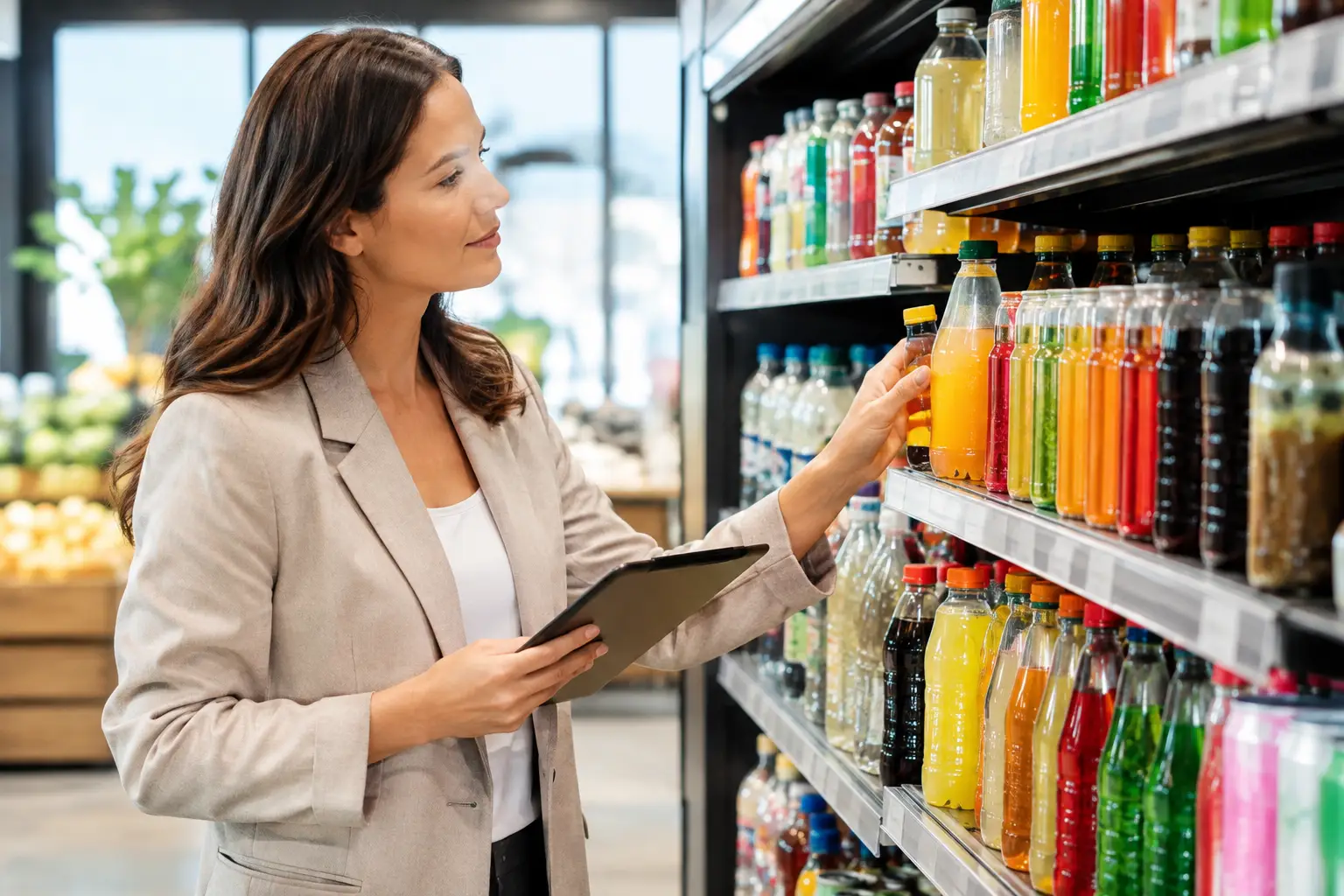
A beverage can earn attention in a buyer meeting and still fail at the shelf. The difference is usually not the label alone. A disciplined retail beverage buyer guide starts with the commercial questions that determine whether a product can move consistently: Who will buy it, why will they return, what does it deliver to the category, and can the supplier keep it in stock without compromise?
For retailers, distributors, and procurement teams, beverage selection is a balance of differentiation and operational certainty. Consumers may be looking for cleaner ingredients, less sugar, real functionality, or a premium ready-to-drink experience. But a product only becomes a retail asset when that demand aligns with clear positioning, credible claims, workable margins, and reliable supply.
Retail Beverage Buyer Guide: Start With Category Fit
The first question is not whether a beverage is attractive. It is whether it has a defined role in the existing assortment. Products that attempt to appeal to every shopper often create confusion at shelf. Strong products solve a recognizable occasion: hydration during work or training, a better-for-you energy choice, an adult cocktail alternative, or a convenient premium refreshment.
Buyers should assess the product against the job it is expected to do. Is it designed to bring new shoppers into the category, trade consumers up to a higher-value option, replace a declining SKU, or improve the retailer’s relevance in a growing segment? Each goal calls for different pricing, pack formats, promotional support, and velocity expectations.
A natural sports drink may fit a retailer seeking a more ingredient-conscious hydration option. A health-oriented energy beverage may fill a gap between conventional energy drinks and wellness products. An all-natural classic cocktail can serve a premium adult occasion where quality cues and flavor credibility matter more than mass-market pricing. These are distinct category roles, and each requires a clear reason to exist.
Avoid treating trend language as proof of demand. Terms such as natural, functional, clean label, and better-for-you can help shoppers navigate a crowded set, but they do not replace a focused consumer proposition. Ask what ingredient, benefit, flavor profile, or usage occasion makes the product relevant in the store where it will be sold.
Assess the shelf, not just the sample
Tasting matters, especially in beverages built on real ingredients. It is not enough on its own. A buyer should view the product in its intended retail environment. Does the package read clearly from several feet away? Is the flavor easy to understand? Does the format make sense beside comparable items? Can a shopper identify the functional benefit or premium quality cue in seconds?
The competitive set also matters. A product that looks distinctive in a presentation may disappear beside established brands. Conversely, a well-positioned package can create useful contrast in an overbuilt category. The objective is not novelty for its own sake. It is recognizable value at the moment of purchase.
Evaluate Ingredient Integrity and Claim Discipline
Retail customers are increasingly reading labels, comparing sugar levels, and questioning artificial ingredients. That creates opportunity for brands built on real ingredients, but it also raises the standard for accuracy. Buyers need confidence that front-of-pack messaging is supported by the formulation, nutrition facts, and applicable regulations.
Review the ingredient deck as closely as the marketing language. If a drink is positioned around natural flavor, performance, hydration, or wellness, its formula should support that promise without relying on vague language. The strongest products make a straightforward case: what is in the can or bottle, what it is designed to deliver, and what it does not include.
Claims require particular care. Functional ingredients, caffeine content, electrolytes, vitamins, botanicals, and added benefits may be central to a product’s commercial appeal, but they also require disciplined substantiation and compliant presentation. A supplier should be able to explain the ingredient purpose, provide current specifications, and demonstrate that labeling is appropriate for the markets served.
This does not mean every beverage must carry a long list of benefits. In many cases, simplicity is the better commercial decision. A clean, enjoyable drink with a transparent ingredient statement can be more durable than a product built around claims that are difficult to explain at shelf or defend under review.
Quality systems should be visible in the buying process
A buyer should not have to guess whether a supplier can deliver consistent product. Request clarity on manufacturing standards, quality controls, traceability, shelf-life validation, batch testing, and documentation. The expectation changes by channel and product type, but the principle remains the same: premium positioning must be supported by repeatable execution.
For alcoholic products, licensing, tax compliance, and market-specific distribution requirements are part of the decision. For nonalcoholic functional beverages, the focus may include ingredient documentation, nutrition labeling, allergen controls, and state or international market requirements. A capable partner treats compliance as a core production discipline, not an afterthought once the sales plan is already underway.
Build the Margin Around the Full Cost to Serve
A beverage that leaves the supplier at an acceptable price can still produce weak economics for the retailer. Freight, distributor margins, promotional allowances, slotting requirements, damaged goods, refrigeration, and packaging format all affect the final margin picture. Buyers should evaluate the full path from production to shelf, not just the quoted case cost.
Pack configuration deserves close attention. Single-serve cans can support convenience, trial, and chilled placement. Multipacks can improve pantry loading and repeat purchase. Glass may communicate premium quality, while aluminum can deliver portability and recycling advantages. There is no universal answer. The right format depends on the channel, shopper behavior, price architecture, and handling requirements.
Price must be credible relative to the experience. Premium drinks can command premium prices when the product, ingredients, package, and occasion reinforce one another. A higher price without a visible reason to believe will slow trial. At the other end, aggressive pricing may undermine a product’s quality cues or leave too little room for distribution and promotion.
Promotional plans should be realistic. New beverages often need an initial period of support, whether through sampling, introductory pricing, secondary displays, or coordinated distributor activity. But continuous discounting is not a strategy. Buyers should look for brands that understand how to build trial while protecting long-term brand value and category profitability.
Supply Reliability Is Part of Product Quality
A buyer’s reputation is attached to the assortment. Out-of-stocks, inconsistent flavor, packaging changes, and missed delivery windows can damage retailer trust faster than a strong launch can build it. That is why manufacturing capacity, supplier redundancy, and production planning should be evaluated early.
Ask direct questions about minimum order quantities, lead times, production locations, inventory strategy, and contingency planning. A supplier with multi-region manufacturing may offer useful flexibility for national programs, international expansion, or changing freight conditions. That capability is especially valuable when a product has seasonal demand, requires specialized ingredients, or is moving from a regional test to broader distribution.
Scale should not come at the expense of product standards. The best manufacturing partners combine high-speed automated capacity with disciplined formulation control, quality assurance, and packaging consistency. UNC One Corp. operates from that principle: real ingredients, strict quality standards, and production capability designed to support both premium beverage positioning and meaningful volume.
Forecasting is a shared responsibility. Retailers need suppliers that can translate launch assumptions into practical production plans, while suppliers need timely visibility into promotions, store counts, distribution gains, and expected replenishment. A conservative launch estimate is often healthier than an ambitious forecast that creates excess inventory or forces a production schedule that cannot be sustained.
Use a Practical Retail Beverage Buyer Guide for Launch Decisions
Before authorization, bring commercial, operational, and quality teams into the same review. The product should have a defined category role, a clear consumer reason to buy, compliant and credible claims, viable margin structure, and a supply plan that fits the retailer’s requirements. If one of those pieces is weak, the launch risk rises sharply.
It also helps to agree on what success means before the first case ships. Set expectations for distribution, store execution, trial activity, reorder timing, and sales velocity by channel. A convenience program, natural grocery placement, club test, and on-premise rollout should not be measured by the same timetable or the same consumer behavior.
The strongest buyer-supplier relationships are built on direct information and consistent follow-through. Choose beverages that make a clear promise, then choose partners with the manufacturing discipline to keep that promise on every shipment. That is how a new SKU earns more than shelf space – it earns a durable place in the assortment.

No responses yet