
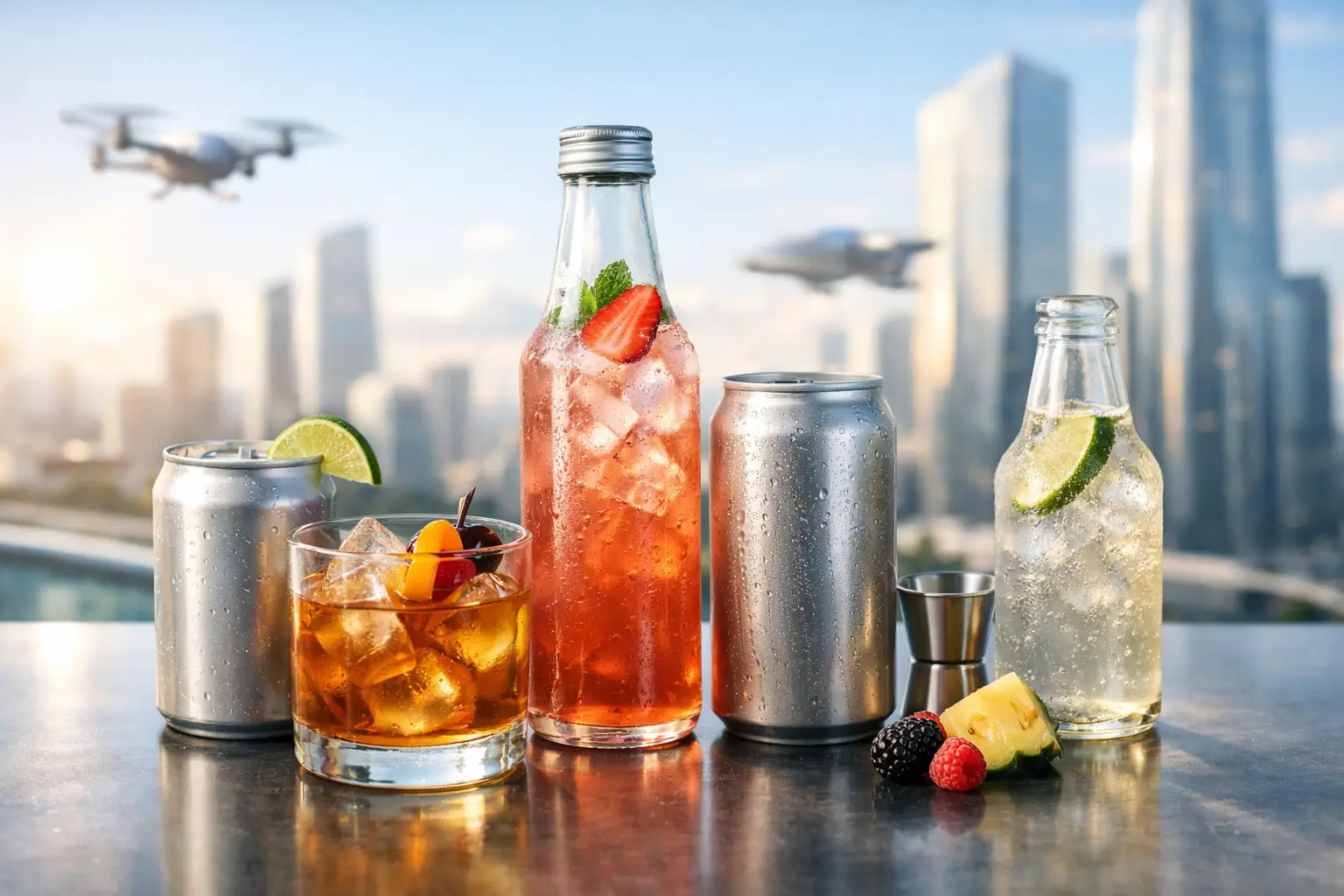
A canned cocktail is no longer judged only by the convenience of opening it. Buyers now assess ingredient quality, alcohol balance, label clarity, flavor consistency, shelf performance, and whether the supplier can deliver the same product at meaningful volume. The future of ready to drink cocktails will be defined by brands that treat those requirements as one operating standard rather than separate priorities.
For distributors, retailers, hospitality groups, and beverage founders, the opportunity remains significant. Ready-to-drink cocktails can bring recognizable serves to more occasions, from beach coolers and stadium concessions to hotel minibars and premium retail shelves. But the category is moving beyond novelty. Growth will increasingly depend on formulation discipline, channel-fit packaging, regulatory readiness, and manufacturing capacity that does not compromise the product promise.
The Future of Ready to Drink Cocktails Is Moving Upmarket
Early category momentum came from accessibility. Consumers could purchase a familiar cocktail format without a bartender, bar tools, or a long ingredient list. That convenience still matters, but it is no longer enough to establish a durable position. As shelves become more crowded, a generic citrus profile, heavy sweetness, or artificial finish becomes easier to reject.
The next phase will reward products that earn repeat purchase. That means cocktails built with real juice, natural flavors, recognizable spirits or spirit character, and sweetness calibrated for modern palates. A premium product does not need to be overly complex. It needs to taste intentional from the first can to the last case produced.
This shift creates a clear commercial divide. Brands that rely on packaging alone may secure initial trial, but brands with disciplined liquid development can build velocity. For buyers, that distinction matters because repeatable demand is more valuable than a short-lived launch spike.
Familiar cocktails, better execution
Classic serves will continue to lead because consumers understand them immediately. Margaritas, mojitos, palomas, vodka sodas, spritzes, and whiskey-based highballs have established flavor cues. The opportunity is not to reinvent every cocktail. It is to deliver a recognizable experience with cleaner ingredients, better balance, and dependable quality.
There is room for experimentation, particularly with botanical notes, global flavor influences, and lower-sugar recipes. Still, innovation should serve a clear occasion. A flavor can be distinctive without becoming difficult to explain at the shelf or behind a bar. For broad distribution, clarity usually outperforms complexity.
Clean Labels Will Need to Deliver Real Taste
Clean-label positioning has become a baseline expectation across many beverage categories. In ready-to-drink cocktails, it presents a technical challenge. Alcohol, acidity, juice content, carbonation, sweeteners, and natural flavor systems must work together over the intended shelf life. Removing an ingredient is easy compared with protecting the finished drink’s taste, appearance, and stability.
The strongest products will make straightforward claims that the formula can support. Real ingredients, real results is a credible direction only when the supply chain, specifications, and production controls back it up. Natural positioning must be more than front-label language. It has to survive sourcing variability, processing, transport, and time on shelf.
For a brand owner, this requires decisions early in development. Is the product expected to be shelf-stable at ambient temperatures? Will it be carbonated? Does it require juice content, and if so, how will color and flavor be managed across harvest cycles? What is the acceptable tolerance for alcohol by volume, fill level, and sensory variation? These questions shape the formula, cost structure, equipment requirements, and route to market.
A lower-calorie or lower-sugar cocktail can also be commercially attractive, but only if it still tastes complete. Cutting sweetness without rebuilding acidity, mouthfeel, and aroma often produces a thin product. The better approach is to formulate for balance, then validate with sensory testing across target consumers and channels.
Occasion-Based Design Will Shape Portfolios
Ready-to-drink cocktails are not one category with one buyer. A 12-ounce sparkling cocktail for outdoor social occasions has different requirements than a premium 200-milliliter cocktail for hotel rooms, airlines, or upscale retail. A multipack designed for grocery needs a different price architecture than a single can sold at a concert venue.
Portfolio planning should start with where and how the product will be consumed. Off-premise retail favors clear value, shelf visibility, efficient case configuration, and a flavor profile that works for repeat purchase. On-premise accounts may prioritize speed of service, consistent pours, premium presentation, and a format that reduces labor and waste. Neither channel is inherently better. The right choice depends on the brand’s price point, supply capability, and sales model.
Packaging must follow that strategy. Slim cans can signal light refreshment and portability. Standard cans may provide stronger value perception. Glass can support a premium cue, but it adds weight, breakage risk, and freight considerations. Multipacks can improve household penetration, while single units help trial. Each format has a trade-off, and successful launches make those choices deliberately.
Scale Will Become a Stronger Competitive Advantage
The future of ready to drink cocktails will not be won by flavor development alone. A product that tastes excellent in a pilot run can fail commercially if it cannot be produced consistently at scale. This is where manufacturing competence becomes a brand advantage.
Alcoholic beverage production demands precise control over batching, alcohol integration, carbonation where applicable, filling, seam integrity, coding, packaging, and quality release. Small deviations can affect sensory performance, compliance, shelf life, or customer confidence. As distribution expands, a producer must also manage ingredient procurement, packaging availability, production scheduling, and logistics across changing demand patterns.
Brands should assess manufacturing partners on more than stated capacity. The important questions are practical: Can the facility run the desired package and volume efficiently? Does it have established quality systems? Can it source and qualify ingredients consistently? Does it understand the documentation required for alcoholic beverages in intended markets? Can it support scale-up without changing the product experience?
Flexible production across regions can reduce exposure to freight disruption and support faster market response. It can also create more options for brands entering new territories. However, multi-region supply only creates value when specifications, process controls, and quality standards are tightly managed. Consistency must travel with the product.
UNC One Corp. approaches this requirement through natural beverage development combined with high-speed automated production. For partners, the objective is direct: preserve premium product standards while building a supply model capable of serving serious distribution.
Compliance Will Influence Product Design Earlier
Ready-to-drink cocktails sit at the intersection of beverage innovation and alcohol regulation. Requirements can vary by alcohol base, alcohol percentage, product classification, labeling language, deposit systems, state rules, and export destination. A formula that appears commercially sound can become difficult to sell if regulatory review happens too late.
This is particularly relevant for brands planning cross-border growth. Label artwork, nutrition and ingredient declarations where applicable, approved claims, alcohol statements, container requirements, and tax treatment may all affect the final product. Regulatory planning should be part of the development timeline, not a final checkpoint before production.
Founders should also avoid making functional claims that conflict with the nature of an alcoholic beverage. Consumers may seek cleaner options, fewer calories, or familiar real-food ingredients, but alcohol products require disciplined, compliant communication. Trust is built through accurate positioning, not exaggerated benefits.
What Buyers and Brands Should Prioritize Now
The most durable ready-to-drink cocktail programs will align four elements: a product with clear consumer appeal, a formula that can maintain quality through shelf life, packaging suited to the sales channel, and a production platform built for reliable execution. Weakness in any one area can limit the entire launch.
For buyers, the priority is to look past a compelling can design and evaluate product readiness. Ask for clear specifications, sampling consistency, supply expectations, shelf-life information, and a realistic view of lead times. For emerging brands, start with the commercial target rather than an oversized flavor lineup. A focused launch with the right liquid, package, and manufacturing plan is often stronger than a broad portfolio that cannot be supported.
The category will continue to reward convenience, but convenience is now the entry point, not the finish line. Build for the second purchase, the second market, and the second production run. That is where a ready-to-drink cocktail becomes a lasting beverage business rather than a temporary trend.

No responses yet