
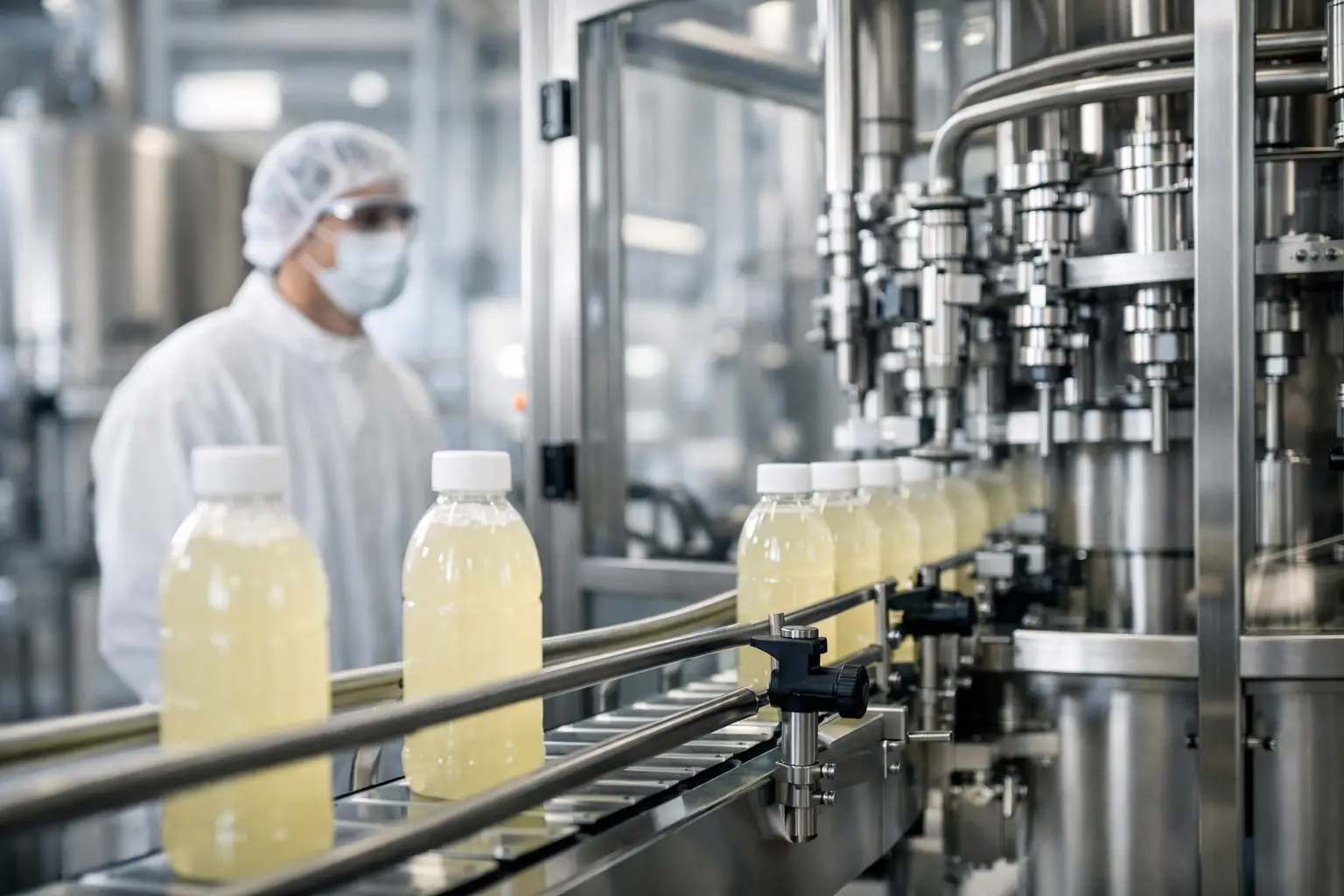
A beverage can win a buyer’s attention in seconds and lose it just as quickly if its flavor, color, or ingredient story changes on the shelf. Aseptic beverage manufacturing is built to prevent that outcome. It gives brands a proven way to protect product safety and quality while delivering shelf-stable beverages that can move through retail, foodservice, export, and distribution networks without relying on refrigeration.
For natural cocktails, sports drinks, functional energy beverages, and other products made with real ingredients, the manufacturing decision is never only about filling a package. It affects formulation options, freight economics, inventory planning, retail placement, and consumer trust. The right aseptic program protects what makes a beverage worth buying in the first place.
What Aseptic Beverage Manufacturing Does
Aseptic manufacturing sterilizes the beverage and its package separately, then fills and seals the product in a controlled sterile environment. The objective is direct: eliminate microorganisms that could compromise safety or shorten shelf life, without requiring traditional in-package thermal processing.
The process typically begins with a validated formula and raw-material specification. The product is then treated at a precise temperature for a controlled period, commonly through ultra-high-temperature processing. After treatment, it is cooled and transferred into sterilized packaging under aseptic conditions. Every step is designed to prevent recontamination.
That distinction matters. A product may be shelf stable because it is highly acidic, heavily preserved, or processed aggressively after filling. Aseptic processing offers another path: use disciplined thermal treatment, hygienic design, sterile filling, and package integrity to preserve safety and shelf life with a cleaner product proposition.
For brands, the value is practical. Shelf-stable distribution can reduce cold-chain dependence, improve inventory flexibility, and support broader geographic reach. For buyers, it provides a dependable product with consistent quality across shipments and markets.
Why the Process Matters for Natural Beverages
Natural positioning raises the standard. Consumers expect recognizable ingredients, clear claims, and a flavor profile that feels intentional rather than processed. At the same time, natural ingredients can introduce variation in acidity, viscosity, particulate load, color, and microbiological risk.
Aseptic production helps manage those variables, but it does not eliminate formulation discipline. A drink containing juice, plant extracts, dairy alternatives, protein, botanicals, or functional ingredients must be designed for the realities of heat treatment and filling. Some ingredients lose aroma under heat. Others can separate, settle, foam, or create filling challenges. Vitamins and actives may require overages or alternative addition strategies to meet label claims through the full shelf-life period.
The best outcome comes from treating formulation and manufacturing as one program. A beverage should not be finalized in a development kitchen and then handed to a production team with the expectation that scale will simply follow. Scale changes mixing dynamics, heat exposure, homogenization performance, package interaction, and quality-control requirements.
This is where experienced manufacturing support earns its value. The goal is not merely to produce a compliant run. It is to build a product that performs consistently at commercial volume, arrives in market as intended, and continues to meet the brand standard through its stated shelf life.
Shelf Life Is a Quality Commitment
Shelf life is often discussed as a logistics benefit. It is also a promise to the customer. A beverage must remain safe, but it should also retain the sensory profile that earned approval: the proper flavor balance, color, texture, aroma, and carbonation level where applicable.
A longer shelf life is not automatically better if the product no longer tastes like the brand intended. The right target depends on the channel, expected distribution cycle, package format, export requirements, and inventory model. A regional foodservice program may need a different shelf-life strategy than a national retail launch or international export plan.
Validation should include microbiological review, package integrity testing, sensory evaluation, and stability work under conditions that reflect the real supply chain. Temperature abuse testing is particularly relevant for products that may sit in warehouses, loading docks, or retail backrooms before purchase.
The Trade-Offs Brands Need to Evaluate
Aseptic processing is powerful, but it is not the correct answer for every beverage. A clear, acidified drink may be well suited to another shelf-stable process. A product with large particulates may require specialized equipment or a different packaging approach. A refrigerated product may be central to a brand’s premium positioning and sensory profile.
The decision should be based on product science and commercial goals, not on packaging trends alone. Brands should evaluate several factors before choosing an aseptic path:
- Formula behavior: pH, viscosity, solids, emulsions, protein content, particulates, and ingredient sensitivity all affect process feasibility.
- Package format: Cartons, bottles, and other aseptic-ready formats each carry different visual, operational, and cost considerations.
- Channel requirements: Retail, hospitality, e-commerce, club, and export channels impose different handling and shelf-life demands.
- Volume outlook: Aseptic lines are designed for efficiency at scale. Minimum runs, changeover requirements, and production scheduling must match the brand’s demand plan.
- Quality and regulatory needs: Label claims, nutrition targets, allergen controls, supplier documentation, and market-specific compliance must be built into the program early.
The most common mistake is selecting a process before defining the commercial model. A brand may choose a package that looks premium but does not travel efficiently, or develop a formula that performs well in small trials but cannot hold its texture after high-temperature processing. Good manufacturing decisions prevent expensive reformulation and rework later.
From Formula to Commercial Run
A disciplined aseptic program starts with a complete product brief. This should define the target consumer, ingredient standards, nutrition profile, flavor direction, package, serving size, shelf-life goal, target cost, and launch market. These details guide technical decisions before production time is committed.
Bench development is followed by pilot work and scale-up validation. At each stage, the team should confirm the product’s physical and sensory performance. Does the emulsion remain stable? Does the beverage flow correctly through the system? Does it maintain its intended flavor after processing? Is the fill weight accurate? Does the package protect the product as expected?
Commercial readiness also requires clear specifications. Raw materials need approved sources, defined acceptance criteria, and traceability. Finished goods need measurable standards for appearance, taste, microbiology, net contents, coding, and package integrity. These controls protect consistency when production expands across multiple runs or facilities.
For a brand entering multiple markets, manufacturing footprint matters as much as process capability. Production in more than one region can improve supply flexibility, reduce transit exposure, and support faster replenishment. It also requires disciplined quality systems so that a product made for one market retains the same standard wherever it is produced.
UNC One Corp. approaches this work with a simple operating principle: premium beverage quality must hold at commercial speed. That means aligning real-ingredient formulation, validated process controls, automated production capacity, and supply planning before the first large-scale order is released.
What Buyers and Brand Partners Should Ask
A manufacturing partner should be able to explain more than its line speed. The critical questions are about capability, controls, and accountability. Ask how the facility validates thermal processing, manages sterile zones, tests package integrity, and handles deviations. Ask how it qualifies suppliers, manages allergens, documents traceability, and protects formula confidentiality.
It is also worth asking how the manufacturer manages change. Ingredient substitutions, packaging shortages, revised label claims, and demand spikes are routine pressures in beverage operations. A capable partner identifies the impact of each change before it reaches production, rather than correcting issues after finished goods are already in the supply chain.
For distributors and procurement teams, the same discipline reduces risk. Reliable aseptic supply supports better forecasting, more flexible warehousing, and fewer quality surprises. A differentiated beverage still needs a compelling commercial story, but consistency is what allows that story to scale.
Build for the Shelf, Not Just the Launch
Aseptic beverage manufacturing is a long-term operating choice. When the formula, process, package, and supply plan are aligned, it can support clean-label ambitions, shelf-stable distribution, and serious volume without compromising product integrity. The strongest brands build that discipline into the product before the market asks them to prove it.

No responses yet