
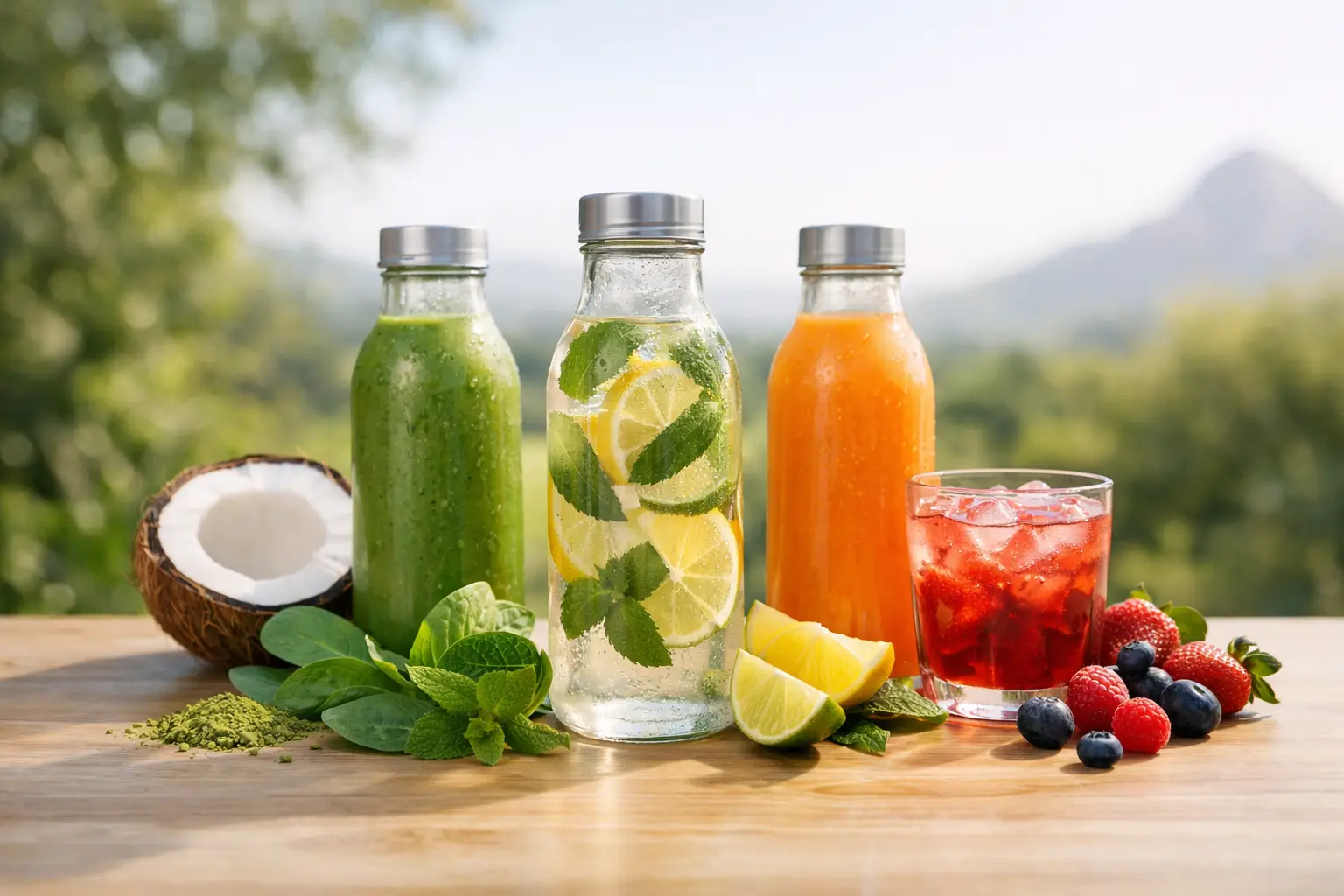
A performance beverage is no longer judged only by its energy claim or flavor profile. Buyers want to know what is in the can, where it was made, whether the supply can hold, and whether the product delivers a clear reason to return to the shelf. The future of natural performance beverages will be defined by brands that can answer all four questions without compromise.
For distributors, retailers, hospitality operators, and beverage founders, this shift changes the standard for product development. A clean-looking label is not enough. Natural positioning must be supported by ingredient discipline, sensory quality, compliant claims, stable production, and the capacity to serve demand across markets.
The Future of Natural Performance Beverages Is More Specific
The broad promise of “better for you” is losing value because it says too little. Consumers increasingly look for products built around a defined occasion: sustained energy before work, hydration during training, recovery after activity, or a lighter alternative to conventional energy drinks and cocktails. The strongest concepts will make the function easy to understand without overstating what the formula can do.
This is where real ingredients matter. Fruit-based flavors, recognizable extracts, minerals, electrolytes, tea-derived caffeine, and carefully selected botanical components give brands a credible foundation. They also introduce formulation work that cannot be ignored. Natural ingredients can vary by harvest, origin, color, acidity, and flavor intensity. Managing those variables is part of building a product that performs consistently at scale.
The market will reward clarity over complexity. A formula with a limited number of purposeful ingredients can be easier for consumers to trust, easier for buyers to position, and easier for manufacturing teams to control. That does not mean every product needs the shortest possible label. It means each ingredient should have a clear role in taste, function, stability, or product identity.
Clean Labels Must Also Deliver a Better Experience
Natural beverages have often faced a practical problem: a strong ingredient story paired with an average drinking experience. Bitterness from functional ingredients, weak flavor carry, sediment, color changes, or an overly thin mouthfeel can stop repeat purchase quickly. Performance positioning earns the first trial. Product quality earns the second purchase.
The next generation of successful beverages will treat sensory development as a commercial requirement, not a final-stage adjustment. Flavor must work through the full shelf life. Sweetness needs to fit the target consumer without masking the product’s character. Carbonation, viscosity, and acidity should support the intended occasion, whether the beverage is designed for fast refreshment, controlled energy, or post-workout hydration.
Lower-sugar formulations will remain important, but sugar reduction is not a universal answer. Some categories need carbohydrates for taste, energy delivery, or a fuller body. Others benefit from a lighter profile. The right decision depends on use occasion, target channel, and the competitive set. The objective is not to remove ingredients for marketing purposes. It is to build a formula that delivers a credible benefit and a satisfying experience.
Function Needs Evidence and Regulatory Discipline
As functional beverage claims become more visible, scrutiny will increase. Brands must distinguish between permitted, substantiated product communication and language that suggests disease treatment or unsupported outcomes. This is especially relevant for products containing caffeine, adaptogenic botanicals, vitamins, minerals, amino acids, or other active components.
A strong development process considers regulatory requirements before packaging is finalized. Ingredient specifications, market-specific limits, nutrition facts, allergen management, label statements, and claim substantiation should be reviewed as part of the product build. Correcting these issues after a production run costs time, inventory, and credibility.
For companies selling internationally, the challenge is greater. A formula that is acceptable in one market may require adjustments in another. Manufacturing partners with multi-region experience can help brands plan for those differences early, rather than treating international expansion as a label translation exercise.
Scale Will Separate Concepts From Lasting Brands
A compelling beverage concept can win attention at launch. Reliable manufacturing determines whether it can become a real business. Natural formulas are particularly sensitive to production conditions because ingredients may behave differently in large batches than they do in bench samples. Heat treatment, mixing order, water quality, carbonation, filling conditions, and packaging format can all affect the final product.
This is why scalable production should be considered during formulation, not after market demand arrives. A beverage must be designed for its intended manufacturing environment. The right production partner brings formulation knowledge together with quality systems, sourcing capability, automated filling capacity, and repeatable process control.
For buyers and channel partners, scale is more than volume. It means confidence that the product arriving in a regional retail account will match the product first approved for a national program. It means consistent case packs, dependable lead times, complete documentation, and the ability to respond when a successful SKU moves faster than forecast.
For beverage founders, it means making early decisions that do not limit future growth. Choosing an ingredient that cannot be sourced consistently, a package that creates operational constraints, or a formula that is difficult to stabilize may create problems long after the initial launch. Premium positioning and industrial capability must work together.
Supply Flexibility Is Now a Product Advantage
The beverage sector has learned that supply chains are part of brand reputation. Delays in cans, sweeteners, extracts, or key functional ingredients can interrupt distribution and reduce buyer confidence. Brands that plan around approved alternatives, qualified suppliers, realistic inventory levels, and regional manufacturing options are better positioned to protect continuity.
Multi-region production is particularly valuable when brands serve international markets or need to reduce shipping complexity. It can improve responsiveness and help manage risk, but it also requires strict alignment on specifications. The same brand should not become a different product because it is produced in a different facility. Standardized formulas, documented processes, sensory benchmarks, and quality controls keep the product identity intact.
This is one reason manufacturing competence will become more visible in beverage purchasing decisions. Buyers do not only evaluate a brand’s front label. They evaluate whether the supplier can execute at the required standard, in the required quantity, on the required timeline.
The Best Opportunities Are Built Around Real Occasions
The category will continue to expand beyond the traditional energy drink. Hydration beverages, better-for-you sports drinks, tea-based energy, functional sparkling beverages, and naturally positioned ready-to-drink cocktails all have room to grow when the proposition is clear.
The common denominator is not a single ingredient. It is relevance. A product should solve a specific consumer need while fitting the habits of the channel where it will be sold. A fast-moving convenience product may require immediate flavor impact and familiar functional cues. A fitness-focused retail product may need transparent nutrition and a more technical benefit story. On-premise concepts need speed of service, reliable margins, and a format that performs in a social setting.
Brands should resist adding every current trend to one can. Combining energy, hydration, immunity, focus, mood, and recovery language can create confusion and make compliance more difficult. A sharper proposition is usually more commercial: one primary use occasion, one understandable product promise, and a formula built to support it.
Partnership Will Matter as Much as Product Vision
The future of natural performance beverages favors companies that can move from idea to shelf with discipline. That requires more than a compelling brand identity. It requires formulation expertise, ingredient sourcing, packaging decisions, regulatory review, production planning, quality assurance, and a route to market that matches the product’s economics.
For emerging brands, a capable contract manufacturing partner can reduce the operational burden of building those systems independently. For established portfolio owners, the right production relationship can provide capacity, speed, and flexibility without lowering standards. The value is not simply filling a can. It is creating a repeatable product platform that can support growth.
UNC One Corp. approaches this work with the same principle that should guide the category: real ingredients, real results. Natural performance beverages do not need exaggerated claims or fragile supply chains to stand out. They need a clear product purpose, consistent quality, and production built to deliver when the market responds.
The strongest next move is practical: define the occasion, prove the formula, and build the supply plan before demand forces the decision. That is how a natural beverage earns long-term placement, not just launch-day attention.

No responses yet