
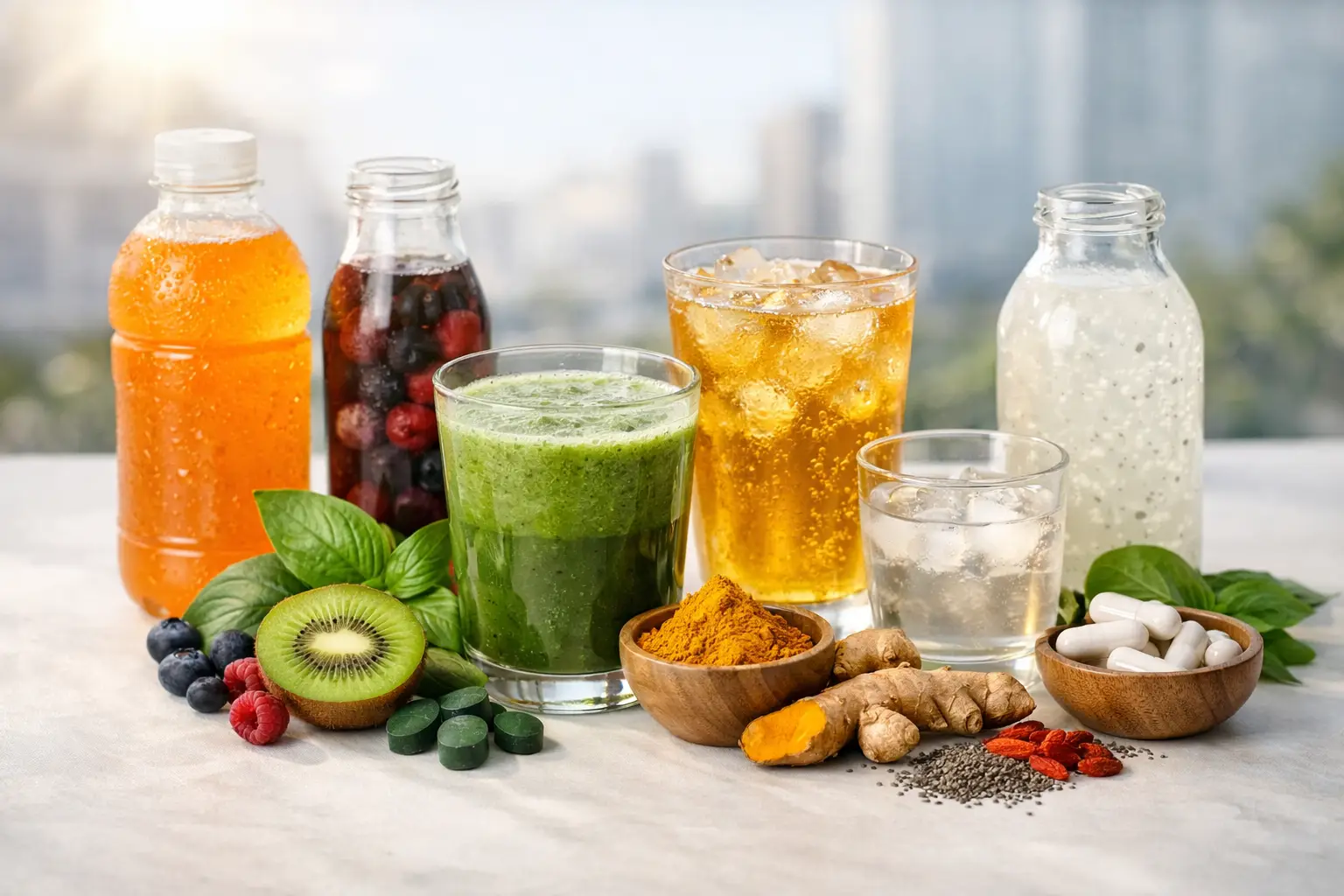
A beverage can win a shelf placement, a menu feature, or a distribution meeting long before the first case ships. It wins when its benefit is instantly clear, its ingredients support the claim, and its supply plan can withstand demand. The top functional beverage market opportunities sit where consumer need, clean formulation, and dependable production meet.
For buyers, distributors, and emerging brands, the opportunity is not simply to add functional ingredients to another flavored drink. The stronger play is to build a product with a credible role in a customer’s day – before training, during recovery, between meetings, or during a social occasion. That role must be supported by taste, price architecture, labeling discipline, and a manufacturing partner that can scale without compromising the formula.
Top Functional Beverage Market Opportunities by Occasion
Functional beverages are moving beyond a single wellness aisle. Consumers increasingly expect beverages to deliver a purpose while remaining convenient, enjoyable, and compatible with everyday routines. The best opportunities are defined by usage occasion, not by ingredient trend alone.
Hydration built for active, everyday use
Hydration remains one of the clearest functional propositions because the consumer benefit is easy to understand. The market extends well beyond elite sports. Workers, travelers, students, and recreational athletes all look for convenient hydration options that feel lighter and cleaner than traditional high-sugar sports drinks.
The opportunity is strongest for products that balance electrolytes with a disciplined nutrition profile. Lower sugar, natural flavors, recognizable ingredients, and a clean finish can help a brand earn repeat purchase. However, a low-sugar formula cannot come at the expense of taste or stability. Sweetener selection, mineral load, acidity, and flavor masking need to be engineered together.
For channel partners, hydration products can work across convenience, grocery, fitness, hospitality, and foodservice. That breadth is valuable, but it also means packaging format and price point must fit the intended route to market. A premium glass bottle may support a hotel or on-premise program, while a lightweight can or PET format may better serve high-volume convenience and event channels.
Health-oriented energy without the old trade-offs
Energy remains a high-velocity category, but the definition of value is changing. Many consumers still want alertness and performance. They are less willing to accept excessive sugar, artificial positioning, or a formula that feels disconnected from broader wellness goals.
This creates room for health-oriented energy beverages built around clear energy cues and real ingredient credibility. The commercial challenge is to avoid overpromising. A product does not need to claim every imaginable benefit. A focused proposition – clean energy, balanced refreshment, or performance support – is easier for buyers to understand and easier for brands to substantiate.
Caffeine source, serving size, sweetness, and flavor intensity all influence whether an energy product feels premium or generic. Compliance also matters. Brands must ensure that ingredient levels, label disclosures, and marketing language align with the markets in which they sell. A compelling front label does not replace disciplined regulatory review.
Functional social beverages and better cocktail occasions
The social beverage space offers a distinct opportunity for brands that understand moderation without treating it as deprivation. Consumers are seeking more choice at social occasions: lower-alcohol options, premium ready-to-drink cocktails, sophisticated nonalcoholic formats, and beverages with botanical or wellness-adjacent cues.
The strongest concepts preserve the ritual. They should look appropriate in a bar, restaurant, poolside venue, or home gathering and deliver a credible flavor experience. A functional element can add differentiation, but the product still has to taste like a beverage consumers want to order again.
For hospitality buyers, consistency is central. A ready-to-serve format can reduce labor, improve portion control, and make premium beverage programs easier to execute across locations. For retail buyers, the opportunity depends on clear segmentation. Alcoholic, nonalcoholic, and functional products may serve similar occasions, but they face different placement, licensing, and communication requirements.
Daily wellness formats with a reason to return
Daily wellness is often where brands become too broad. Adding vitamins, botanicals, or adaptogen-inspired ingredients may create a marketable story, but a long ingredient panel does not automatically create a strong product. Consumers return when they recognize the benefit, trust the ingredients, and enjoy the flavor.
This category is particularly suited to brands with a focused consumer problem to solve. That may be a refreshing afternoon alternative, a better-for-you sparkling drink, or a convenient product that supports a specific routine. The more precise the occasion, the more disciplined the formula and brand message can become.
There is a trade-off. Highly specialized formulations can create differentiation, but they may narrow the audience and complicate ingredient sourcing. Broad wellness positioning can reach more consumers, but it risks becoming indistinguishable on shelf. The right answer depends on the distribution strategy, target price, and the brand’s ability to explain its value in seconds.
What Makes a Functional Beverage Opportunity Scalable
A concept can test well in a small launch and still fail at commercial scale. Functional beverage development requires early decisions that protect quality when volume increases. Ingredient availability, lead times, minimum order quantities, sensory consistency, and co-packing capability should be evaluated before a brand commits to a launch calendar.
Real ingredients and performance benefits require operational control. Botanical extracts can vary. Natural flavors can behave differently across formats. Minerals, proteins, and active ingredients can create sediment, haze, or off-notes. Carbonation, pasteurization method, package type, and shelf-life targets all affect the finished product.
This is where manufacturing competence becomes a market advantage. A capable production partner can help brands move from concept through formulation, pilot runs, packaging selection, quality testing, and commercial production with fewer avoidable changes. UNC One Corp. is positioned for this work through natural beverage expertise, automated production capacity, and manufacturing reach across Germany, the United States, Latin America, and Asia.
Multi-region capacity can also reduce supply risk when it is paired with consistent standards. It may support regional production, shorter freight routes, and more flexible inventory planning. Yet global production is not a shortcut. Formula specifications, ingredient standards, packaging components, and quality protocols must remain tightly controlled across every facility.
Choose Benefits That Can Be Proven
Functional beverage marketing succeeds when the product promise is clear and defensible. Buyers increasingly scrutinize labels, ingredient sourcing, and nutrition facts. Consumers do the same, often within seconds of picking up a can or bottle.
Start with the product’s core benefit and work backward. If hydration is the proposition, the formulation should support hydration-related positioning without relying on vague language. If energy is the proposition, the caffeine source and serving experience should make sense. If the product is positioned around wellness, every claim should be reviewed for the applicable regulatory environment before packaging reaches print.
Claims discipline protects more than compliance. It protects brand value. Overstated promises can create friction with retailers, distributors, and informed consumers. Straightforward language built on real ingredients, transparent nutrition, and a clearly defined use occasion gives commercial teams a stronger foundation.
Build for the Channel Before Building the Campaign
A product designed for a national grocery reset is different from a product designed for premium bars, gyms, or specialty wellness retail. The formula may be similar, but the commercial requirements are not. Buyers will ask about margins, case configuration, shelf life, velocity expectations, packaging, and supply continuity. Distributors will assess whether the product has a clear sales story and enough operational support to move through the channel.
Early-stage brands should decide whether their first objective is proof of concept, regional distribution, or large-scale rollout. That choice influences everything from minimum production runs to packaging inventory. Launching too broadly can tie up capital in slow-moving stock. Launching too narrowly can limit the data needed to secure larger accounts. A phased approach often provides the best balance: prove repeat demand in the right channels, refine execution, then increase production with confidence.
The top functional beverage market opportunities will not be captured by the loudest claims or the most complicated formula. They will belong to brands that make a specific promise, deliver a beverage people enjoy, and build a supply chain ready for the next purchase order. Start with the occasion, validate the formula under real production conditions, and let quality carry the brand forward.

No responses yet