
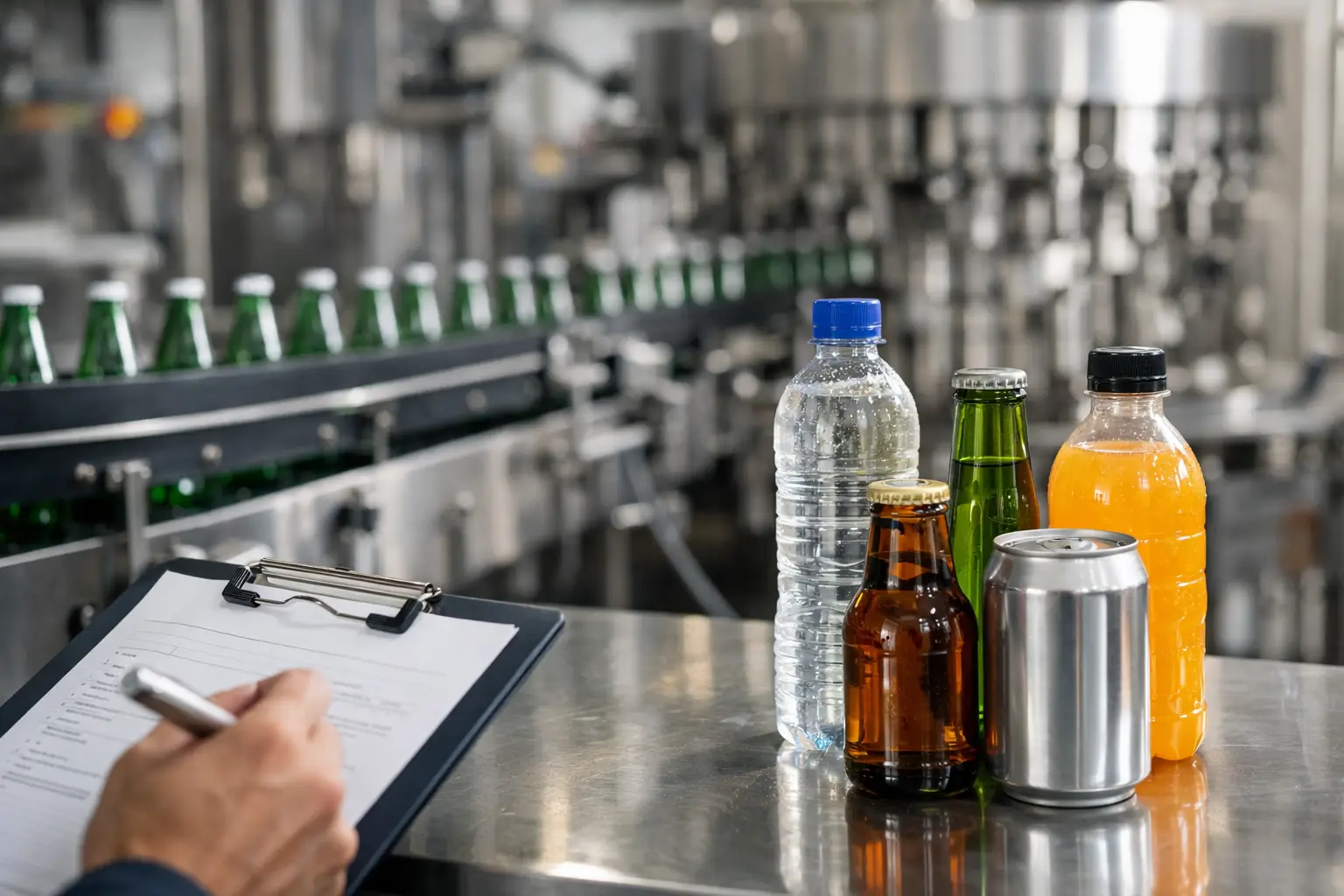
A purchase order can validate a beverage concept and expose every weakness in its supply chain at the same time. When retail, distribution, or hospitality demand rises, a brand needs more than a good liquid and a strong label. It needs repeatable quality, compliant production, dependable packaging supply, and the capacity to deliver on time. This guide to beverage contract packaging explains how to evaluate those requirements before they become expensive problems.
Contract packaging can give a new or growing brand access to equipment, technical knowledge, and production scale without the capital burden of building a facility. But not every co-packer is built for every beverage. A low-acid functional drink, a carbonated cocktail, and a shelf-stable sports beverage each require different controls. The right manufacturing relationship protects the product promise from the first approved formula through every finished case.
What Beverage Contract Packaging Covers
Beverage contract packaging, often called co-packing, is the outsourced production of a finished beverage under a brand owner’s specifications. Depending on the partner and project, the work may begin with formula development and sourcing, or it may start with a production-ready formula supplied by the client. The output is typically a finished, labeled, case-packed product ready for warehousing, distribution, or direct delivery.
A capable partner can support more than filling. The scope may include ingredient qualification, batching, carbonation, thermal processing, can or bottle filling, labeling, secondary packaging, quality testing, and pallet preparation. Some facilities also support regulatory documentation, packaging procurement, and logistics coordination.
That broader capability matters because packaging is not separate from product quality. A formula that performs well in a bench sample can behave differently at production scale. Acid levels, carbonation targets, viscosity, particulate content, sweetener systems, and natural flavors can all affect processing conditions, shelf life, and filling performance. The best contract packaging programs address these factors together rather than treating the liquid and the package as separate decisions.
Start With a Product That Can Be Manufactured
Before selecting a facility, define the non-negotiables of the beverage. That includes flavor profile, ingredient standards, nutrition targets, alcohol content where applicable, preservative approach, carbonation level, intended shelf life, and target retail price. A product positioned around real ingredients and clean-label claims needs a formulation strategy that supports those claims at scale.
Natural ingredients can introduce variation. Juice concentrates, botanical extracts, functional actives, and certain sweeteners may change in color, flavor, solubility, or availability from one lot to the next. That does not make them unsuitable for scaled production. It means the formula, specifications, and sourcing plan need tighter discipline.
Ask practical questions early. Does the beverage require hot fill, tunnel pasteurization, aseptic processing, or cold filling? Is it still or carbonated? Will it be sold ambient, refrigerated, or both? Does it contain ingredients that settle, foam, or interact with the package? These answers determine which production lines are viable and how much process development is required.
A contract manufacturer should be direct about technical limits. If a formula is not stable, if an ingredient cannot be sourced consistently, or if a requested package is incompatible with the filling line, solving that issue before commercialization is a sign of competence, not resistance.
Validate Before the First Commercial Run
Pilot runs and shelf-life testing are often the point where a concept becomes a commercial product. They allow the brand and manufacturer to confirm taste, appearance, fill weights, carbonation, package integrity, and processing parameters under realistic conditions.
Skipping this work may save time at the beginning, but it can create costly rework later. A label may need revision after nutrition analysis. A flavor may shift after pasteurization. A can end may not perform as expected on a specific line. Validation gives both parties a documented production standard to follow, reducing guesswork during commercial runs.
Choose Packaging for the Channel, Not Just the Shelf
Can, glass, PET, and carton formats each carry different operational and commercial trade-offs. Cans are efficient for many carbonated beverages, protect products from light, and move well through high-volume distribution. Glass can reinforce premium positioning but adds weight and breakage risk. PET can offer design flexibility and lower shipping weight, while cartons may suit certain shelf-stable concepts.
The right choice depends on the product, channel, and economics. A premium on-premise cocktail may need a different format than a functional beverage designed for club retail or convenience distribution. Package size also affects trial, margin, shelf placement, and freight efficiency. There is no universal best package, only a package that supports the brand’s specific route to market.
Packaging supply deserves the same attention as the liquid. Custom cans, printed shrink sleeves, specialty closures, trays, and cartons can have long lead times and minimum order requirements. Brands should understand who owns packaging inventory, how it is stored, what happens to obsolete materials, and what backup options exist if a supplier experiences delays.
Artwork control is equally critical. Every label must align with current ingredient statements, allergen declarations, nutrition information, alcohol requirements where relevant, deposit rules, barcode specifications, and brand claims. A strong partner will treat label review as a production control, not a last-minute design exercise.
Evaluate Capacity, Quality Systems, and Communication
A facility’s stated capacity is only useful if it matches the needs of the product. Ask what line speeds apply to your package format, how often changeovers occur, what minimum run sizes are required, and whether production slots are available during your launch window. A large operation may have significant overall volume but limited flexibility for smaller or highly customized runs. A smaller facility may be responsive but unable to support national expansion.
The most reliable fit is a partner with appropriate scale today and a credible path for growth tomorrow. Multi-region manufacturing can add supply flexibility, reduce freight exposure, and support international market plans, but only when quality standards are consistent across locations.
Quality systems should be visible in the conversation. Brands should understand how raw materials are released, how batches are documented, what in-process checks occur, how finished goods are tested, and how deviations are handled. Traceability is not paperwork for its own sake. It is the ability to identify what was made, with which materials, under which conditions, and where it was shipped.
Communication is another operational control. The manufacturer should provide clear milestones for formula approval, procurement, production scheduling, quality release, and shipment. When an issue arises, the useful response is specific: what happened, which lots are affected, what corrective action is being taken, and whether the production timeline has changed.
Understand the Commercial Terms Before Scaling
Contract packaging costs are more than a per-unit fill fee. The full landed cost can include ingredients, packaging components, development work, testing, freight, warehousing, line setup, changeovers, scrap allowances, and inventory carrying costs. A low quoted fill price can be misleading if material lead times, waste assumptions, or minimum purchase commitments are not clear.
Before signing, align on ownership of formulas, packaging artwork, raw materials, and finished goods. Confirm payment timing, forecast expectations, cancellation terms, production tolerances, and procedures for nonconforming product. These details are not legal formalities alone. They define how the relationship works when demand changes or supply conditions tighten.
Forecasting should be honest rather than optimistic. Brands need enough volume to secure ingredients and line time, while manufacturers need realistic demand signals to plan labor, packaging, and capacity. A rolling forecast with regular updates is usually more useful than a single annual number that is never revisited.
A Guide to Beverage Contract Packaging That Protects Growth
The goal is not simply to find a facility that can fill a can or bottle. It is to build a production program that delivers the same product experience every time, at a cost structure that supports the business. For emerging brands, that may mean starting with a focused SKU range and standard package format. For established brands, it may mean adding capacity, entering new regions, or improving supply resilience without compromising quality.
UNC One Corp. approaches this work with the discipline required for natural, performance-oriented beverages: real ingredients, defined standards, and production capability designed to scale. The right partner should bring that same balance of product understanding and industrial execution.
A beverage brand earns trust one finished unit at a time. Choose a contract packaging partner that treats every batch, package, and delivery commitment as part of the product itself.

No responses yet