
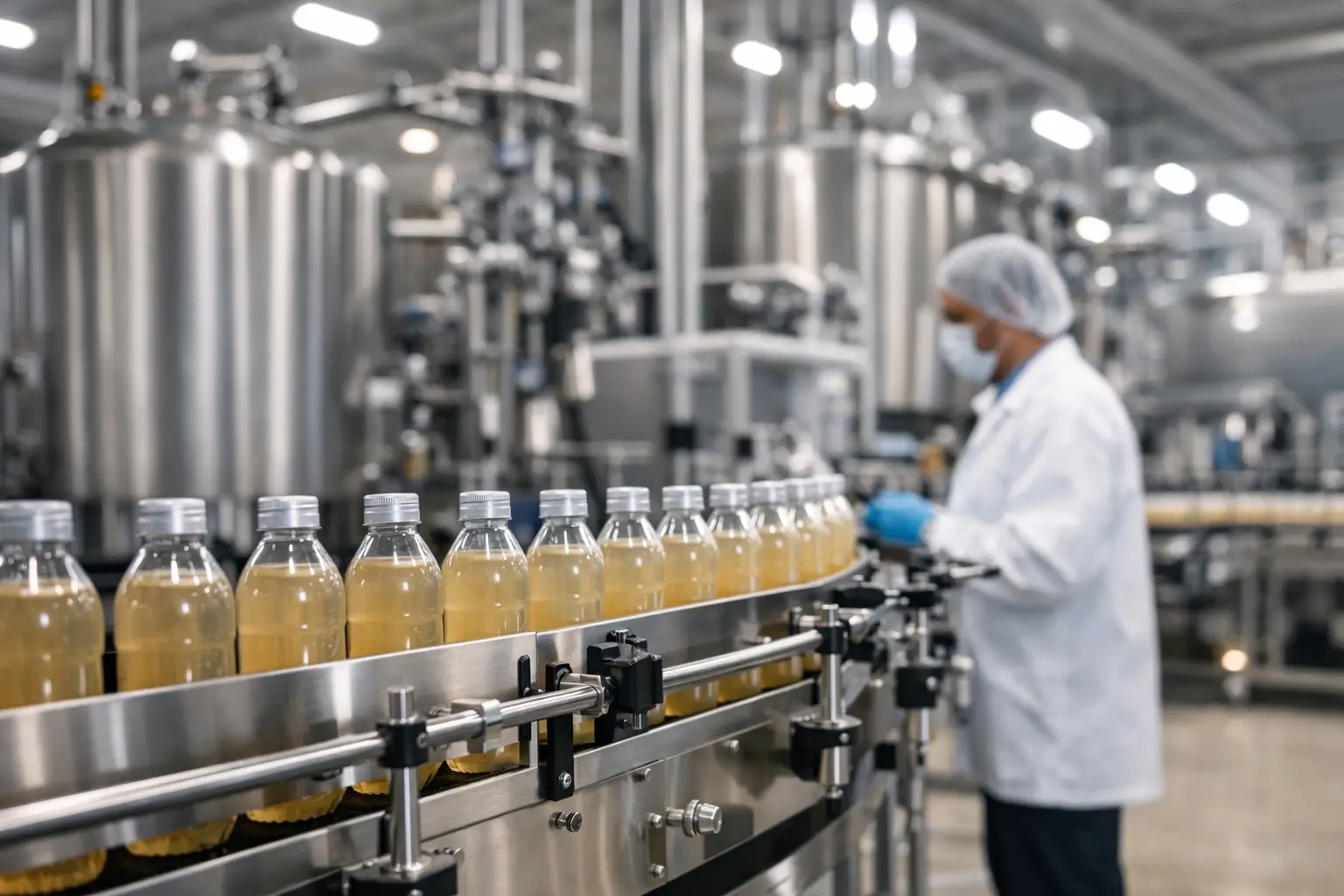
A beverage can win on flavor, branding, and channel fit, then still fail where it matters most – on the production floor. Sanitary beverage production standards are what separate a product that looks good in a pitch deck from one that performs consistently in market. For buyers, distributors, and brand owners, these standards are not a technical footnote. They are the operating discipline behind product safety, shelf stability, taste consistency, and long-term trust.
In beverage manufacturing, sanitation is not one checkpoint. It is a system. It starts with facility design, continues through ingredient handling and processing, and extends into packaging, storage, and distribution readiness. When that system is built correctly, it protects both product integrity and commercial reliability. When it is weak, problems show up fast – contamination risk, off-flavors, shortened shelf life, failed audits, rejected loads, and damaged brand equity.
What sanitary beverage production standards really cover
The term sounds broad because it is broad. Sanitary beverage production standards include the controls that keep a beverage safe, stable, and consistent from raw material intake to finished goods release. That includes hygienic equipment design, validated cleaning procedures, environmental controls, personnel hygiene, allergen management, microbial monitoring, and documented process verification.
For natural and functional beverages, the standard is even higher. Real ingredients bring market value, but they can also introduce variability. Fruit bases, botanical extracts, dairy-adjacent components, proteins, and performance ingredients each present different sanitation and handling demands. A capable manufacturer does not treat all formulations the same. It adjusts sanitation protocols to the actual risk profile of the product.
This is where many early-stage brands underestimate the challenge. A formula that works in small pilot batches can behave very differently at commercial speed. Heat transfer changes. Hold times change. Line residue changes. Cleaning complexity increases. Sanitary control has to keep pace with production scale or quality drifts.
Why sanitary beverage production standards matter commercially
For procurement teams and channel partners, sanitation affects more than compliance. It affects predictability. Buyers need product that lands with the same taste, appearance, and shelf performance every time. Distributors need confidence that supply interruptions will not come from avoidable production failures. Brand owners need manufacturing discipline strong enough to support growth without forcing reformulation or quality trade-offs.
Strong sanitary standards also reduce hidden cost. A contaminated batch is expensive, but so is recurring downtime from inefficient cleanouts, frequent product changeover issues, or packaging loss caused by poor line hygiene. Good sanitation protects yield, throughput, and service levels. It is a quality issue and an efficiency issue at the same time.
There is also a brand-positioning reality. Clean-label and natural beverage claims raise consumer expectations. If a product is marketed around purity and real ingredients, the manufacturing standard behind it has to support that promise. Anything less creates a gap between label and execution.
The production areas that define sanitary performance
Sanitary performance starts with equipment and plant design. Tanks, pipes, valves, fillers, and transfer systems should be built for hygienic access and effective cleaning. Dead legs, poor welds, hard-to-drain lines, and difficult-to-clean fittings create risk because they allow residue and microbial growth to persist between runs.
Cleaning systems matter just as much as hardware. A strong clean-in-place program is not just about running chemicals through a line. It requires the right concentration, temperature, flow rate, contact time, and verification method for each product type. A low-acid functional drink with protein behaves differently than a clear cocktail mixer or an isotonic sports beverage. The cleaning standard has to reflect that.
Water quality is another critical factor. Water is often the largest ingredient in a beverage, and it also drives cleaning effectiveness. If water treatment, filtration, and monitoring are inconsistent, product quality and sanitation both suffer. The same applies to compressed air and other utilities that come into contact with the product or packaging environment.
People are part of the sanitation system too. Gowning, hand hygiene, traffic flow, training, and shift discipline all influence contamination risk. This sounds basic, but poor human controls can undermine expensive equipment and sophisticated SOPs very quickly. The best facilities treat sanitary culture as an operating standard, not a poster on the wall.
Sanitary beverage production standards and ingredient complexity
Not every beverage carries the same sanitary burden. Shelf-stable, acidified products often allow a different processing approach than products with sensitive botanicals, dairy components, or performance ingredients that leave more residue. That does not mean one category is easy and another is impossible. It means the plant and process need to match the formulation.
This is especially important for brands built around natural positioning. Fewer artificial preservatives can be a commercial advantage, but it puts more pressure on process control. Temperature management, pH validation, fill conditions, and post-process handling become more important, not less. A manufacturer should be candid about those trade-offs. Clean label can work at scale, but only with disciplined sanitary design and process validation behind it.
For buyers evaluating suppliers, this is a useful test. Ask whether the facility has actual experience with products similar to yours. A plant that runs high volumes of one beverage type may still be the wrong fit for another if the sanitation profile is fundamentally different.
What buyers and brand owners should expect from a manufacturing partner
A serious production partner should be able to explain its sanitary controls in plain language. Not vague claims about quality. Specifics. How are cleaning cycles validated? How is microbial risk monitored? How are allergen and flavor carryover managed during changeovers? What environmental controls protect open product zones? How are deviations documented and corrected?
Documentation is a major signal of maturity. Strong sanitary beverage production standards are visible in records, not just in facility tours. That includes sanitation logs, process validations, preventive maintenance, environmental monitoring, batch records, quality holds, and release procedures. If a manufacturer cannot show control, it does not have control.
Audit readiness matters as well. Whether the end customer is a national retailer, hospitality chain, distributor, or export buyer, commercial relationships increasingly depend on documented food safety and sanitation performance. A capable partner treats audits as part of normal operations, not as special events.
Scale is another area where standards get tested. It is one thing to maintain sanitation on a limited production schedule. It is another to do it across multiple SKUs, high-speed lines, and regional manufacturing footprints. The right partner can protect consistency while moving volume. That balance is difficult, and it is where operational experience shows.
How sanitary standards support growth without compromise
For growing beverage brands, sanitation is often framed as a compliance requirement. That is too narrow. It is a growth requirement. If a product succeeds in one region, enters larger retail programs, or expands into new channels, the production system behind it has to absorb that growth without quality drift.
That means line changeovers must stay clean as SKU counts rise. Ingredient receiving must stay controlled as sourcing expands. Finished goods standards must hold as production moves across facilities or geographies. Without that discipline, growth creates inconsistency, and inconsistency erodes both margin and brand trust.
This is where an experienced manufacturing organization brings real value. UNC One Corp. operates with the understanding that premium beverage positioning and industrial scale are not opposing goals. They only conflict when the sanitary and quality systems are not built to support both.
The real standard is repeatability
The strongest sanitary beverage production standards do not show up as marketing language. They show up as repeatable outcomes – clean flavor, stable shelf life, compliant records, reliable fulfillment, and fewer surprises. That is what buyers want. That is what distributors depend on. That is what serious beverage brands need if they plan to grow.
If you are evaluating a beverage manufacturing partner, do not stop at capacity, cost, or packaging format. Ask whether the sanitation system is built for your formula, your quality position, and your growth path. Real ingredients demand real discipline. The right standard is not the one that sounds good in a presentation. It is the one that holds under pressure, batch after batch.

No responses yet