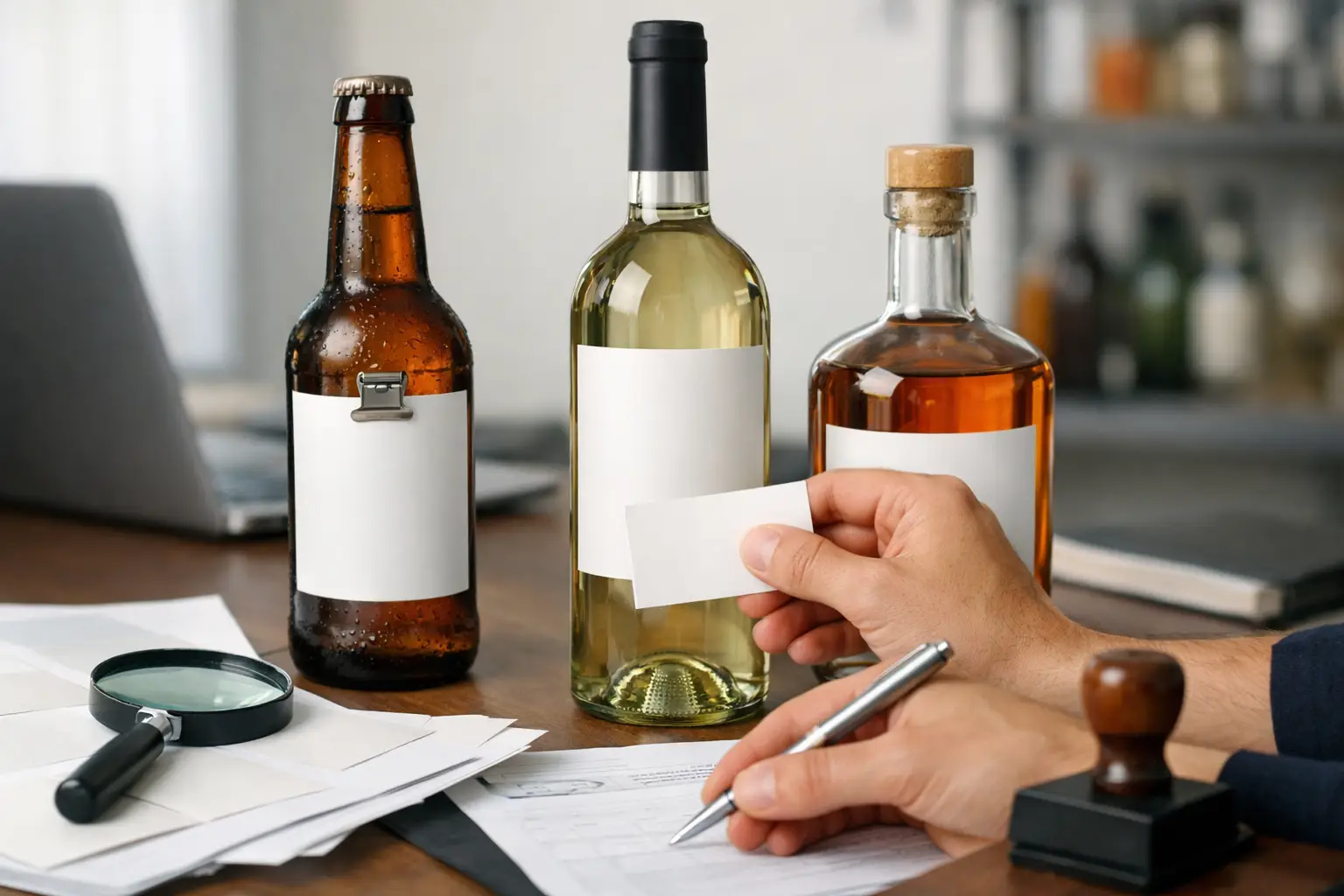
A label can hold up a launch just as easily as a formula, and the beverage label approval process is often where promising products lose time, margin, and momentum. For brand owners, importers, and buyers, label approval is not a design checkpoint. It is a regulatory gate that affects whether a product can ship, clear review, and enter the market without costly revisions.
Why the beverage label approval process matters
In beverage manufacturing, compliance is part of execution. A strong formula, reliable sourcing, and production capacity mean little if the package carries claims, statements, or formatting that trigger rejection or enforcement risk. That is especially true for brands selling across multiple channels, multiple states, or multiple countries.
The approval path also shapes speed to market. If a label is built correctly from the start, review tends to move faster and downstream changes are easier to control. If the label is treated as a last-minute creative asset, problems tend to surface late, after packaging has been printed, production has been scheduled, or distributor commitments have been made.
For natural and functional beverages, the stakes are even higher. Products positioned around clean ingredients, energy support, hydration, or wellness benefits often sit closer to the line on claims language. What sounds compelling in marketing copy may not be acceptable on-pack.
What “approval” actually means
The term approval can mean different things depending on the product category and where the beverage is sold. In the United States, some beverages require formal pre-market label review by a regulator, while others are expected to comply with labeling laws without a centralized approval stamp before launch.
Alcohol beverages often fall into a more explicit submission process. Non-alcohol beverages usually operate under compliance requirements tied to FDA rules, state rules, and category-specific standards, but not always a single federal pre-approval workflow. That distinction matters because many founders assume every beverage label follows the same path. It does not.
The practical question is not just, “Has this label been approved?” The better question is, “Which authority governs this product, what review is required, and what evidence supports the claims and statements on the label?”
Beverage label approval process by category
Alcohol beverages
Alcohol labels generally require formal review before market entry. The exact filing path depends on product type, alcohol source, and jurisdiction, but the process usually includes submitting the label artwork, mandatory statements, class or type designation, alcohol content, net contents, health warnings, and producer or importer details.
This is where precision matters. A small wording issue, missing designation, or mismatch between formula records and the front label can trigger rejection or resubmission. If the product is imported, supporting documents and origin details can add another layer.
Non-alcohol beverages
For soft drinks, functional beverages, energy drinks, sports drinks, and similar products, the beverage label approval process is usually less about formal preclearance and more about meeting FDA labeling requirements before commercialization. That means the burden sits with the brand owner and manufacturer to get it right before product ships.
Core requirements may include statement of identity, net quantity, ingredient list, allergen declarations where applicable, nutrition facts, manufacturer or distributor information, and compliant claims language. If the beverage includes novel ingredients, dietary supplement positioning, or structure-function claims, review becomes more nuanced.
International and multi-market products
A label that works in one country may fail in another. Units of measure, ingredient naming conventions, language requirements, recycling marks, deposit information, and permitted claims can all vary. For brands planning cross-border distribution, label development should start with market mapping, not translation after the fact.
The documents and decisions that shape approval
Label review does not begin with artwork. It begins with product definition.
A compliant label depends on what the beverage legally is, how it is formulated, and how it will be marketed. Is it a conventional beverage or a dietary supplement? Is it alcoholic or non-alcoholic? Does it contain ingredients that require specific disclosures? Will it make nutrient content claims, functional claims, or no claims at all?
These choices affect every line on the package. They also determine which internal teams need to align. Regulatory, formulation, commercialization, packaging, and sales should be working from the same product brief. When that alignment is missing, labels often get revised multiple times because the product story changes midstream.
At minimum, approval-ready label work usually depends on final formula details, ingredient specifications, nutrition calculations or lab data, packaging dimensions, market of sale, and confirmed brand claims. If any of those inputs are still moving, the label is not really ready for final review.
Where brands lose time
Most label delays come from preventable errors rather than complex law.
One common issue is unsupported claims. Words like “natural,” “clean,” “healthy,” “energy,” or “recovery” may sound commercially strong, but each can create regulatory questions depending on context. The more benefit-oriented the promise, the more important substantiation becomes. Some claims are acceptable with the right framing. Others may need to be softened or removed.
Another frequent problem is mismatch. The ingredient deck may not align with the formula sheet. The nutrition panel may reflect an old version. The flavor name may imply an ingredient that is not present. The front panel may suggest juice content, botanical function, or origin claims that are not properly supported elsewhere.
Formatting also matters more than many teams expect. Type size, placement, contrast, serving declarations, and panel structure are not cosmetic details. They are part of compliance. A visually strong label still fails if required information is hard to read or incorrectly arranged.
Then there is timing. Some companies finalize label review after ordering printed cans, cartons, or shrink sleeves. That can turn a simple correction into a scrap cost, a delayed launch, or a temporary relabeling exercise. In scaled production, those mistakes add up quickly.
How to build a faster approval path
The fastest route through the beverage label approval process is disciplined preparation. That starts with locking the product classification early. If the legal category changes late, most of the label changes with it.
Next, claims should be reviewed before design is finalized. It is far more efficient to challenge front-panel language at concept stage than after a creative direction has been approved by sales and brand leadership. Strong branding can coexist with compliant language, but only if regulatory review is part of development, not a final obstacle.
It also helps to use a structured review sequence. Formula first. Then regulatory content. Then artwork formatting. Then final prepress review against the approved source file. When teams skip steps or review in parallel without version control, inconsistencies are almost guaranteed.
For growing brands, an experienced manufacturing partner can reduce risk significantly. A production-focused partner sees recurring label issues across categories, packaging formats, and channels. That experience matters because compliance is not theoretical at the plant level. It affects print runs, release timing, and shipment readiness.
The role of manufacturing in label compliance
Label approval is often treated as a regulatory or brand function, but manufacturing has a direct stake in the outcome. Production teams need confidence that the packaged product matches what was approved and that the approved version is what actually goes to print.
That becomes more important as volume scales. Multi-SKU programs, regional variations, and retailer-specific packaging can create version complexity quickly. Without strong controls, a business can end up with the right product in the wrong packaging, or an outdated label version moving into finished goods.
A disciplined manufacturing environment helps prevent that. It connects formulation control, packaging specifications, artwork management, and release procedures. For businesses operating across contract manufacturing or multi-region production, that level of coordination is essential.
UNC One Corp. approaches this the same way it approaches formulation and fill operations – with quality standards that protect speed, consistency, and commercial readiness without compromise.
What buyers and channel partners should watch for
If you are sourcing a beverage for distribution or retail, label compliance is not just the supplier’s problem. It affects your timelines, your shelf set, and your exposure. A product with questionable claims or incomplete disclosures can create issues at receiving, during retail review, or after launch.
That is why experienced buyers look beyond flavor and margin. They want to know whether the label has been properly reviewed for the intended market, whether the beverage category is correctly defined, and whether the manufacturer has a process for controlling revisions. Those questions help separate scalable supply partners from brands that are still improvising.
For emerging brands, this is worth understanding early. Retail-ready packaging is not only about visual appeal. It is proof that the product can perform in the real market, under real scrutiny, at real volume.
The best labels do two jobs at once. They sell the product clearly, and they stand up to review cleanly. When those two goals are built together from the start, approvals move faster and launches hold their ground.

No responses yet