
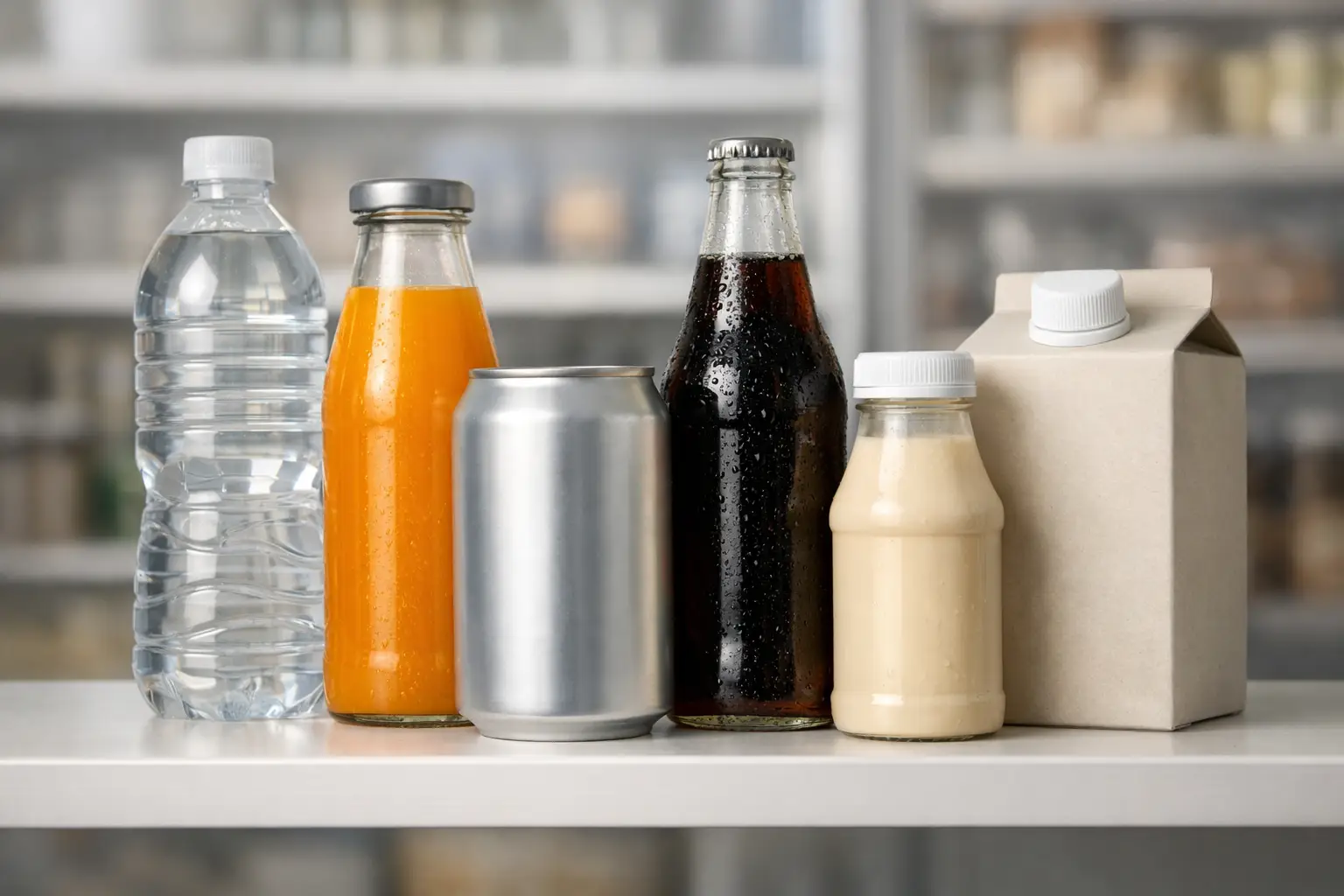
Shelf life is not a label claim first. It is a formulation and process decision made long before a bottle reaches a shelf. When beverage buyers and brand owners ask what makes a beverage shelf stable, the real answer is never just one ingredient or one production step. It is the result of chemistry, microbiology, thermal treatment, packaging, and disciplined manufacturing working together.
That matters even more in natural and functional beverages. Real ingredients, reduced preservatives, protein systems, botanicals, juices, and performance actives all raise the technical stakes. A product can look clean on paper and still fail in distribution if the formula is not built for stability from the start.
What makes a beverage shelf stable in practice
A shelf-stable beverage is designed to remain safe, consistent, and commercially viable at ambient temperatures for a defined period. That means the product resists microbial growth, maintains acceptable flavor and color, and holds its physical structure without separation, sediment problems, gas loss, or package failure.
Safety is the first threshold. If a beverage can support the growth of yeast, mold, or harmful bacteria during normal storage, it is not shelf stable. But commercial success goes further than safety alone. A drink that is microbiologically safe but loses flavor after six weeks or throws heavy sediment after two months may still be unacceptable in retail or distribution.
Shelf stability, then, is a balance of protection and product quality. The best products hit both targets without compromising the brand promise.
The biggest technical factors behind shelf stability
pH is one of the first control points
For most non-alcoholic beverages, pH is a primary factor. High-acid beverages are generally easier to stabilize because low pH limits the growth of many dangerous microorganisms. Juice drinks, flavored waters, sports drinks, and many functional beverages often fall into this category.
Once pH rises, the process becomes more demanding. Dairy-based drinks, plant protein beverages, meal replacements, and low-acid formulations may require stronger thermal processing, aseptic systems, or refrigerated distribution. This is where many early-stage brands underestimate complexity. A formula that sounds simple from a marketing standpoint may require advanced processing to be commercially safe.
Low pH alone is not enough, though. A beverage can still spoil from acid-tolerant yeast, mold, or flavor degradation. pH is a foundation, not a complete strategy.
Water activity plays a supporting role
In beverages, water activity is usually high because the product is mostly water. That means microbes have a favorable environment unless other controls are in place. Sugar, solids, alcohol, and certain dissolved ingredients can influence microbial risk, but in most ready-to-drink products, water activity does not solve shelf stability on its own.
This is why beverage systems rely more heavily on acidity, preservatives, thermal treatment, hygienic filling, or aseptic packaging.
Preservatives can help, but they are not a shortcut
Preservatives are often part of the answer, especially in ambient beverages sold through broad distribution. Potassium sorbate, sodium benzoate, and similar systems can suppress yeast and mold when used correctly and within regulatory limits.
But preservatives only work under the right conditions. Their effectiveness depends on pH, ingredient interactions, dosage, and target organisms. If the process is weak or sanitation is inconsistent, preservatives will not rescue the product. They are support tools, not replacements for good manufacturing.
For clean-label brands, the trade-off becomes sharper. Some want to avoid traditional preservatives entirely. That can be done, but it usually shifts the burden to stronger process control, tighter pH management, advanced packaging, and more rigorous validation. Clean label without process discipline is a risk.
Process is often the real difference-maker
A well-designed beverage can still fail if the production process is not aligned with the formula.
Hot fill and tunnel pasteurization
Hot fill is common in acidic beverages. The product is heated to a validated temperature, filled hot into the package, and held long enough to reduce microbial risk in both the liquid and parts of the container. For teas, juices, sports drinks, and some functional beverages, this can be a practical route to shelf stability.
Tunnel pasteurization is another option, particularly when packaging format or product characteristics require a different approach. Both methods depend on exact control of time, temperature, fill conditions, and package compatibility.
Aseptic processing for more sensitive products
Aseptic processing is often used when a brand wants ambient shelf life while protecting more delicate flavor systems, nutrients, or textures. In this model, the product and package are sterilized separately and combined in a controlled sterile environment.
This approach can support premium formulations and wider product types, including lower-acid beverages, but it requires specialized equipment, tighter validation, and higher operational discipline. It is not the right choice for every SKU, but for some beverages it is the only path to stability without compromise.
Sanitation and environmental control
No shelf-life strategy survives poor hygiene. Ingredient handling, tank sanitation, line cleaning, air quality, filling-zone controls, and microbiological monitoring all affect final performance. A formula that passes bench testing can still fail in commercial production if the manufacturing environment introduces contamination.
For buyers and brand owners, this is one reason manufacturing partner selection matters so much. Shelf stability is not just a lab question. It is a plant capability question.
Packaging is part of what makes a beverage shelf stable
Packaging does more than hold the liquid. It protects the product from oxygen, light, moisture transfer, and physical stress through storage and distribution.
Oxygen is a frequent source of quality loss. It can flatten flavor, darken color, degrade sensitive actives, and shorten shelf life even when the beverage remains microbiologically safe. Some ingredients, including vitamins, natural colors, and botanical compounds, are particularly vulnerable. Headspace control, oxygen barriers, and proper closure systems all matter.
Light exposure can also damage product quality, especially in clear packaging. Natural pigments and flavor compounds can degrade faster under retail lighting or warehouse exposure. A package that looks premium may create new stability issues if it does not provide enough protection.
Then there is package-process fit. Not every bottle, can, cap, or carton can tolerate every thermal process. Shelf stability depends on the full system working together, not just on the formula inside.
Ingredients can make stability easier or harder
Natural positioning is commercially strong, but it introduces technical realities. Fruit juice concentrates can shift flavor and color over time. Proteins can settle or create grit. Botanical extracts may haze, precipitate, or interact with acids and minerals. Sweetener systems can affect pH perception and preservative performance. Carbonation changes package demands and product behavior.
Even small additions matter. Electrolytes, caffeine, amino acids, vitamins, and emulsified flavors all have stability implications. A functional claim may sound simple in sales language, but every active has to remain effective and sensory acceptable through the intended shelf life.
This is why beverage development should not treat shelf life as a final checkpoint. It has to be built into formulation from the beginning. Real ingredients and real results only scale when the formula is designed for both performance and durability.
Shelf life testing proves the claim
A beverage is not shelf stable because the team expects it to be. It is shelf stable because testing confirms it.
That includes microbiological challenge work where appropriate, analytical testing for pH and stability markers, and sensory review across the intended storage period. Brands also need to test under realistic conditions. Warehouse heat, shipping cycles, retail lighting, and international transit can all expose weaknesses that do not appear in a short laboratory hold.
There is also a business question behind every shelf-life target. A six-month shelf life may work for some channels but fail for export, club retail, or distributor networks with longer inventory turns. The right target depends on route to market, packaging format, and commercial goals.
Why this matters for scaling a beverage brand
At small scale, some products survive because they move fast or stay close to the point of production. At larger scale, the margin for error disappears. More warehouses, longer transit times, mixed climates, and wider channel exposure all put pressure on the formula and the process.
That is where experienced manufacturing makes a difference. The companies that scale successfully do not ask only whether a beverage can be made. They ask whether it can be made consistently, compliantly, and at volume while staying shelf stable across real distribution conditions.
For contract manufacturing clients and commercial buyers, that is the standard that matters. Not theory. Not a pilot sample. A beverage that keeps its safety, sensory profile, and brand integrity from production line to final sale.
A shelf-stable beverage is built, not assumed. If the formula, process, packaging, and quality system are aligned, ambient stability becomes a competitive advantage instead of a recurring risk. That is where strong beverage programs separate themselves from short-lived launches.

No responses yet