
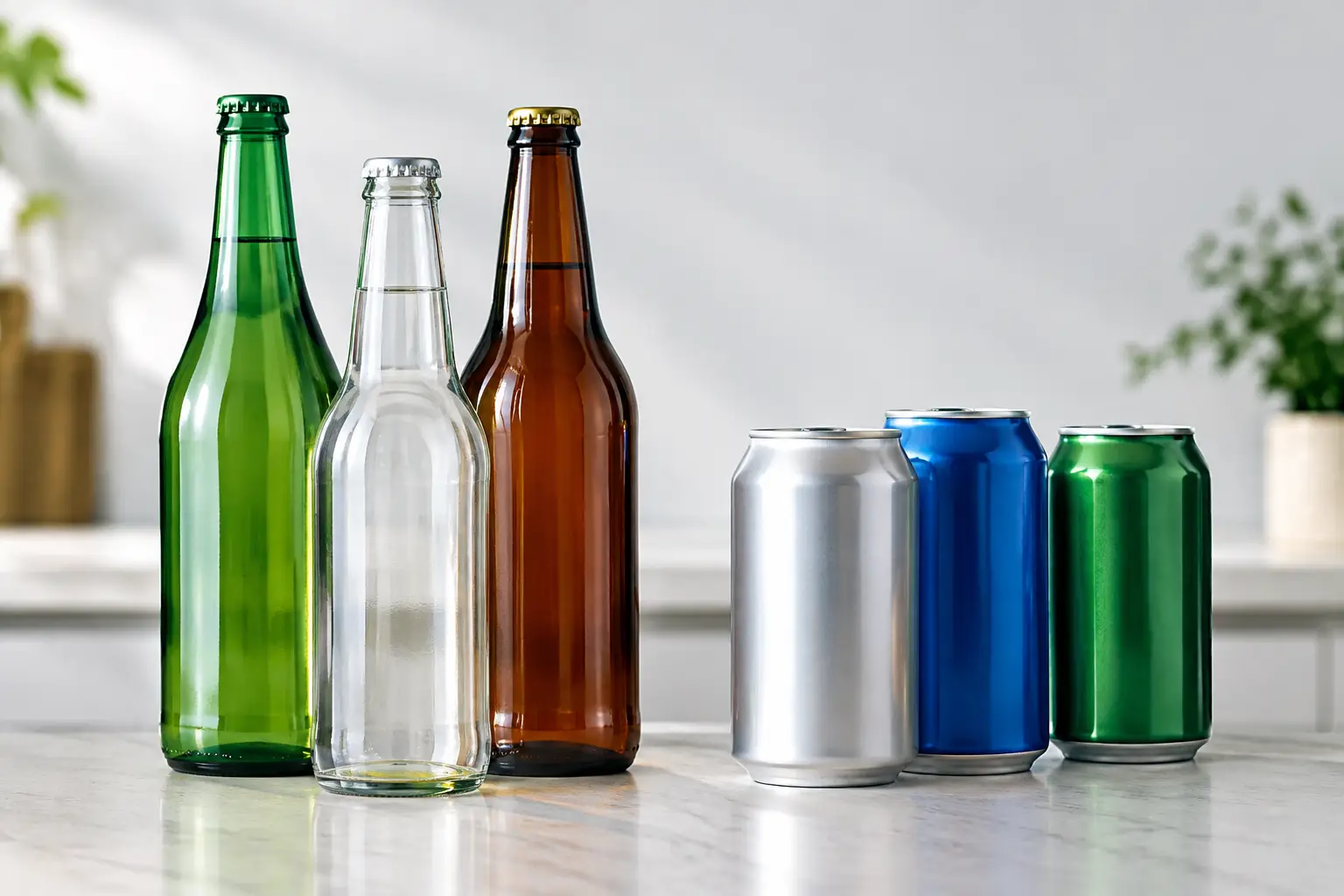
A package decision can determine whether a beverage arrives with the same flavor, carbonation, and visual impact it had on the production line. In the glass bottles vs aluminum cans decision, there is no universal winner. The right format depends on the liquid, the channel, the target price point, the required shelf life, and the operational realities behind every case shipped.
For beverage brands, packaging is not an afterthought. It is a product-performance decision and a supply-chain decision at the same time. A premium cocktail, a functional energy drink, and a sports beverage may all call for different answers, even when they share a clean-label and natural-ingredient position.
Glass Bottles vs Aluminum Cans: The Core Trade-Off
Glass signals permanence, clarity, and premium presentation. It gives buyers and consumers a direct view of the beverage, which can be valuable when color, botanicals, or natural sediment support the product story. It also creates a familiar ritual in hospitality settings, where the weight and feel of glass can reinforce perceived quality.
Aluminum cans are built for efficiency. They are lightweight, highly stackable, quick to chill, and well suited to high-volume retail, convenience, outdoor, and event channels. Their opaque structure protects beverages from light exposure, a meaningful advantage for products with sensitive flavors, colors, vitamins, or botanical ingredients.
Neither material automatically makes a beverage better. Formula and package must work together. The commercial question is whether the package protects the product, supports the intended occasion, and performs reliably at scale without compromising margin or brand standards.
Product Protection and Shelf-Life Performance
Light, oxygen, and flavor stability
Aluminum cans provide a complete barrier to light. For beverages containing natural colors, juices, tea extracts, vitamins, or delicate botanical notes, this can help preserve flavor and appearance throughout distribution. Light exposure can degrade certain ingredients and produce noticeable changes before a product reaches the shelf.
Glass offers strong protection against oxygen when properly sealed, but clear glass allows light transmission. Amber or green glass can reduce that exposure, although it also changes the shelf presentation. Brands selecting clear bottles should validate stability under realistic storage and retail lighting conditions rather than relying on a short internal trial.
Both formats require disciplined closure and seam performance. A bottle cap, liner, can end, and double seam all need to be matched to the beverage’s acidity, carbonation level, fill process, and expected shelf life. For carbonated cocktails and functional beverages, package integrity is a quality requirement, not a finishing detail.
Compatibility with the formula
Cans depend on an internal liner to separate the beverage from the aluminum. Modern can linings are designed for broad beverage compatibility, but every formula still requires testing. High-acid beverages, alcohol-based cocktails, products with aggressive flavors, and functional formulas with active ingredients should be evaluated for flavor pickup, corrosion resistance, and long-term stability.
Glass is chemically inert for most beverage applications, which makes it a strong option for formulas where purity perception and ingredient integrity are central to the proposition. Yet glass does not remove the need for validation. Closure systems, headspace oxygen, pasteurization conditions, and transport stress remain part of the final package-performance equation.
Brand Positioning and Channel Fit
A package should match how and where the beverage will be consumed. Glass bottles remain compelling for restaurants, bars, hotels, specialty retail, and premium grocery. They can elevate classic cocktails, mixers, and adult beverages where table presentation matters. For buyers, glass can communicate a higher-value serving experience and support a premium menu price.
Cans fit naturally into convenience, club, e-commerce, fitness, festivals, travel, and single-serve retail. They are easy to transport, fast to cool, and practical in locations where glass is restricted or undesirable. A 12-ounce or slim can also offers a clean canvas for bold branding, ingredient claims, and functional benefits that need to be understood quickly at shelf.
The decision can be channel-specific. A brand may use glass for on-premise service and selected premium accounts while using cans for broad off-premise distribution. This approach adds complexity, but it can protect the core product identity while giving distributors a format suited to each route to market.
Freight, Breakage, and Production Efficiency
Glass is significantly heavier than aluminum. That affects freight expense, warehouse handling, pallet weight, and emissions associated with transport. It also requires more caution throughout distribution because breakage can create product loss, safety concerns, and retailer dissatisfaction.
Aluminum cans improve freight efficiency because less of the shipped weight is packaging. Their shape supports dense pallet configurations, and their durability makes them well suited to long distribution routes and active-use occasions. For national or international programs, those operational advantages can become material to total delivered cost.
Production requirements differ as well. Glass bottling lines need to manage bottle variation, rinsing, filling, capping, labeling, and, where applicable, pasteurization. Can lines require precise seam control, depalletizing, filling, and end application. Both can operate at high speeds, but format changes, minimum order quantities, decoration choices, and regional supplier availability can affect lead times and economics.
For a developing brand, the lowest unit packaging price is not always the best decision. Total cost should include secondary packaging, freight, storage, breakage allowance, line efficiency, retailer requirements, and the working capital tied up in inventory. A disciplined cost model often reveals a different answer than a simple quote comparison.
Sustainability Requires a Full-System View
Glass is widely recyclable and can be recycled repeatedly without losing material quality. Its sustainability case is strongest where local collection systems are effective, recycled content is available, and transport distances are limited. Refillable glass programs can also perform well in markets with established return infrastructure.
Aluminum is also highly recyclable and retains material value through the recycling stream. Because cans are lightweight, they can reduce transportation impacts compared with heavier alternatives. Recycled aluminum content and local recovery rates matter significantly, so environmental claims should reflect the actual market and supply chain rather than broad assumptions.
The most responsible choice is not determined by a single recycling statistic. It depends on package weight, recycled content, collection access, production energy, shipment distance, product loss, and whether the format is realistically recovered after use. Brands should avoid treating sustainability as a label claim alone. It must be supported by credible packaging specifications and operational facts.
What Buyers and Beverage Brands Should Ask First
Before choosing between glass and cans, start with the beverage itself. Is it light-sensitive? Carbonated? Acidic? Heat processed? Designed for immediate refreshment or slow, premium consumption? Those answers shape the technical requirements.
Next, define the commercial environment. A cocktail designed for hotel bars has different needs than a functional energy beverage intended for convenience stores. Consider where the product will sit, how far it will travel, whether it needs to be chilled quickly, and whether the venue permits glass.
Finally, assess manufacturing fit. The right partner should be able to test formula-package compatibility, maintain quality controls at production speed, source packaging consistently, and provide practical guidance on scale. A visually strong package is not enough if supply becomes unreliable when distribution expands.
UNC One Corp. approaches package selection as part of complete beverage execution: real ingredients, disciplined quality standards, and scalable production without compromise. The goal is not to force every product into one format. It is to build a package program that protects the beverage, supports the brand, and performs in the channels that matter.
Choose glass when the serving ritual, visible product, and premium on-premise presentation justify its weight and handling requirements. Choose aluminum when light protection, portability, freight efficiency, and broad single-serve distribution are the priority. The strongest decision is the one verified against your formula, your customer, and the realities of your supply chain before the first production run.

No responses yet