
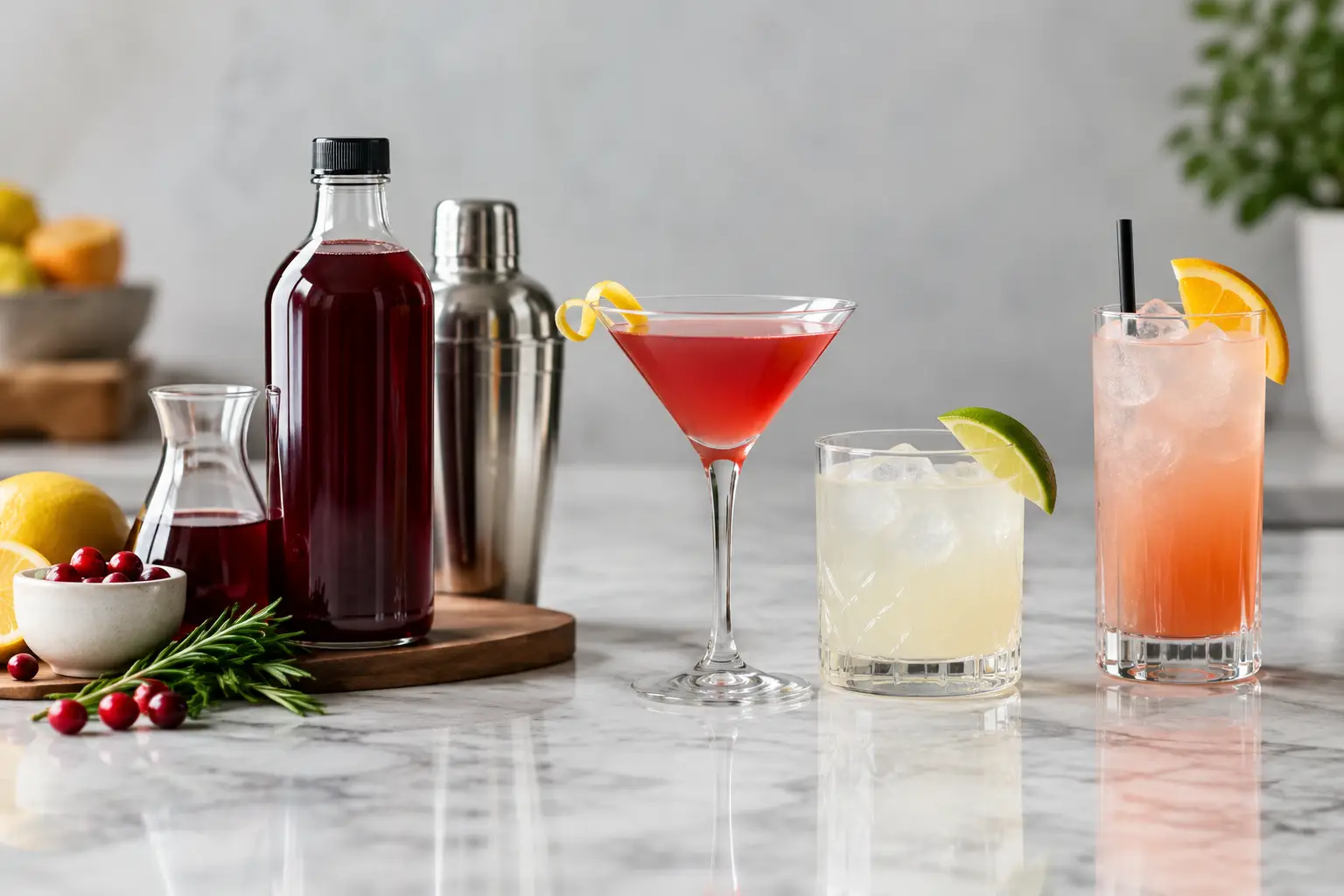
A crowded back bar leaves little room for products that do not earn their place. For buyers, distributors, and beverage brands, the decision between cocktail concentrates versus ready cocktails is not simply a packaging choice. It affects ingredient control, labor, freight, margins, consumer expectations, and the ability to scale without compromising the product.
Both formats can support premium positioning. Both can be built with real ingredients and consistent flavor standards. The right choice depends on where the drink will be served, who will prepare it, and what the brand needs to accomplish at retail or on-premise.
Cocktail Concentrates Versus Ready Cocktails: The Core Difference
Cocktail concentrates are designed to be mixed with a designated spirit, water, sparkling mixer, or another component before service. They deliver the cocktail’s flavor architecture – citrus, botanicals, fruit, sweetener, bitters, and acidity – in a smaller format. The final beverage is completed at the point of use.
Ready cocktails, often called ready-to-drink or RTD cocktails, are finished beverages. They are sold in their final drinking form, typically canned or bottled, with alcohol content, dilution, and carbonation established during production. The customer opens the package and consumes the product as intended.
That distinction changes the commercial equation. Concentrates shift some preparation to the operator or consumer. Ready cocktails shift more of the production responsibility to the manufacturer, delivering a controlled final serve. Neither approach is automatically better. Each solves a different operational problem.
When Concentrates Create a Stronger Commercial Case
Concentrates are particularly effective in hospitality settings where a bartender, server, or trained operator already completes drinks to order. A well-built concentrate can reduce the number of bottles, juices, syrups, and modifiers required for a cocktail program while preserving a premium flavor profile.
For a bar group, hotel, event operator, or restaurant chain, this can mean faster service and more predictable execution. Instead of relying on multiple fresh components and variable pour habits, staff follow a defined build. The result is reduced waste, shorter training time, and greater consistency across locations.
Freight and storage can also favor concentrates. Because they are not fully diluted, more finished servings may fit into a smaller shipment footprint. That can matter for distributors managing warehouse space or brands shipping across multiple markets. The savings are not automatic, however. The total benefit depends on package format, local mixing requirements, shelf stability, and whether the added spirit or mixer is purchased efficiently at the point of use.
Concentrates also give operators room for controlled customization. A single natural margarita concentrate, for example, can become a classic serve, a spicy variation, or a zero-proof option when paired with the appropriate components. That flexibility is valuable in venues where menus change often or where alcohol regulations differ by market.
The trade-off is clear: a concentrate still requires execution. If the operator uses the wrong pour, skips a specified ingredient, or fails to chill the final serve, the consumer experience can suffer. Concentrates work best when the preparation method is simple, repeatable, and supported by clear service standards.
Concentrates Fit Best When
The format is most compelling for high-volume bars, foodservice programs, catered events, and hospitality groups that want speed without an overly complex ingredient list. It can also suit brands entering markets with different alcohol structures, since the non-alcoholic concentrate may be paired locally with an approved spirit.
For consumer retail, concentrates can appeal to shoppers who enjoy making drinks at home and want a premium shortcut. The brand must communicate serving instructions with discipline. Convenience is part of the promise, but the consumer still needs confidence that the result will taste right on the first pour.
Why Ready Cocktails Win on Convenience
Ready cocktails remove the final preparation step. That is their primary strength. The consumer receives the same product every time, whether the package is purchased at a grocery store, airport, resort, stadium, or liquor retailer.
This format is built for convenience-led occasions: outdoor events, travel, poolside service, single-serve retail, and any environment where a full cocktail setup is impractical. A properly formulated RTD can deliver a reliable balance of sweetness, acidity, aroma, alcohol, and carbonation without requiring a bartender or consumer to measure anything.
For retailers, ready cocktails are easy to merchandise and easy for shoppers to understand. The package carries the brand, flavor, alcohol content, serving size, and required compliance information in one finished unit. This makes the category suitable for broad distribution, provided the brand can meet state, federal, and international rules for alcohol production, labeling, taxation, and route to market.
Ready cocktails can also protect the intended sensory profile. Dilution is one of the most overlooked elements of cocktail formulation. A drink that tastes balanced over ice may taste too sweet, too strong, or too flat directly from a package if it has not been developed for that exact occasion. Finished RTDs allow the manufacturer to set the final liquid system before it reaches the customer.
The trade-off is less flexibility. A finished cocktail cannot be adjusted at the bar without moving away from the product specification. It also carries more liquid per serving than a concentrate, which can increase transportation and storage demands. For brands pursuing national or international distribution, packaging weight, pack configuration, production lead times, and warehouse planning deserve the same attention as flavor development.
Quality Starts With the Formula, Not the Format
A concentrate with artificial shortcuts will not become premium because it is served by a bartender. A ready cocktail with poor balance will not earn repeat purchase because it comes in an attractive can. Product integrity starts with formulation choices: real fruit inputs where appropriate, natural flavors that perform under shelf-life conditions, controlled acidity, stable color, and a sweetness profile that supports rather than masks the base spirit.
This is where technical development matters. Ingredients behave differently after thermal processing, carbonation, storage, and transport. Citrus can fade. Botanical notes can become muted. Certain natural ingredients may settle, cloud, or shift in color. A product must be tested for the conditions it will face, not only for how it tastes immediately after blending.
Alcohol adds another layer of complexity. It can change aroma release, alter perceived sweetness, and affect the solubility of flavor compounds. A formula intended as a non-alcoholic concentrate may need meaningful reformulation before it becomes a finished alcoholic RTD. The reverse is also true. Brands should avoid assuming that one liquid can simply be moved from one format to the other without redevelopment.
Manufacturing Requirements Change With the Product
For emerging brands, the choice between concentrates and ready cocktails should be made alongside manufacturing planning. Concentrates may require precise blending, hot-fill capability, aseptic processing, or other preservation systems depending on the formula and package. Ready cocktails can require alcohol handling, carbonation control, specialized filling, pasteurization, compliance documentation, and more complex sourcing.
Shelf life is a commercial requirement, not a footnote. A product may taste excellent at 30 days but fail to meet a distributor’s inventory cycle at nine or 12 months. The packaging must protect the product from oxygen and light exposure where needed, while the formulation must remain stable through real shipping conditions.
Production scale also changes the risk profile. A small pilot run can conceal challenges that become expensive at commercial volumes: inconsistent flavor lots, foam during filling, inadequate mixing, variable carbonation, or ingredient supply constraints. A capable production partner evaluates the full system early – formula, process, packaging, quality controls, and supply continuity.
UNC One Corp. approaches beverage development with this discipline, combining natural ingredient standards with scalable production capability across key international regions. For brands and buyers, the goal is straightforward: a product that performs at the first pallet and at the millionth unit, without compromise.
How Buyers Should Make the Decision
Start with the consumption occasion. If the product must be opened and enjoyed anywhere, with no preparation and no equipment, ready cocktails are generally the stronger fit. If the priority is efficient bar service, menu flexibility, or lower liquid freight per serving, concentrates may deliver more value.
Next, assess the channel. Grocery and convenience buyers usually need a finished product with immediate consumer clarity. Hotels, restaurants, and event operators may value a concentrate that simplifies service and reduces back-bar complexity. Alcohol regulations can determine the practical path in some markets, especially when a brand wants to supply a non-alcoholic base that is paired locally.
Finally, define the non-negotiables before formulation begins. These may include all-natural positioning, target alcohol level, calorie range, package size, shelf life, price point, required certifications, and expected production volume. Clear specifications prevent costly reformulation later and help manufacturing teams build the right process from the start.
The strongest format is the one that protects the drink, supports the channel, and gives the customer a reason to buy it again. Build from that standard, then let the package and production model follow.

No responses yet