
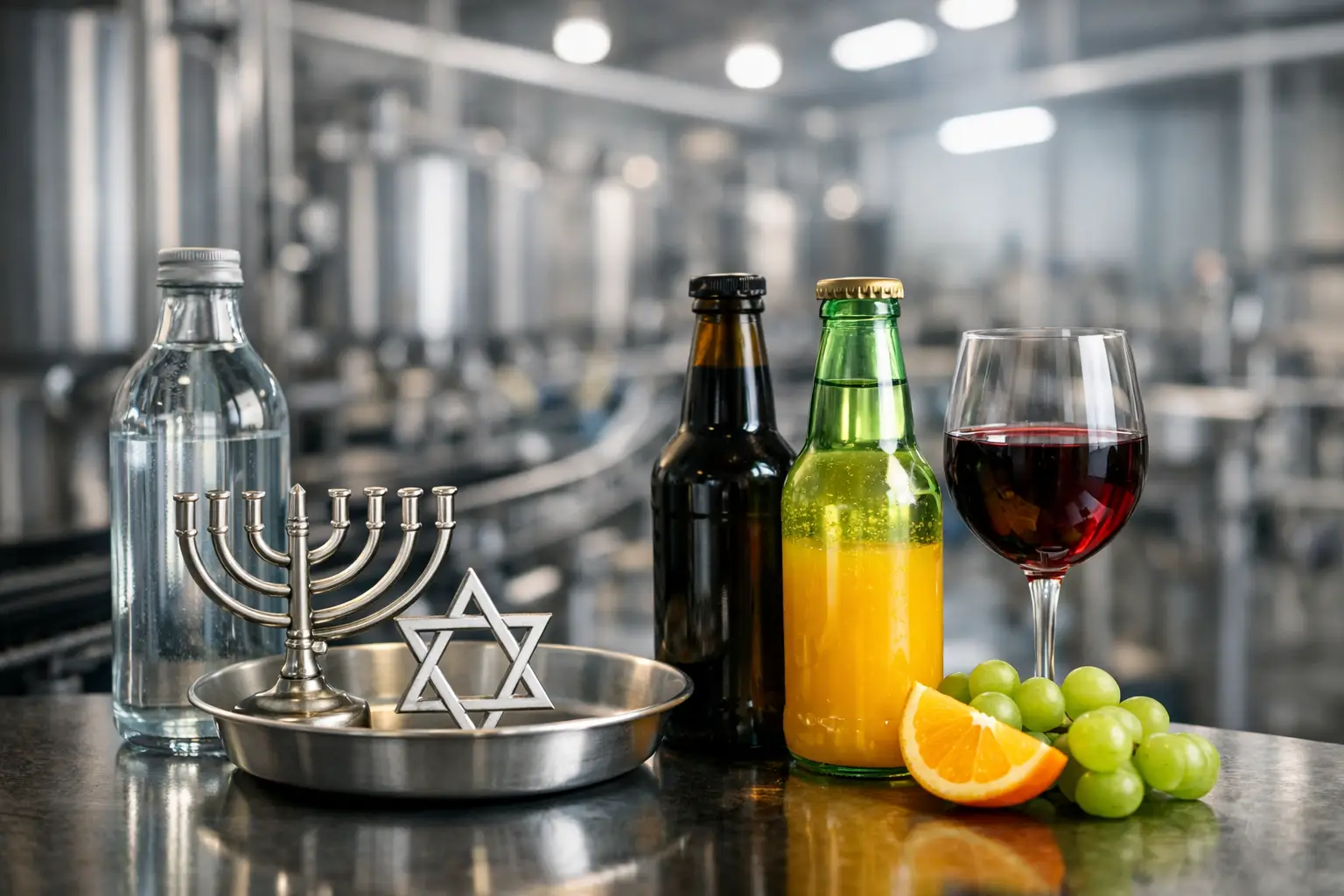
Shelf placement is won long before a beverage reaches the store. For brands selling into retail, hospitality, export, or specialty channels, the right kosher beverage manufacturer can shape more than compliance. It can affect ingredient approval, production scheduling, market access, and the consistency buyers expect from every run.
Kosher certification is often misunderstood as a niche requirement. In practice, it is a serious operational standard that influences how beverages are sourced, formulated, produced, and documented. For some buyers, it is mandatory. For others, it signals process discipline and broader market readiness. Either way, choosing the right manufacturing partner is not a box-checking exercise. It is a supply chain decision with commercial consequences.
What a kosher beverage manufacturer actually manages
A kosher beverage manufacturer does more than place a certification mark on finished packaging. The manufacturer has to control the full production environment in a way that aligns with kosher requirements, including raw material review, supplier verification, sanitation procedures, line status, and batch documentation.
That matters because beverage production is rarely simple. Flavor systems may contain alcohol bases, glycerin, colors, botanical extracts, or processing aids that need individual review. Functional beverages can add amino acids, adaptogens, vitamins, and specialty ingredients that create another layer of scrutiny. Even when a formula appears clean on paper, the details behind each component can determine whether it is acceptable for kosher production.
For brand owners, this is where manufacturing competence matters. A qualified partner should be able to evaluate ingredient decks early, identify risks before commercialization, and structure production in a way that avoids unnecessary reformulation or downtime.
Why kosher matters beyond religious compliance
For many beverage companies, kosher certification supports access to specific consumer groups and retail programs. That is the most visible benefit, but it is not the only one.
Kosher production tends to require tighter ingredient traceability, clearer supplier documentation, and stronger process controls. Those disciplines align well with what serious buyers already expect, especially in natural, functional, and premium beverage categories. When a manufacturer can manage kosher requirements well, it often reflects broader strength in compliance, quality assurance, and operational execution.
There is also a practical market advantage. A kosher-certified beverage can be easier to position across mixed channels, from conventional grocery to specialty retail to foodservice accounts that screen products more closely. For exporters and importers, kosher status may also support acceptance in markets where certification influences purchasing decisions.
That said, not every beverage needs kosher certification. The right path depends on your target customer, category, and channel strategy. If kosher status will not affect your route to market, the added oversight may not justify the complexity. But if it opens doors with distributors, key retailers, or institutional buyers, it becomes a strategic asset.
How to evaluate a kosher beverage manufacturer
The first question is not whether a manufacturer says it can produce kosher beverages. The real question is how it manages the process under commercial production conditions.
Start with certification oversight. A capable partner should work with recognized certifying bodies and understand how those relationships affect scheduling, inspections, approvals, and product changes. If the manufacturer treats certification as an afterthought, problems usually appear later – delayed launches, rejected ingredients, or labeling corrections that slow distribution.
The second issue is ingredient control. This is especially important for brands built around natural positioning. Real juices, plant extracts, sweetener systems, and active ingredients often come from complex global supply chains. A manufacturer needs a disciplined approval process for every input, including documentation from suppliers and procedures for substitutions when sourcing shifts.
Production flexibility also matters. Some kosher beverage programs require dedicated runs, specialized sanitation, or careful sequencing around other products on the line. That can be manageable in a plant designed for high throughput, but only if planning is disciplined. If a manufacturer lacks scheduling control, kosher production can turn into a bottleneck.
Then there is scale. A small facility may be able to support pilot runs with close attention, but struggle when orders expand into regional or national volume. A large plant may offer speed and output, but not the formulation support or category knowledge a developing brand needs. The right choice depends on where your business is now and where it needs to be in 12 to 24 months.
Kosher beverage manufacturer capabilities that affect growth
A strong kosher beverage manufacturer should support more than compliance. It should help reduce friction from concept to finished goods.
Formulation support is one example. If a beverage needs to meet kosher standards while also hitting clean-label goals, taste expectations, and cost targets, trade-offs are inevitable. Some ingredients perform well but complicate certification. Others fit certification requirements but weaken flavor, function, or shelf stability. An experienced manufacturer can help navigate those decisions early, before a product is locked into an inefficient formula.
Packaging capability is another growth factor. Kosher-certified beverages may be sold across multiple channels, each with different pack formats, case requirements, and labeling needs. A manufacturing partner that can handle cans, bottles, secondary packaging, and compliant labeling under one operational system reduces complexity for the brand and improves execution for buyers.
Geographic manufacturing reach can also be a major advantage. Multi-region production creates options when freight costs shift, demand spikes in specific markets, or sourcing conditions change. For companies serving international customers or balancing on-premise and off-premise demand, that flexibility can protect margins and maintain service levels.
This is where industrial discipline matters. A beverage company that combines premium product standards with high-speed automated production is better positioned to support both brand integrity and volume growth without compromise.
Common mistakes brands make
One of the most common mistakes is assuming a kosher-ready formula guarantees a kosher-ready product. It does not. Ingredient acceptance is only one part of the equation. The production environment, sanitation protocols, line history, and certification process all affect whether the finished beverage qualifies.
Another mistake is choosing a partner based only on unit cost. Lower pricing can look attractive during development, but the real cost appears when production delays, quality issues, or documentation gaps disrupt launch plans. Buyers and distributors remember missed dates and inconsistent supply. Recovering trust is harder than negotiating a better manufacturing rate at the start.
Brands also underestimate change control. Reformulating a sweetener system, replacing a flavor house, or shifting a processing aid may seem routine, but under kosher production those changes can trigger new reviews and approval steps. A disciplined manufacturer will flag that early. A weaker one may not recognize the issue until it affects production.
Finally, some companies overbuild. They select a manufacturing setup designed for far larger volume than the business can realistically support. The result can be high minimums, inefficient inventory, and pressure to scale before the brand is ready. The better approach is to choose a partner with room to grow and the operational structure to support each stage responsibly.
What buyers and channel partners should look for
For distributors, retailers, and hospitality buyers, the question is straightforward: can the supplier deliver a kosher-certified beverage consistently, at the required quality, and at the volume your channel demands?
That means looking past the product spec sheet. Ask how certification is maintained across production runs. Ask how ingredient substitutions are controlled. Ask whether the manufacturer has the capacity to support promotions, seasonal spikes, and expansion into adjacent markets without destabilizing supply.
Product quality should be matched by documentation quality. Clean records, traceable inputs, and consistent labeling are not administrative details. They protect sell-through, reduce compliance risk, and support confidence across the supply chain.
For private-label buyers and brand founders, the standard is similar but broader. You need a manufacturer that can protect your concept while executing at commercial speed. That includes formula development, sourcing, certification alignment, production planning, packaging, and finished product reliability. If one part of that chain is weak, the brand feels it.
UNC One Corp. operates in that space with a model built around natural ingredients, premium beverage positioning, and scalable manufacturing across multiple regions. For partners that need both product integrity and production capacity, that combination matters.
The right partner is built for discipline
Kosher beverage manufacturing is not about adding one more claim to a label. It is about running a production system that can meet a higher level of scrutiny without losing speed, quality, or commercial practicality.
That is why the best manufacturing partnerships are built on discipline. Clear ingredient review. Reliable certification management. Consistent production controls. Scalable output. When those pieces are in place, kosher certification supports growth instead of creating friction.
If your beverage strategy depends on trust, compliance, and repeatable quality, choose a manufacturer that treats kosher production as an operating standard, not a marketing feature. The right partner will make that difference visible in every batch.

No responses yet