
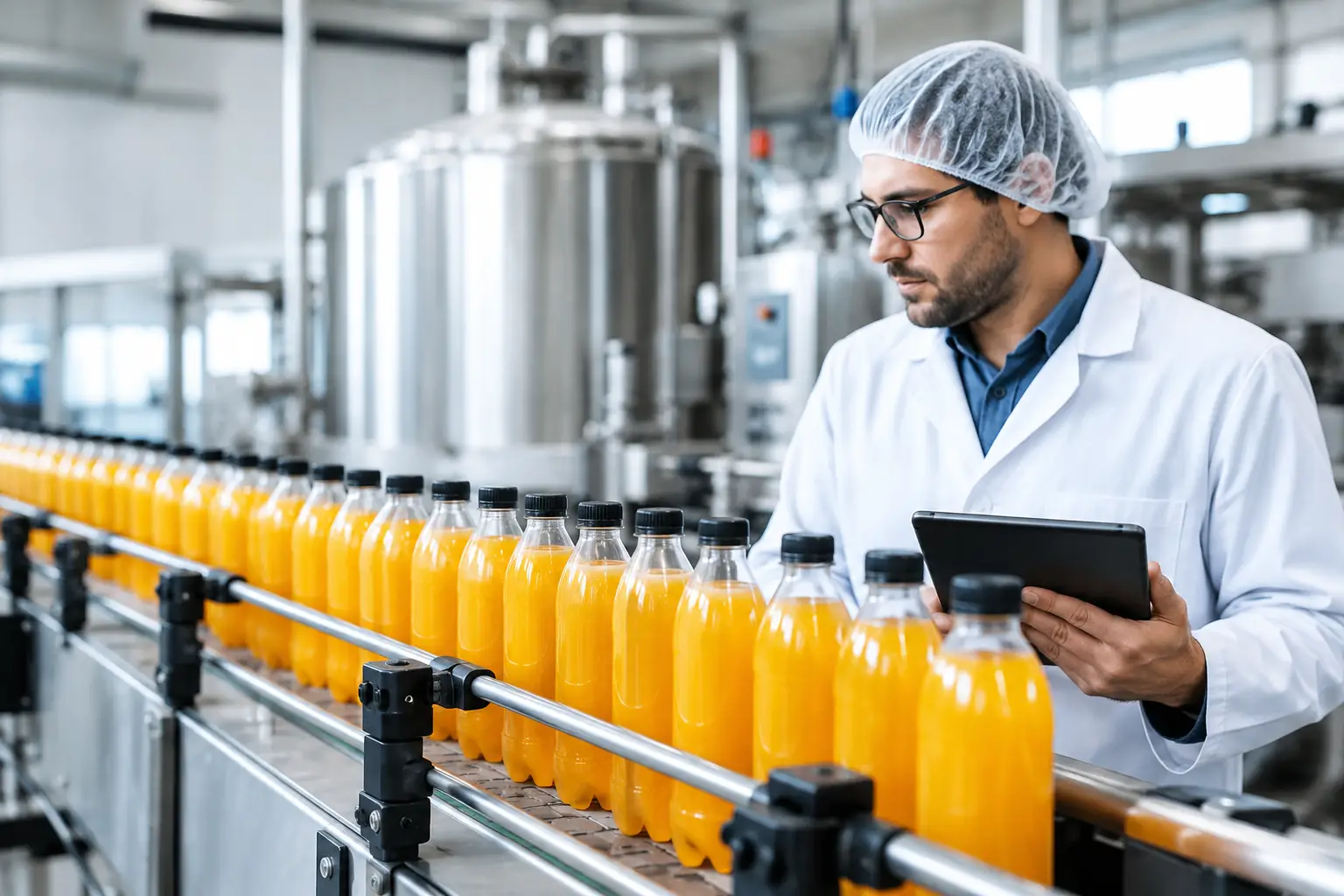
A promising sample, a polished sales presentation, and an attractive unit price can all create confidence too early. Beverage manufacturer reviews should go further. For buyers, distributors, and brand owners, the real question is whether a producer can deliver the same product quality, documentation, and service level at the volumes your business requires.
Manufacturing is where a beverage promise becomes a commercial reality. A partner may have strong formulation talent but limited production flexibility. Another may have significant line speed but little experience protecting natural ingredients or handling a functional beverage process. The right evaluation identifies both strengths and limits before they become a missed delivery, a quality claim, or a costly reformulation.
What Beverage Manufacturer Reviews Should Measure
A useful review is not a scorecard based on one conversation or one pilot run. It is a structured assessment of how a manufacturer performs across the conditions that matter to your product and channel. That includes quality control, ingredient sourcing, packaging capability, production scale, regulatory discipline, communication, and contingency planning.
Start with product fit. A manufacturer experienced in carbonated drinks may not be the right choice for a shelf-stable cocktail, a hydration formula with electrolytes, or an energy beverage containing sensitive active ingredients. Ask what comparable product types they currently make, what process controls those products require, and where they see technical risk in your formula. Direct answers are a positive signal. Overconfident answers without process detail are not.
Quality must be measurable. Review whether the facility uses documented specifications for incoming ingredients, batch production, finished goods, and packaging components. Confirm how it handles holds, deviations, corrective actions, and product release. A quality system is not just a certificate on a wall. It is the discipline that prevents one inconsistent batch from reaching a distributor, retailer, or hospitality account.
The review should also consider the difference between capacity on paper and capacity available to your brand. A facility may have high annual output but limited open line time during peak months. It may run your package format only on certain lines, or it may need longer changeovers because of allergen controls, specialty closures, or labeling requirements. Available capacity, minimum run requirements, and scheduling priority deserve clear discussion before an agreement is signed.
Look Beyond the Sample Run
A sample run proves that a beverage can be made. It does not prove that it can be made repeatedly without compromise. Commercial production introduces variables that are easy to overlook during development: ingredient lot variation, fill-level control, carbonation consistency, packaging performance, warehouse conditions, and transit stress.
Ask how the manufacturer validates a product from bench formulation through pilot production and commercial scale. The process should include defined checkpoints rather than assumptions. This is particularly important for clean-label and natural beverages, where real juice, botanicals, colors, extracts, and functional ingredients can behave differently from one batch to the next.
Shelf life is another area where reviews need discipline. A stated shelf-life target should be supported by an appropriate validation plan, not simply borrowed from a similar product. The required work depends on the formula, package, distribution environment, and preservation approach. A refrigerated beverage has different risks than an ambient-stable can. A drink sold through hospitality may face different handling than a product moving through national retail distribution.
Packaging should receive equal scrutiny. Can, glass, PET, carton, and specialty formats each affect cost, line efficiency, freight, product protection, and consumer perception. Evaluate whether the manufacturer has proven experience with the selected format and whether it can source components reliably. A premium beverage cannot maintain its position if its package arrives scuffed, leaks in transit, or changes appearance across production runs.
Questions that reveal operational depth
The best questions are specific enough to show how a manufacturer operates under pressure. Ask how it responds when a key ingredient is delayed, a packaging component fails inspection, or a batch misses a sensory target. Ask who owns customer communication during a production issue and what documentation is provided after resolution.
Also ask about lead times by component, not only by finished product. A manufacturer can be ready to run while labels, caps, cartons, or a specialized ingredient remain unavailable. Partners with mature planning processes can explain their critical-path items, expected lead times, and alternatives without making vague promises.
Assess Supply-Chain Strength by Region
For brands serving multiple markets, manufacturing location is a strategic decision. Producing close to demand can reduce freight exposure, shorten replenishment cycles, and simplify market-specific packaging. At the same time, a regional footprint only creates value when standards are aligned across facilities.
Review where ingredients are sourced, where products are manufactured, and how quality specifications are controlled between regions. A consistent brand requires more than the same label artwork. It requires equivalent raw-material standards, calibrated processes, approved suppliers, and clear documentation from facility to facility.
International production can also provide useful flexibility during supply disruption, but it should not be treated as an automatic solution. Different countries have different regulations, import requirements, labeling rules, taxes, and production lead times. The right partner explains these trade-offs early. It does not present global scale as a substitute for careful market planning.
UNC One Corp. approaches scalable beverage production through a multi-region manufacturing network designed to support quality, supply flexibility, and commercial growth without losing control of the product standard. For buyers and brand owners, that combination matters when a successful launch moves from a regional opportunity to broader distribution.
Evaluate Service as Part of Product Quality
Poor communication is often the first visible sign of an operational problem. A manufacturer does not need to promise instant answers to every question, but it should provide clear ownership, realistic timing, and accurate updates. Review how the team handles formulation changes, artwork approvals, forecasts, purchase orders, production scheduling, and shipment coordination.
For a contract manufacturing client, service should extend across the development path. That may include help refining a formula for manufacturability, selecting a package that fits the channel, preparing production specifications, and managing the transition to larger runs. The scope varies by partner, but responsibilities should be defined in writing.
For distributors and beverage buyers, service means dependable execution after the first order. Confirm the producer’s ability to maintain product availability, provide current compliance documents, manage lot traceability, and respond to commercial requests with useful information. Strong brands create demand. Strong manufacturing keeps that demand from turning into a supply problem.
Pricing deserves the same level of transparency. The lowest quote may exclude costs that emerge later through setup charges, packaging minimums, storage fees, expedited freight, testing, or formulation revisions. Request a full commercial view of the project and understand which assumptions support the quoted price. A higher unit cost can be the better business decision when it includes tighter controls, dependable materials, and fewer disruptions.
Red Flags in Manufacturer Evaluations
Some concerns are obvious, such as missing certifications or an inability to provide specifications. Others are more subtle. Be cautious when a producer avoids discussing minimums, provides estimated capacity without a production calendar, or treats regulatory questions as an afterthought.
Another red flag is a lack of ownership at the handoff points. If sales, quality, operations, and logistics each provide a different answer, the issue is not simply communication style. It may indicate that the operating model is not coordinated around the customer’s product.
Watch for inflexibility disguised as process. Standardization is valuable because it supports safety and repeatability. But a capable manufacturer can distinguish between a non-negotiable quality requirement and a commercial detail that can be adjusted to help a brand launch successfully. The goal is controlled flexibility, not exceptions without discipline.
Make the Decision on Evidence
The strongest beverage manufacturer reviews combine documents, conversations, facility observations, and commercial references. They compare what a manufacturer says it can do with evidence of how it performs. That evidence may include production records, quality procedures, packaging specifications, capacity plans, lead-time assumptions, and examples of similar products produced at scale.
A site visit can be valuable when the project size justifies it. Observe the condition of the operation, material flow, sanitation practices, warehouse organization, and how teams interact. A facility does not need to look theatrical to inspire confidence. It should look controlled, clean, and ready to execute.
Choose the partner that can protect the beverage you intend to build, not merely produce the first shipment. When quality standards, production capacity, and communication are aligned from the start, growth becomes an operating plan rather than a production risk.

No responses yet