
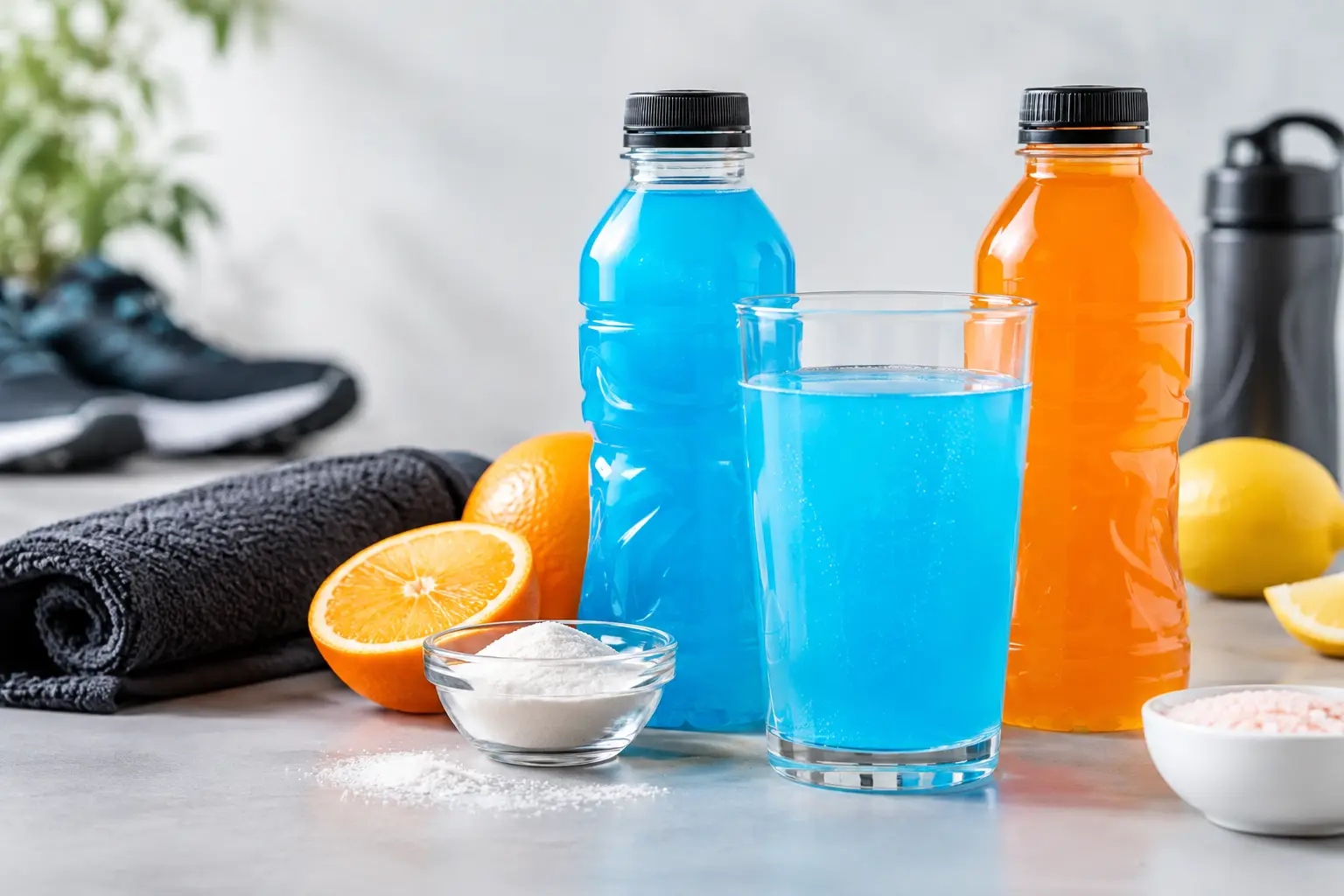
A credible sports drink is not created by adding electrolytes to flavored water. To understand how to formulate isotonic beverages, start with the condition that defines the category: the finished drink should have an osmolality close to that of body fluids while delivering fluid, sodium, and carbohydrate in a format consumers will drink consistently.
For beverage brands, that requirement creates a practical formulation challenge. Every ingredient added for performance, sweetness, flavor, color, preservation, or positioning affects the total dissolved solids and therefore the drink’s behavior. The strongest products balance hydration science with clean-label expectations, sensory quality, regulatory compliance, and repeatable high-volume production.
What makes a beverage isotonic?
An isotonic beverage generally targets an osmolality near human blood plasma, commonly in the range of roughly 275 to 330 mOsm/kg. Osmolality measures the concentration of dissolved particles in a liquid. It is not the same as Brix, total sugar, or electrolyte content alone.
A drink may contain an appropriate amount of sodium yet become hypertonic if it carries too much sugar, mineral salt, amino acid, vitamin, or functional ingredient load. Conversely, a low-calorie drink can include electrolytes but may not provide the carbohydrate energy profile expected from a traditional isotonic sports drink. Category positioning should follow the actual formula and its validated analytical results, not a marketing assumption.
The right target depends on the intended use. A product for prolonged training in heat may prioritize sodium replacement and carbohydrate delivery. A daily hydration product may use a lower carbohydrate load and make a more restrained performance claim. Both can be commercially viable, but they should not be built from the same brief.
Start with the use case, not the ingredient list
Before selecting salts or flavors, define who will use the beverage, when they will use it, and what they need it to do. A clear product brief prevents expensive reformulation later.
For an endurance-focused drink, the formula may need meaningful carbohydrate availability, a sodium level designed for sweat replacement, and a flavor profile that remains acceptable over repeated consumption. For recreational fitness or lifestyle hydration, lower sweetness and a lighter mouthfeel may matter more. For retail, the brief must also account for shelf life, cost of goods, packaging format, channel requirements, and the ability to source ingredients consistently across production regions.
This is where formulation becomes commercial discipline. A technically correct beverage that tastes medicinal, costs too much to scale, or loses clarity after six months is not a finished product.
Build the electrolyte system around sodium
Sodium is typically the primary electrolyte in an isotonic beverage because it supports fluid retention and replaces a key mineral lost through sweat. Sodium can be supplied through ingredients such as sodium chloride, sodium citrate, or other approved sodium salts. Each choice changes more than the nutrition panel.
Sodium chloride is familiar and efficient, but it can create a noticeable salty edge at higher inclusion levels. Sodium citrate can soften the flavor profile while contributing buffering capacity, although it also affects pH and total ionic load. Many successful formulas use a controlled combination to achieve the desired sensory result and functional target.
Potassium can support the electrolyte profile, but it should be used with restraint. Potassium salts can introduce bitterness, metallic notes, or astringency. Magnesium and calcium may support a broader mineral story, yet they are formulation-sensitive and can create haze, sediment, off-notes, or stability issues. More minerals do not automatically mean better performance.
The finished electrolyte system should be assessed through laboratory analysis, sensory testing, and shelf-life testing. Calculations provide a starting point. Validation confirms what the consumer and the supply chain will actually receive.
Select carbohydrates for absorption, energy, and taste
Carbohydrates influence energy delivery, sweetness, mouthfeel, osmolality, and flavor release. In many traditional isotonic formulations, total carbohydrate content falls around 4% to 8%, but there is no universal number that fits every brand or activity occasion.
Glucose and related carbohydrate systems are commonly considered because glucose transport is associated with sodium uptake in the intestine. Sucrose can also be used, but it contributes differently to sweetness and needs to be evaluated as part of the full carbohydrate and osmolality calculation. Fructose may help broaden the carbohydrate system in endurance products, though excessive inclusion can create digestive tolerance concerns for some consumers.
Lower-sugar formulas require particular care. High-intensity sweeteners, natural flavors, acids, and electrolytes can produce an appealing beverage with fewer calories, but they do not replicate the carbohydrate function of a conventional sports drink. The product can still be useful, but the positioning should be precise. Real ingredients, real results means matching the promise to the formula.
Control osmolality without sacrificing flavor
The central technical task in how to formulate isotonic beverages is managing the contribution of every dissolved component. Sugars, sodium salts, potassium salts, organic acids, vitamins, amino acids, and botanical extracts all affect the final system.
Use formulation calculations early, then confirm osmolality on production-representative samples. Bench samples made with purified water may not behave exactly like commercial batches made with local process water. Water mineral content can materially affect taste, pH, and analytical results, especially when manufacturing across multiple facilities.
Flavor development should occur alongside performance development, not after it. Citrus and tropical profiles often work well with electrolyte beverages because acidity can help mask salt perception. However, too much acid can make the drink aggressive during exercise, while too little can leave it flat or overly sweet. A clean finish matters as much as the first sip because the consumer may drink the product over an extended workout.
Design for shelf stability and production reality
An effective formula must survive processing, filling, transport, storage, and consumer use. Set a target pH based on the beverage system, flavor profile, preservation strategy, and process capability. Acidified beverages may use hot-fill, tunnel pasteurization, or other validated controls depending on the product and package. The selected process must protect both safety and sensory quality.
Some ingredients become less stable under heat, light, or oxygen exposure. Vitamins may degrade over shelf life. Natural colors can fade. Certain minerals can interact with flavors or create turbidity. If the product contains sensitive functional ingredients, evaluate whether aseptic processing, appropriate oxygen management, or protective packaging is necessary.
Packaging is part of formulation execution. Clear PET can support a bright, accessible appearance but may offer less light protection than other formats. Cans provide strong light protection and can support broad distribution, but the beverage chemistry must be compatible with the liner system. Glass can reinforce premium cues but changes freight economics and on-premise handling. There is no best package in isolation.
Validate the claims and the label
In the United States, the finished beverage must meet applicable food safety, labeling, ingredient, and nutrition requirements. A formulation team should verify ingredient status, allergen controls, nutrition facts, serving size, claims language, and any substantiation required for performance-oriented statements.
Be careful with terms such as “isotonic,” “hydration,” “electrolyte,” “natural,” and “no artificial flavors.” Their use should be supported by the actual ingredient deck, analytical data, and legal review. If a formula changes because of supply availability or regional production, the label and claims must be reassessed rather than carried forward automatically.
A serious validation program includes osmolality, pH, Brix, electrolyte analysis, microbiological testing, stability testing, and sensory review. It should also include pilot-scale trials before final commercialization. Small-batch success does not guarantee line performance at commercial speed.
Scale the formula without compromise
Scaling an isotonic beverage requires control over ingredient specifications, water treatment, blending order, dissolution time, filtration, processing temperatures, and fill conditions. Salt addition order matters. Acid addition can change flavor perception and clarity. Some ingredients need pre-dissolution to prevent settling or batch inconsistency.
Brands should ask a manufacturing partner how the formula will be protected across volumes and locations: What are the approved raw-material specifications? How are critical control points documented? Can the same sensory profile be maintained if one production site must support another? What testing is completed before release?
UNC One Corp. approaches beverage development with this production reality in mind: premium product standards supported by scalable manufacturing. The objective is not merely to make a successful pilot. It is to make a beverage that performs consistently in every approved market and every production run.
The most durable isotonic beverage concepts are disciplined from the first brief onward. Define the performance occasion, build the electrolyte and carbohydrate system with intent, verify the finished osmolality, and test the product under real production conditions. That is how a hydration concept earns repeat purchase – and stays reliable as demand grows.

No responses yet