
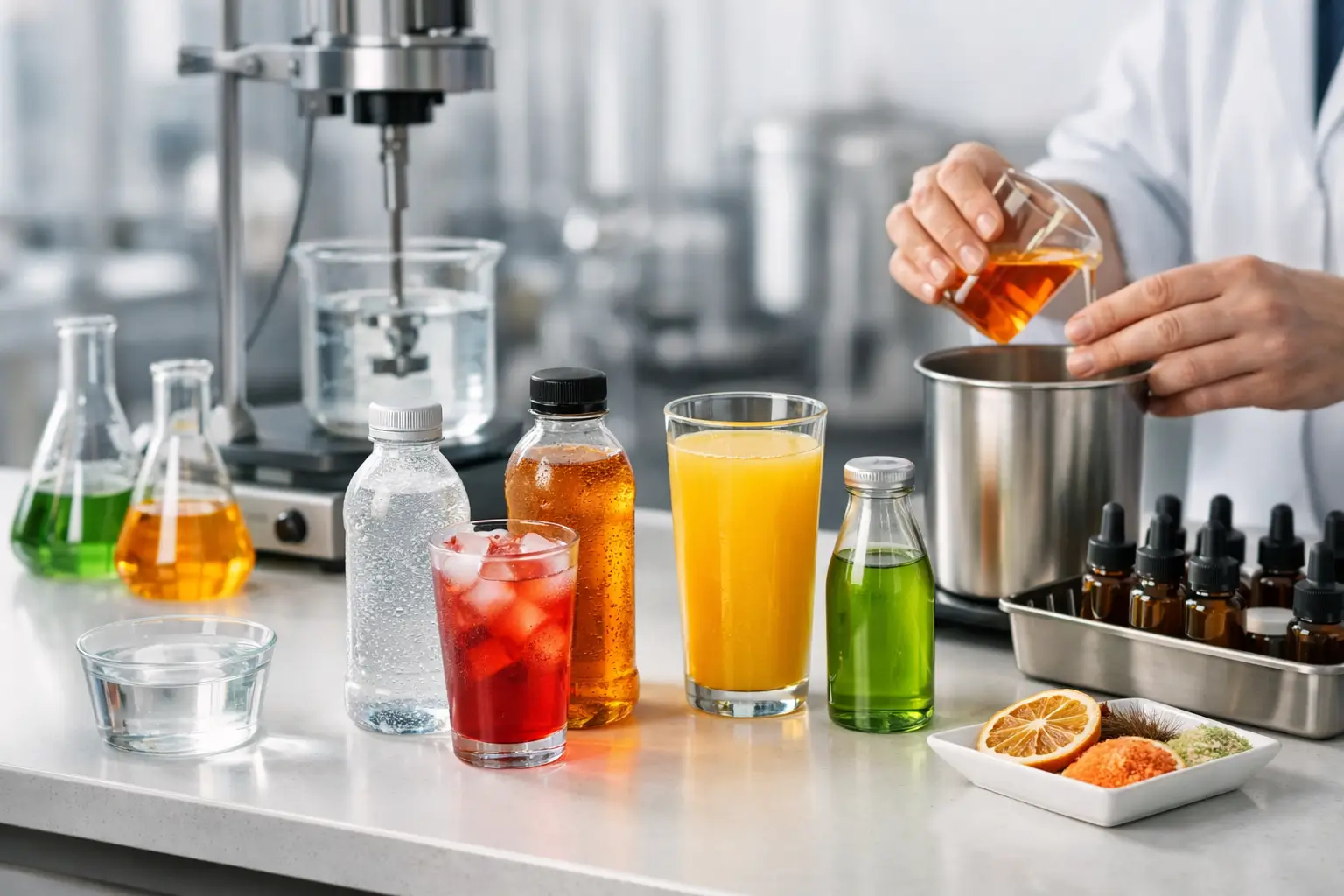
A beverage concept can look strong on paper and still fail at the first production run. The reason is rarely one ingredient alone. Flavor behavior, ingredient interactions, process conditions, packaging, shelf life, regulatory requirements, and supply continuity all affect the finished drink. This beverage formulation process guide outlines how to move from a market-ready idea to a repeatable commercial product without compromising quality.
For founders, private-label operators, and beverage buyers, formulation is not simply a creative exercise. It is a controlled development process. The objective is to produce a drink that delivers the intended taste and benefit in every can or bottle, across every production run and market.
Start With a Commercial Product Brief
A formulation project should begin with a detailed product brief, not a flavor sample. Define the beverage category, target consumer, serving format, channel, price position, and core product promise. A natural sparkling energy beverage, for example, has different technical demands than a still sports drink or a ready-to-drink cocktail.
The brief should establish what the product must deliver: flavor profile, sweetness level, functional ingredients, calorie target, caffeine content where applicable, and clean-label expectations. It should also identify non-negotiables. These may include no artificial colors, no preservatives, a specific nutrition claim, or a requirement for real juice and recognizable ingredients.
Commercial realities belong in the brief from day one. A formula built around a rare botanical or a volatile commodity may be appealing in early development but difficult to scale consistently. The best formulation decisions balance product distinction with supply reliability, production compatibility, and target margin.
Beverage Formulation Process Guide: Build the Formula
Select Ingredients for Performance, Not Label Appeal Alone
Natural ingredients support premium positioning, but they require precise handling. Juice concentrates, extracts, botanical flavors, proteins, minerals, vitamins, sweeteners, and acids can all influence taste, color, clarity, stability, and processing behavior.
An ingredient that performs well in a bench sample may behave differently under heat treatment or over several months in distribution. Citrus oils can separate. Plant extracts can create sediment. Certain minerals can leave a metallic finish. Protein systems may become unstable at low pH. These outcomes do not make an ingredient unsuitable, but they must be understood before commercialization.
Ingredient selection should also account for documentation and consistency. Specifications, certificates of analysis, allergen status, country of origin, microbiological standards, and approved-use status are all part of a commercial formulation. Quality begins with controlled inputs.
Establish Flavor, Sweetness, Acidity, and Mouthfeel Together
A beverage’s flavor system works as a whole. Sweetness can round sharp acidity, but excessive sweetness can hide a functional ingredient only temporarily and reduce drinkability. Acid provides brightness and preservation support, yet too much can make a drink harsh or destabilize sensitive actives.
Mouthfeel matters just as much. This is particularly true for reduced-sugar, functional, hydration, and energy beverages. Soluble fiber, juice solids, gums, and certain sweeteners can add body, but they may also affect clarity or create a lingering finish. Carbonation can lift aroma and reduce perceived heaviness, while a still format may allow deeper flavor expression.
Sensory evaluation should be structured rather than based on a single tasting. Compare prototypes against the target profile, leading category products, and internal benchmarks. Test cold and ambient samples. A flavor that performs well immediately after mixing may lose top notes after thermal processing or become unbalanced during shelf-life storage.
Confirm pH, Brix, and Product Stability
Technical targets turn a beverage idea into a controllable formula. pH influences flavor, microbial control, preservative performance, and processing requirements. Brix measures soluble solids and helps manage sweetness, body, and batch-to-batch consistency. Carbonation, dissolved oxygen, viscosity, and fill conditions may also be critical depending on the product.
Shelf-life testing should begin early. Finished beverages need to be evaluated for sensory quality, microbiological stability, color retention, sedimentation, separation, package interaction, and active-ingredient performance over time. Accelerated testing can provide early indicators, but real-time testing remains necessary when determining a commercial shelf-life claim.
There are trade-offs. A cleaner ingredient statement may limit the available preservation options. A product with real fruit content may offer a stronger consumer story while requiring more attention to settling, flavor variation, and processing. The right choice depends on the category, distribution model, and brand promise.
Design the Process Around the Formula
A commercially viable formula must fit a defined manufacturing process. This includes ingredient receiving, water treatment, batching sequence, mixing time, filtration, homogenization where needed, thermal treatment, carbonation, filling, coding, and palletization.
Order of addition is often underestimated. Powders may clump if added too quickly. Acids can destabilize certain components when introduced before full hydration. Flavors may flash off under heat. A disciplined batch procedure protects the product profile and reduces production losses.
The selected process should match the beverage’s risk profile. Acidified shelf-stable drinks may require one approach, while dairy-based, high-protein, or low-acid products require another. Packaging also affects the process. Cans, PET bottles, glass, and aseptic formats have different oxygen barriers, filling capabilities, logistics profiles, and visual positioning.
Pilot production is where formula and process meet reality. It validates whether the product can be produced efficiently at meaningful volume, not merely whether it tastes good in a laboratory. The pilot run should review yield, line speed, foaming, fill accuracy, torque or seam integrity, package appearance, and sensory consistency.
Build Compliance Into Development
Regulatory review should not be left until final artwork. Ingredient usage, nutrition calculations, allergen declarations, claims, supplement positioning, caffeine disclosures, and labeling language can influence both formula design and commercial timing.
A functional beverage may be positioned around hydration, energy, focus, recovery, or wellness, but its claims must align with the ingredients, serving size, and applicable regulatory framework. Words such as “natural,” “low sugar,” or “source of” can carry specific expectations. The formula, label, and substantiation should agree.
For brands planning international distribution, requirements may differ by destination market. Ingredient approvals, nutrition formats, languages, deposit rules, and packaging requirements can change the product specification. Early planning avoids costly reformulation or label revisions after a product is ready to launch.
Secure Supply Before the Launch Window
Supply continuity is a formulation issue. If a key ingredient cannot be sourced consistently, has a long lead time, or varies materially by crop and origin, the product may face delays or quality shifts. Qualified secondary sources can reduce risk, but substitutions should be tested against the approved sensory and technical standard.
Set clear specifications for every critical material and finished product. These should include acceptable ranges for flavor, color, pH, Brix, microbiological quality, packaging dimensions, and other product-specific attributes. A specification is not administrative paperwork. It is the standard that protects the brand in production and distribution.
Manufacturing reach also matters. Multi-region production can improve access to markets and create supply flexibility, but formula transfer must be tightly controlled. Water profiles, local ingredient sources, equipment configurations, and packaging suppliers can affect the final drink. Consistent documentation and validated procedures keep a product consistent across facilities.
Choose a Partner That Can Scale the Standard
The right manufacturing partner should contribute more than filling capacity. Look for formulation expertise, quality systems, regulatory awareness, pilot capabilities, packaging knowledge, and the ability to manage commercial volumes without lowering product standards.
UNC One Corp. approaches beverage development with that full production view: real ingredients, controlled quality, and scalable manufacturing for products built to compete in demanding channels. Whether the target is a natural cocktail, sports drink, functional energy beverage, or a new category concept, the formula must be designed for repeatable execution from the beginning.
A finished beverage earns repeat purchases when the promise on the package matches the experience in the bottle or can. Build for that standard early, test it under real conditions, and treat every production detail as part of the product.

No responses yet