
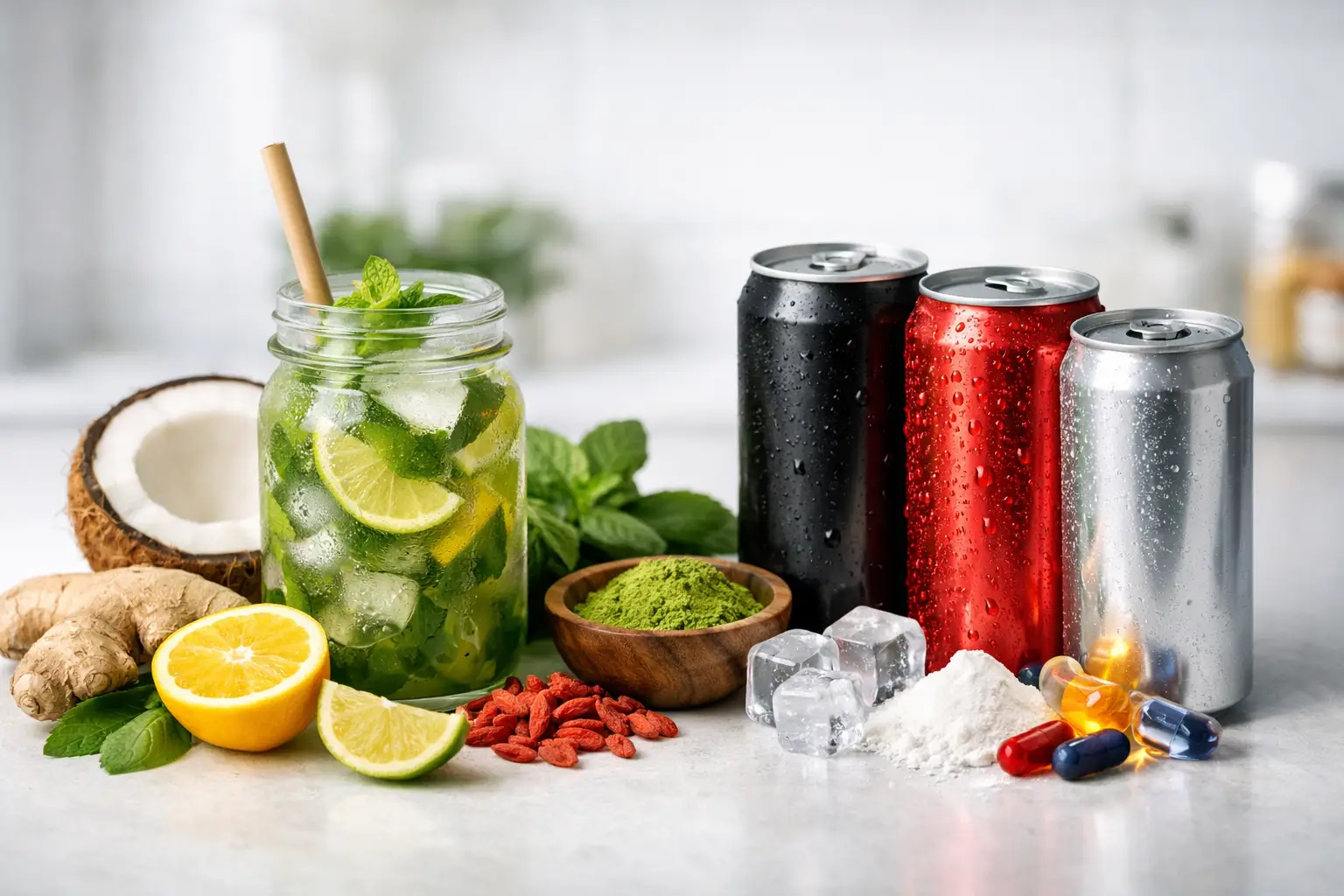
A buyer evaluating natural energy drinks vs synthetic options is not simply choosing between two caffeine sources. They are assessing ingredient integrity, label credibility, flavor performance, regulatory exposure, shelf stability, and the supplier’s ability to deliver the same product at commercial scale. In a category built on fast claims and crowded shelves, the formula must hold up under scrutiny.
The strongest energy beverage is not defined by a single buzzword. It is built around a clear consumer promise, ingredients that support that promise, and manufacturing controls that protect quality from first production run to full-market distribution.
Natural Energy Drinks vs Synthetic: The Real Difference
The distinction begins with formulation, but it extends into positioning and operations. Natural energy drinks typically use caffeine from botanical sources such as green tea, guayusa, yerba mate, or coffee fruit. They may also feature fruit juices, plant extracts, electrolytes, B vitamins, adaptogenic ingredients, and sweeteners positioned as more recognizable or less processed than conventional alternatives.
Synthetic energy drinks commonly rely on added caffeine anhydrous, artificial flavors, artificial colors, high-intensity sweeteners, and laboratory-produced functional ingredients. This does not automatically make a product unsafe or ineffective. Caffeine is caffeine at the molecular level, whether it is isolated from tea or produced synthetically. The commercial difference is often the full formula, the consumer perception of its ingredients, and the evidence behind its claims.
For beverage brands, the question is not whether synthetic ingredients are universally bad or natural ingredients are universally better. The question is whether the finished product delivers the intended experience without creating a disconnect between the label, the claim, and the consumer expectation.
What Consumers and Buyers Are Looking For
Energy drink consumers have become more selective. Many still want alertness and convenience, but they increasingly read labels, compare sugar levels, and ask where the energy comes from. Retail buyers and distributors see the same shift in purchase data: clean-label positioning can create a point of differentiation, especially in wellness-oriented, premium, and better-for-you channels.
A natural positioning can be especially valuable when it is supported by straightforward formulation. Real fruit flavor, recognizable botanical caffeine sources, moderate sugar, and a defined functional purpose can make a product easier to understand at shelf. The message should be specific. “Natural energy” is broad. “Caffeine from green tea with electrolytes and no artificial colors” provides a more concrete reason to believe.
That said, buyers also need consistency. A compelling front label cannot compensate for variable taste, unstable color, sediment, supply interruptions, or a formula that becomes too expensive to scale. Product integrity is the combination of ingredient standards and execution.
The Role of Caffeine Source
Botanical caffeine sources can strengthen a natural story, but they require formulation discipline. Extracts may introduce bitterness, color, tannins, or flavor notes that need to be managed without covering the product in excessive sweetness or artificial-tasting flavors. They can also vary by supplier and harvest conditions, which makes specification control essential.
Caffeine anhydrous is typically neutral in taste, precise to dose, and widely available. It offers practical advantages in some formulations, particularly when a brand needs a highly controlled sensory profile or cost structure. However, it may not support a clean-label or plant-based source claim in the same way as tea- or fruit-derived caffeine.
The right choice depends on the product brief. A performance beverage for health-conscious consumers may benefit from a botanical source that reinforces the brand proposition. A value-oriented product with a conventional energy profile may prioritize dosing precision and cost efficiency. Neither path should be chosen by marketing language alone.
Natural Does Not Mean Formulation Is Easy
Natural formulations can present more technical challenges than conventional energy beverages. Natural colors may fade under light exposure. Juice components can affect pH, sweetness, and microbial stability. Certain botanical extracts can create haze or sediment. Natural flavor systems may behave differently during processing and over the product’s shelf life.
These issues are manageable, but they must be addressed early. A commercially ready formula requires more than a successful bench sample. It should be validated through pilot production, packaging compatibility testing, sensory review, and shelf-life evaluation. This is where experienced product development and high-speed manufacturing capability matter.
Sweetening strategy is another frequent trade-off. Cane sugar can support a familiar, real-ingredient profile, but it adds calories and may not fit a low-sugar target. Stevia, monk fruit, and other alternatives can reduce sugar, but they may introduce lingering sweetness, bitterness, or a thinner mouthfeel. The best solution is often a balanced system rather than an extreme one.
Claims Require Precision
“Natural” is not a free pass for broad health claims. Brands must ensure that ingredient descriptions, nutrition statements, functional messaging, and marketing language align with applicable regulatory requirements. A botanical ingredient may be appropriate for use in a beverage while still requiring careful wording around what it can and cannot be said to do.
Energy claims deserve particular discipline. Consumers understand terms such as “energy,” “focus,” and “performance” differently, and regulators may review whether an implied benefit is supported. The more aggressive the claim, the greater the need for substantiation, compliant labeling, and clear ingredient documentation.
For channel partners, this matters because compliance risk travels through the supply chain. Importers, retailers, hospitality operators, and distributors need confidence that a product has been developed with specifications, documentation, and labeling controls in place. A quality beverage partner should treat compliance as part of formulation, not as a final packaging exercise.
Scale Changes the Decision
A formula that works in a small run can fail when moved to large-volume production. Ingredient availability, lead times, batch-to-batch variation, minimum order quantities, filling speed, and packaging format all affect the final business case. Natural ingredients can carry higher costs or more complex sourcing requirements, but those challenges can be managed through approved supplier programs, clear specifications, and production planning across qualified facilities.
For emerging brands, the key is to build a formula with realistic scale from the start. Avoid relying on an ingredient that has limited supply, uncertain documentation, or a cost that only works at pilot volumes. For established brands, reformulation should protect the sensory profile and operating margins that customers already expect.
UNC One Corp. approaches this balance through real-ingredient beverage development backed by scalable manufacturing across multiple regions. The objective is clear: premium product standards, dependable output, and a finished beverage that performs in the market as well as it does in the lab.
Choosing the Right Product Strategy
Natural energy drinks are strongest when the brand promise is rooted in recognizable ingredients, measured functional benefits, and a credible wellness position. Synthetic or conventional formulations may remain appropriate when precise cost control, familiar flavor profiles, or specific technical requirements are the priority.
The most effective route is often a thoughtful middle ground. A beverage can use a botanical caffeine source while applying modern formulation science to improve taste, stability, and consistency. It can reduce sugar without sacrificing drinkability. It can make a clean-label claim without making claims the formula cannot support.
Before moving into production, brands should pressure-test four decisions: the target consumer, the required energy experience, the claim strategy, and the supply chain needed to support the formula. When these decisions are aligned, the choice between natural and synthetic becomes less ideological and far more commercial.
A well-made energy drink should give buyers a simple reason to list it and consumers a clear reason to choose it again: real ingredients, real results, and quality that does not change when demand grows.

No responses yet