
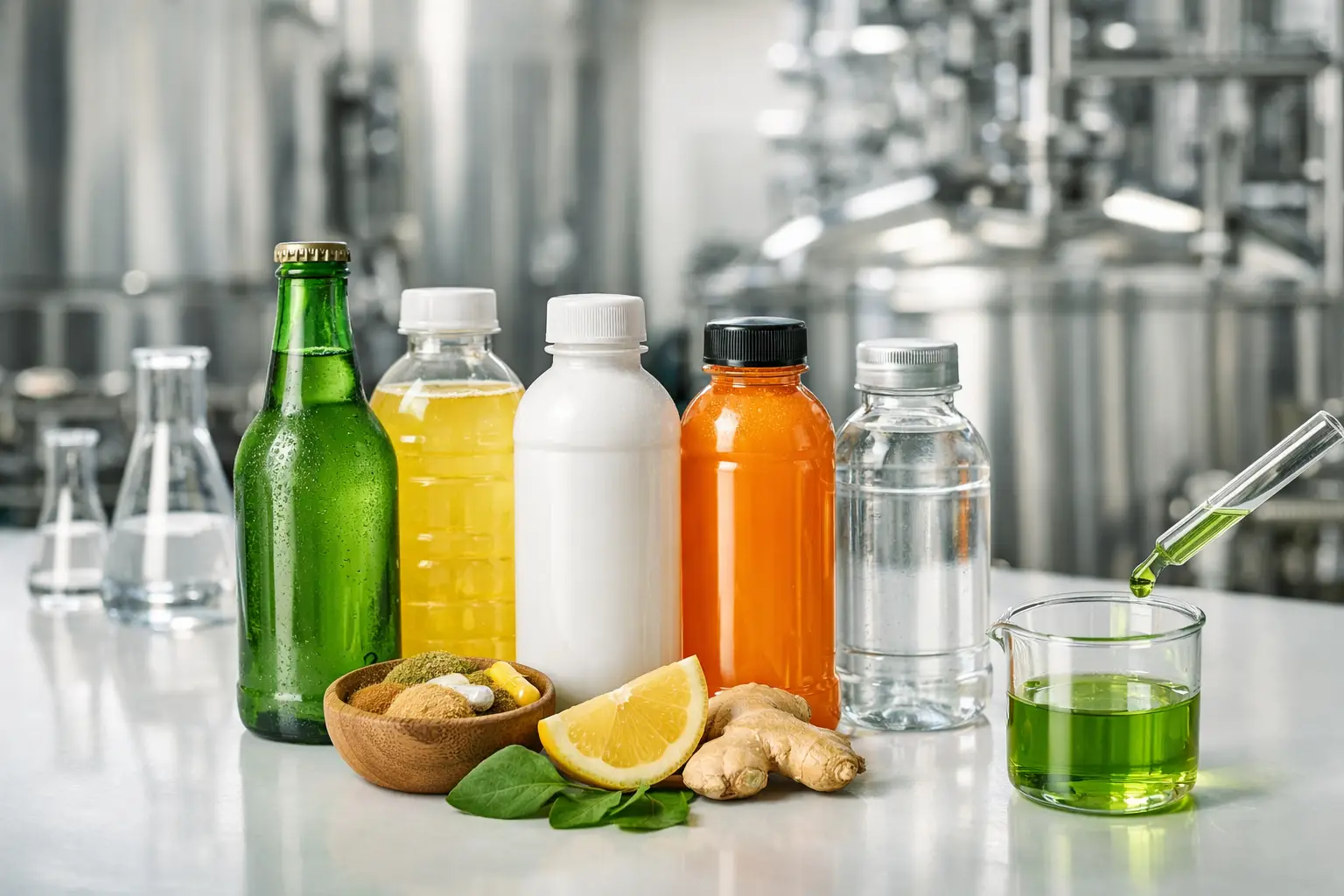
A functional beverage manufacturer does far more than fill cans. The right partner influences ingredient integrity, formula stability, regulatory compliance, production speed, and whether a brand can scale without losing what made the product work in the first place. For buyers, distributors, and beverage founders, that decision affects margin, consistency, and market credibility.
Functional beverages sit in a demanding category. Consumers expect more than taste. They want performance benefits, cleaner labels, and ingredients they recognize. At the same time, retailers and channel partners expect dependable supply, shelf-ready packaging, and repeatable quality. That combination raises the standard for manufacturing.
What a functional beverage manufacturer actually delivers
A qualified functional beverage manufacturer should be able to support the product from concept to finished goods, but not every operation does that at the same level. Some plants are strong at high-volume filling and weak on formulation. Others can build a promising prototype but struggle when volumes increase or when the formula needs to hold up across long production runs.
The difference matters because functional drinks are more complex than many standard beverages. Once a formula includes vitamins, minerals, botanicals, adaptogens, amino acids, electrolytes, or natural caffeine systems, production becomes less forgiving. Ingredient interactions can affect flavor, color, texture, and shelf life. A formula that performs well in a small bench sample may behave very differently in commercial production.
That is why manufacturing competence has to start before the line runs. It begins with formulation review, ingredient sourcing, process validation, and packaging fit. A manufacturer that understands functional beverages should be able to identify where a claim, ingredient system, or flavor profile may create risk before that risk turns into waste or inconsistency.
Why formulation and production have to work together
In this category, product development and manufacturing cannot operate as separate functions. A beverage may look strong on paper, but if the active ingredients settle, degrade under heat, or create bitterness that cannot be masked cleanly, the formula will not hold up in market.
A capable functional beverage manufacturer evaluates the entire production path. That includes the ingredient format, mixing order, pH behavior, thermal sensitivity, sweetener system, and packaging choice. Glass, PET, and cans each create different considerations. So do hot fill, tunnel pasteurization, and aseptic or cold-chain strategies.
There is rarely one perfect answer. A highly natural formula may support a stronger clean-label story, but it can also narrow processing options or shorten shelf stability if the system is not engineered correctly. On the other hand, a formula designed only for processing ease may lose the premium positioning that buyers and consumers expect. Good manufacturing partners know how to balance those trade-offs without compromising the product identity.
Clean-label expectations are raising the bar
For many brands entering the space, the commercial opportunity is tied to real ingredients and transparent positioning. That sounds straightforward until manufacturing starts. Natural flavors, juices, plant extracts, and functional inclusions can introduce variability that standardized commodity formulas often avoid.
This is where discipline matters. A manufacturer serving the functional category should have strict raw material standards, documented specifications, and a sourcing network that can support both quality and continuity. If a key ingredient changes crop to crop or supplier to supplier, the production team needs controls in place to protect flavor and performance.
Buyers also want clarity around what is actually in the can or bottle. Claims tied to energy, hydration, wellness, or recovery need to be supported by measurable formulation discipline. Clean label does not mean loose process control. It means tighter control, because there is less room to hide inconsistency.
Scale is not just volume
A common mistake is to treat manufacturing scale as a simple output question. In reality, scale means the ability to grow while maintaining product standards, lead-time reliability, and channel readiness.
A smaller operation may provide close technical attention and flexibility in early development. That can be useful for pilot runs or first launches. But if the brand gains traction in retail, hospitality, or export channels, the same operation may struggle with throughput, procurement leverage, or packaging supply.
A larger manufacturer may offer automated speed and broader capacity, but size alone does not guarantee fit. If the plant is optimized for mainstream beverage SKUs and not functional formulations, the process may not support a premium, ingredient-forward product. The strongest partners combine industrial output with product-specific expertise. That means they can protect quality at high speed rather than treating quality and speed as opposing goals.
Manufacturing reach also matters. Multi-region production can reduce freight risk, improve supply resilience, and support market expansion without forcing a brand to rebuild its entire supply chain. For companies selling across the US and internationally, that flexibility is more than operational convenience. It can become a competitive advantage.
Compliance is part of the product
Functional beverages are sold on benefit, which means scrutiny is higher. A manufacturer should be prepared to work within labeling requirements, ingredient restrictions, documentation standards, and market-specific compliance expectations.
This is especially important for brands planning to sell in multiple channels or geographies. What works in one market may require adjustment in another due to ingredient thresholds, claims language, or packaging rules. A manufacturing partner with regulatory awareness helps reduce delays and protects against expensive relabeling or reformulation.
Compliance should not be treated as a final checkpoint. It needs to be integrated into development from the start. That includes formulation review, ingredient documentation, production records, and finished product specifications. For serious buyers and founders, this is not back-office detail. It is part of brand protection.
What commercial buyers should look for
Importers, distributors, retailers, and hospitality groups are not only buying a beverage. They are buying supply confidence. A functional drink may have strong positioning, but if fill quality varies, lead times slip, or packaging arrives with defects, the channel absorbs the problem.
That is why commercial buyers should evaluate a manufacturer with the same seriousness they apply to the product concept itself. Can the operation hold consistent quality across runs? Does it have the discipline to support premium natural formulations at commercial volume? Is there enough production flexibility to handle forecast swings, new markets, and seasonal demand?
A manufacturer with heritage in beverage production often has an advantage here. Experience builds process discipline. It also improves decision-making when a formula needs adjustment, a supply issue appears, or a market opportunity requires fast execution. In a crowded category, reliability can be as valuable as novelty.
What beverage brands should ask before signing
Founders and private-label operators often focus first on cost per unit. That matters, but it should not be the only lens. The cheaper option can become the more expensive one if the product needs reformulation, if production losses run high, or if scaling exposes process weaknesses.
The better questions are practical. Can the manufacturer support formulation refinement as well as production? Has it worked with active ingredient systems similar to yours? What are the minimums, lead times, and packaging capabilities? How does it manage quality control, raw material approval, and batch consistency?
It also helps to understand where the manufacturer is strongest. Some are built for speed on established formulas. Others are better suited for innovation and brand-building support. A good fit depends on the stage of the business, the complexity of the beverage, and the level of technical support required.
For many growth-minded brands, the ideal partner is one that can handle development, scaling, and channel expansion under one roof or through one coordinated system. That reduces handoff risk and keeps accountability clear.
The advantage of a manufacturing partner built for performance
The functional beverage category rewards brands that can deliver real ingredients, real benefits, and repeatable quality without compromise. That takes more than a production line. It takes manufacturing discipline, technical depth, and enough scale to meet demand when the market responds.
A company like UNC One Corp. reflects what serious partners look for in this space: beverage heritage, natural product focus, and the ability to combine premium formulation standards with international production reach. That model matters because the market no longer separates product quality from operational capability. Buyers expect both.
The strongest manufacturing relationships are built on clear standards and clean execution. If a functional beverage is supposed to stand for performance, the manufacturing behind it should do the same. Choose a partner that treats formulation, compliance, quality, and scale as one system. That is how better beverages reach the market ready to last.

No responses yet