
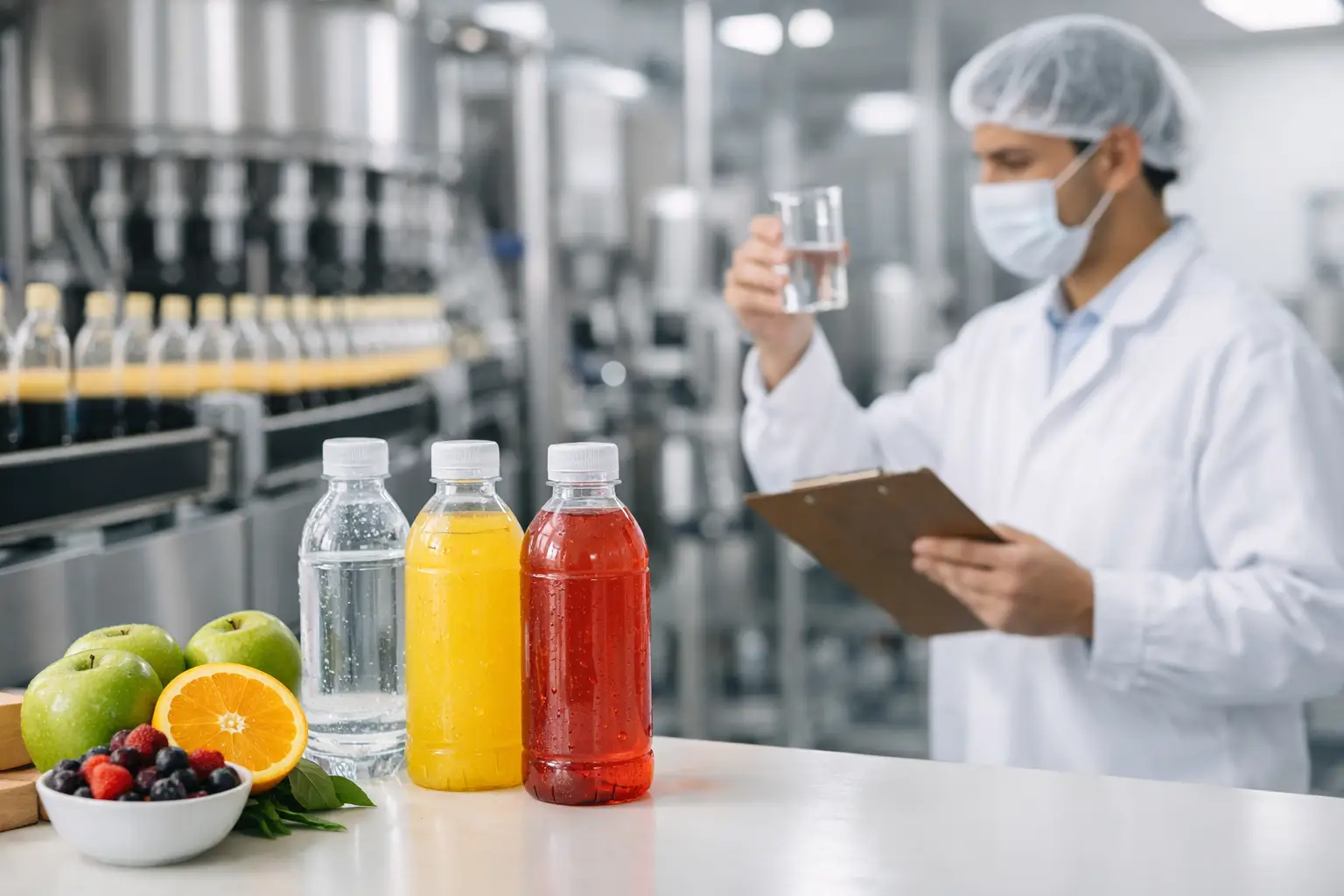
A clean label beverage manufacturer is not just a production vendor with a shorter ingredient deck. For buyers, distributors, and beverage founders, the right manufacturing partner determines whether a product can stay true to its positioning when volumes rise, regulations tighten, and market demands shift. That matters because clean label claims are easy to market and much harder to execute at commercial scale.
In beverage, clean label usually signals a simple idea: recognizable ingredients, fewer artificial additives, and a formula that aligns with what consumers expect from a more natural product. But the commercial reality is more demanding. The manufacturer has to protect flavor, shelf life, appearance, and production efficiency without leaning on the same toolbox used in conventional beverage systems.
What a clean label beverage manufacturer really manages
The job starts well before the first production run. A capable manufacturer evaluates formulation, ingredient sourcing, processing method, packaging compatibility, regulatory requirements, and supply continuity as one connected system. If one part fails, the clean label promise becomes difficult to defend.
Take sweetening as an example. Replacing artificial sweeteners with fruit juice concentrates, cane sugar, agave, or other naturally positioned options changes more than taste. It affects mouthfeel, cost, nutrition facts, microbial stability, and sometimes even filling performance. The same is true when removing artificial preservatives or colors. What looks better on a label may create pressure elsewhere in the process.
That is why strong clean label manufacturing is disciplined, not cosmetic. It requires process control, validated ingredient choices, and production methods that support purity claims without putting the product at risk.
Clean label beverage manufacturer standards that matter
Not every supplier that can produce beverages is built for clean label work. Buyers and brand owners should look past broad claims and examine the operating standards behind the product.
First, ingredient integrity has to be verified, not assumed. That means supplier qualification, lot traceability, specification review, and consistency testing. Natural ingredients often carry more variation than synthetic alternatives. Fruit inputs, botanical extracts, and functional components can shift by season, origin, or crop conditions. A manufacturer must know how to manage that variation without losing product consistency.
Second, process selection matters. Some formulas can achieve the needed shelf life through hot fill, pasteurization, or aseptic approaches. Others may need refrigeration or a shorter shelf-life strategy to preserve the intended label standard. There is no single correct answer. The right choice depends on the beverage type, target market, distribution model, and packaging format.
Third, compliance has to be built into development from the start. Clean label is not a regulated definition in the same way as some formal claims, so language must be precise. A manufacturer should understand ingredient statements, allergen controls, nutrition panel requirements, claim substantiation, and the documentation needed to support domestic and international distribution.
Why formulation is where most clean label projects succeed or fail
Many beverage concepts sound strong in a pitch meeting and break down in pilot production. A formula built around real ingredients has less room for error. Acidity, sweetness, texture, and active ingredient performance need to work together without masking defects through artificial systems.
This becomes especially relevant in categories such as functional energy, sports drinks, and ready-to-drink cocktails. Brands want products that deliver performance benefits or premium taste while keeping the ingredient list understandable. That balance is possible, but it requires technical restraint. Adding more actives, flavors, or label-friendly stabilizers is not always the answer.
A good manufacturing partner knows when to simplify. In many cases, a shorter formula with well-matched ingredients performs better in production and reads better on pack. That protects both the brand story and the operational outcome.
Scale changes the clean label equation
A formula that works in small batches is not automatically ready for regional or international distribution. This is where many brands run into avoidable problems. Pilot-scale success can hide issues that only appear at commercial speed, across multiple production sites, or under extended storage conditions.
A clean label beverage manufacturer with real scale has to preserve product integrity while meeting volume demands. That includes managing ingredient lead times, alternate sourcing strategies, fill-line compatibility, quality assurance protocols, and packaging consistency. High-speed automated production is an advantage only when it does not dilute the original formula standard.
This is also where production footprint matters. Multi-region manufacturing can reduce freight pressure, improve supply flexibility, and support faster market entry. But it only works if formula controls, documentation, and quality systems are aligned across sites. Otherwise, brands end up with version drift – the same product tasting or performing differently by market.
For distributors and retail buyers, this point is critical. Supply reliability is part of product quality. A beverage cannot build a strong channel presence if clean label positioning comes with unstable fulfillment.
The trade-offs buyers and founders should discuss early
Clean label decisions are rarely binary. They involve trade-offs that need to be addressed before commercialization, not after a quality issue or cost surprise.
Shelf life is one of the biggest. A more natural formula may require tighter cold-chain management, a different package, or a shorter code date. That may be acceptable in some channels and a serious limitation in others.
Cost is another. Premium natural ingredients, especially specialized extracts and fruit-based systems, can increase formula cost and sourcing volatility. If the product is intended for broad retail distribution, margin targets have to be realistic from the start.
Visual consistency can also become a discussion point. Real ingredients may settle, darken, or vary slightly over time. For some brands, that supports authenticity. For others, especially in highly standardized categories, it can create friction with buyer expectations.
These are not reasons to avoid clean label positioning. They are reasons to work with a manufacturer that addresses the full operating picture rather than selling an idealized version of it.
What commercial partners should expect from the right manufacturer
A serious clean label manufacturing partner should be able to support more than production capacity. The value is in coordinated execution from concept to packaged product.
That includes formula development grounded in process reality, sourcing support for natural and functional ingredients, packaging guidance based on product stability, and quality systems designed for repeatability. It also includes the ability to move between premium positioning and meaningful production volume without compromising either.
For importers, distributors, and hospitality buyers, this translates into fewer surprises. Products arrive with the consistency, documentation, and supply continuity needed for channel growth. For emerging and established beverage brands, it reduces the gap between product vision and market-ready execution.
UNC One Corp. operates in that space where craft-quality standards and industrial-scale production have to coexist. That balance is increasingly valuable as buyers demand real ingredients and founders need manufacturing depth without building their own facilities.
Choosing a clean label beverage manufacturer with staying power
The strongest partner is not the one making the broadest promises. It is the one with a clear process, proven quality discipline, and the production reach to support growth. Heritage matters here, not as branding language, but as evidence of repeatable execution over time.
Ask direct questions. How are natural ingredient suppliers qualified? What shelf-life method is being used and why? What happens if a key input becomes constrained? Can the same formula be produced consistently across multiple regions? How are claims reviewed before launch? Strong manufacturers answer these with specifics.
Clean label has become a common phrase in beverage. Consistent delivery is still less common. The difference comes down to manufacturing competence – real ingredients, real process control, and the ability to scale without compromise.
For brands and buyers planning their next launch or line extension, that is the right place to focus. A label can attract attention. A disciplined manufacturing partner is what keeps the product credible once it reaches the market.

No responses yet